The best web scraping service for AI training data is one that covers the whole pipeline. Including collecting data at scale, cleaning and deduplicating it, structuring and labeling it, checking quality, and delivering it in formats your ML stack can use.
All while staying within compliance rules.
High-quality training data is the backbone of every successful AI project. From natural language processing to computer vision, the quality and scale of datasets directly impact model performance.
Web scraping provides a scalable way to gather the data AI models need, but it’s not as simple as collecting large volumes of information. Understanding how web scraping powers AI training is essential for building reliable datasets. Without proper planning, scraped datasets can be inconsistent, incomplete or biased, which can harm AI performance.
At Grepsr, we help businesses build AI-ready data pipelines that combine web scraping, cleaning, and structuring to produce reliable training datasets at scale. This guide shows what to look for, compares managed services, in-house scraping and ready-made datasets, and explains how Grepsr builds AI-ready data pipelines.
What Should You Look for in a Web Scraping Service for AI Training Data?
Choosing a web scraping service for AI training requires evaluating its ability to deliver accurate, structured and scalable datasets. Key considerations include:
- Scalability: Ability to collect millions of records across multiple sources.
- Data cleaning: Removal of duplicates, irrelevant content and inconsistencies.
- Structuring and metadata: Standardized fields with source URLs, timestamps and relevant metadata.
- Labeling support: Automated annotation or human review when required.
- Quality assurance: Checks for missing values, anomalies and extraction errors.
- Compliance: Consideration of website terms, copyright and GDPR/CCPA requirements.
- Delivery options: Support for APIs, CSV and database-ready formats.
Managed Service vs In-House Scraping vs Ready-Made Datasets
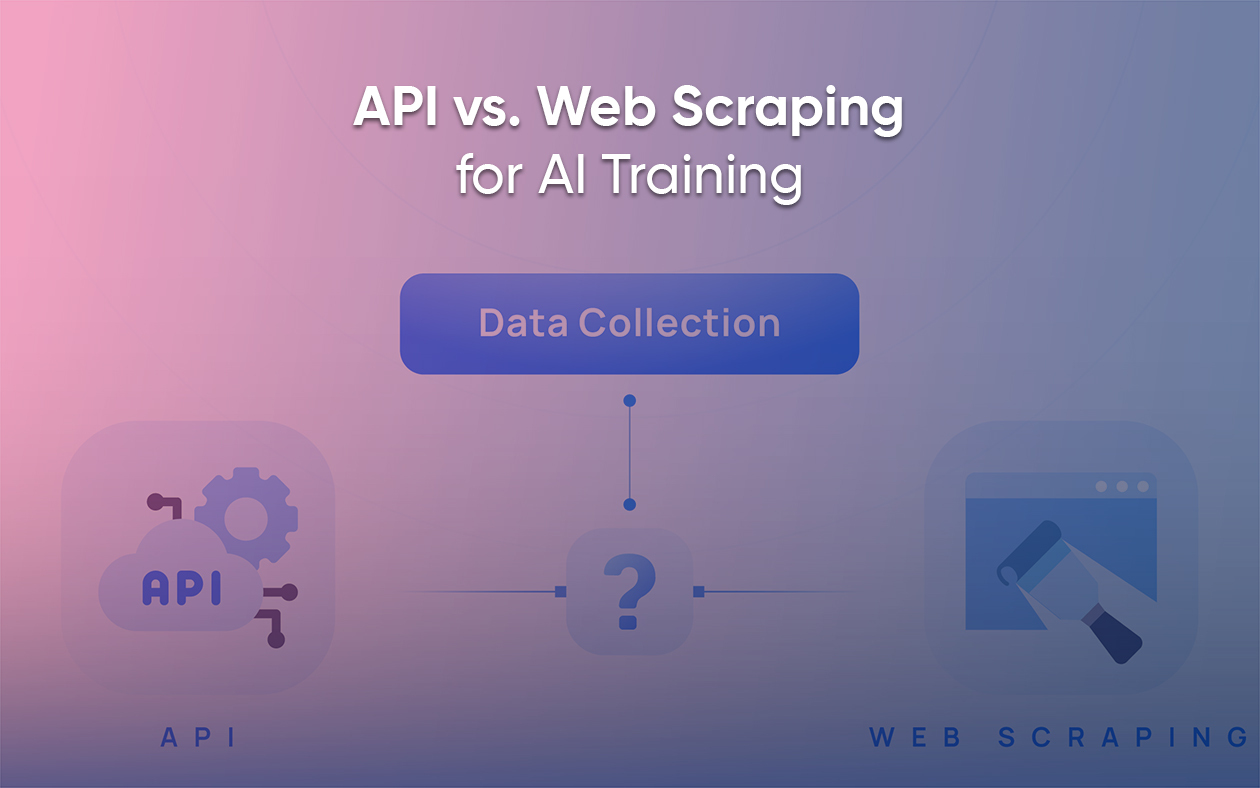
Businesses collecting data for AI training generally have three options: working with a managed web scraping provider, building an internal scraping system or purchasing an existing dataset.
Each approach offers different levels of customization, control and ongoing maintenance.
| Factor | Managed scraping service | In-house scraping | Buying existing datasets |
|---|---|---|---|
| Customization | Tailored to requirements | Full control | Limited to available data |
| Scale | Provider-managed | Depends on internal resources | Limited to dataset coverage |
| Freshness | Scheduled updates | Internally maintained | Depends on vendor |
| Quality control | Provider-managed QA | Internal QA required | Vendor-dependent |
| Setup effort | Low to moderate | High | Low |
| Compliance responsibility | Shared with provider | Internally managed | Buyer verifies usage rights |
Managed scraping services such as Grepsr suit businesses needing customized, regularly updated datasets without maintaining their own scraping infrastructure.
In-house scraping offers greater technical control while ready-made datasets provide faster access when existing data meets project requirements.
Real-World Example: AI Training Data for a Retail Analytics Company
A retail analytics company partnered with Grepsr to collect 1.2 million product records from 85 e-commerce websites for AI-powered pricing analysis and product classification.
Grepsr handled data extraction, deduplication and quality validation, delivering the structured dataset in 14 days for integration into the company’s machine learning pipeline.
Why Is Web Scraping Used to Collect AI Training Data?
First, let’s understand what AI training data consists of. AI training data includes all the text, image, audio or video examples a machine learning model learns from. Web-scraped training data is collected from public websites, then cleaned, structured and, where needed, labeled so it is consistent and usable for training.
AI models require large volumes of structured and high-quality data. Many public datasets are limited in size, outdated, or biased.
Web scraping allows organizations to:
- Collect domain-specific data tailored to AI applications
- Continuously update datasets for evolving trends
- Access niche or specialized information not available in public repositories
- Scale data collection efficiently without excessive manual effort
However, scraping for AI training requires a strategic approach to avoid common pitfalls.
What Are the Best Practices for Scraping AI Training Data?
1. Define Your Data Requirements
A clear specification ensures scraped data is useful for training models without excessive preprocessing. This is also a critical step in building training data pipelines for machine learning.
- The type of data needed (text, images, audio, video)
- The desired quality and granularity
- Dataset size and scale
- Metadata requirements for labels, timestamps, or categories
A clear specification ensures scraped data is useful for training models without excessive preprocessing.
2. Prioritize Data Quality Over Quantity
Large volumes of data are tempting, but poor-quality data can bias or destabilize AI models. Ensure that scraped content is:
- Relevant to your AI task
- Accurate and consistent
- Diverse and representative of real-world scenarios
Understanding the characteristics of high-quality data helps teams evaluate accuracy, completeness and consistency before using scraped datasets for model training.
For example, a language model trained on repetitive text may underperform compared to one trained on smaller but well-structured datasets. Maintaining training data diversity helps ensure models learn from a broader range of real-world scenarios.
3. Automate Cleaning and Structuring
Raw scraped data often contains inconsistencies, missing fields, duplicates, or noise. AI-assisted cleaning ensures that datasets are:
- Deduplicated
- Normalized in formats (e.g., date, currency, units)
- Structured into usable fields
- Free from HTML tags, special characters, or irrelevant content
AI-powered data extraction and processing helps automate these tasks at scale, converting raw web data into structured datasets ready for machine learning pipelines.
4. Use Scalable Scraping Infrastructure
AI datasets can reach millions of records, requiring robust scraping systems. Best practices include:
- Parallelized scraping to speed up collection
- Distributed architectures for high-volume extraction
- Intelligent throttling to avoid overloading websites
- Monitoring and error handling for data consistency
A scalable infrastructure ensures reliable, reproducible datasets without downtime or data loss.
5. Label Data Strategically
For supervised AI tasks, labels are crucial. When scraping data:
- Use AI-assisted labeling to reduce manual effort
- Extract metadata automatically (e.g., categories, timestamps, locations)
- Implement quality checks to validate labels
- Consider human-in-the-loop review for critical fields
Accurate labeling improves model performance and reduces bias in predictions.
6. Ensure Compliance and Ethics
Scraping for AI datasets must respect:
- Website terms of service
- Copyright and intellectual property laws
- Data privacy regulations (GDPR, CCPA, etc.)
- Ethical standards to avoid biased or harmful data
Implementing compliant scraping pipelines protects organizations from legal risks while ensuring responsible AI development.
What Do Real AI Data Pipelines Look Like?
1. NLP Training for Chatbots
A company scraped thousands of customer support threads to train a conversational AI. AI-assisted cleaning normalized text, removed duplicates, and structured conversations into question-answer pairs.
2. Image Recognition Models
A retail AI team scraped product images from hundreds of e-commerce sites. Images were automatically categorized, resized, and validated to ensure consistent quality before feeding into their computer vision models.
3. Financial Forecasting AI
A fintech startup scraped news articles, reports, and social media mentions related to market trends. AI tools cleaned the text, standardized dates, and tagged entities for accurate sentiment analysis and predictive modeling.
These examples demonstrate how scraping combined with AI cleaning and structuring produces high-quality, scalable datasets for training models effectively.
FAQ: Web Scraping for AI Training Data
Q1: Can I use any scraped data to train AI models?
No. The data must be high-quality, representative, and structured for the specific AI task.
Q2: How can AI help clean scraped datasets?
AI can automate deduplication, normalization, structuring, and labeling to prepare datasets for model training.
Q3: Is large volume always better for AI training?
Not always. Quality, diversity, and relevance are more important than raw volume.
Q4: Can scraping violate legal or ethical guidelines?
Yes. Compliance with terms of service, privacy laws, and copyright rules is critical.
Q5: How do I scale scraping for AI training?
Use distributed architectures, parallelized scraping, and automated cleaning pipelines to handle millions of records efficiently.
Q6: What is the best web scraping service for AI and machine learning training data?
Look for a service that handles collection, cleaning, structuring, labeling and QA in one pipeline, scales to millions of records, and documents its compliance approach. Grepsr offers managed AI data pipelines with these components.
Q7: What data formats should training data be delivered in?
Formats your pipeline already consumes, such as API, CSV or database-ready tables. Confirm supported formats with your provider.
Q8: Should I scrape my own data or buy a dataset?
Buy when a suitable, current, licensed dataset exists; scrape when you need domain-specific or fresh data. Many teams do both.
How Does Grepsr Build AI Data Pipelines?
At Grepsr, we help businesses build training datasets for AI through scalable data pipelines that combine web scraping, cleaning, labeling and structuring.
A typical pipeline includes:
- Data Collection: Parallelized scraping across multiple sources
- Data Cleaning: AI-assisted deduplication, normalization, and noise removal
- Structuring & Labeling: Extracted fields and metadata for model training
- Validation & QA: Anomaly detection and manual review
- Delivery: API, CSV, or database-ready datasets for AI pipelines
This approach ensures AI models are trained on high-quality, structured, and scalable datasets, reducing manual effort while improving performance.
Key Takeaways
- Web scraping is critical for building AI training datasets
- Focus on data quality, not just quantity
- AI tools automate cleaning, structuring, and labeling at scale
- Compliance and ethical considerations are essential
- Scalable pipelines ensure reproducible and reliable datasets
When combined, web scraping and AI-driven data preparation transform raw web content into a strategic asset, powering analytics, automation, and machine learning success.