


Search here
Can't find what you are looking for?
Feel free to get in touch with us for more information about our products and services.
 Use Cases
Web Scraping for Competitive Market Insights: Powering $3 Billion in EBITDA Through Data-Driven Pricing
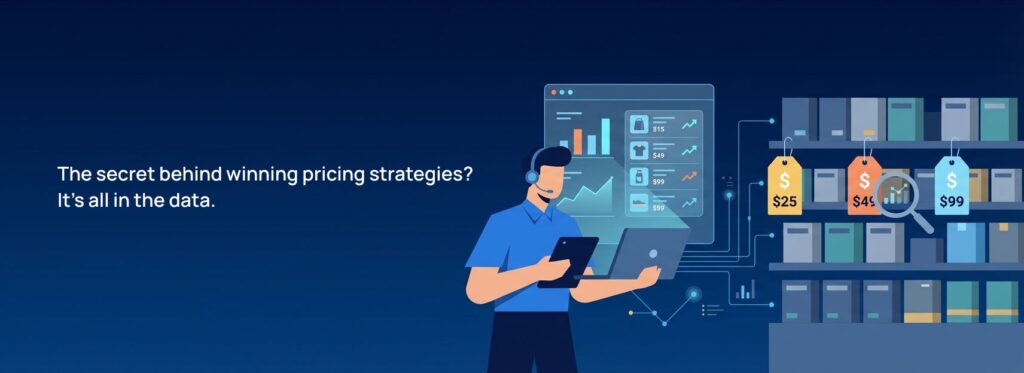
Setting prices for products is similar to adjusting the sails on a boat. If you don’t read the wind properly, you’ll either be stuck in place or heading in the wrong direction. Data is the wind that helps you steer a steady course.
In an economy where every dollar counts, businesses can’t afford to guess when it comes to pricing. They need data-driven pricing, the kind of precision that turns market insights into clear, actionable strategies.
This case study is about a consulting firm that used high-volume, accurate market data from Grepr to empower their clients. We’ll explore how the pricing decisions suggested from data-driven insights led to over $3 billion in EBITDA improvements.
And, how the right data, when handled correctly, can make all the difference in staying competitive and profitable in a price-sensitive world.
About the client
A pricing and analytics consulting firm based in the USA approached Grepsr for a large-scale home improvement sites data extraction project.
They specialize in helping manufacturers, distributors, and retailers optimize pricing strategies with data-driven pricing insights.
As of today, the consultant has collectively helped its clients generate billions.
Requirements
The consultant needed a dependable source of high-volume, accurate, and consistent market data from major home improvement and retail websites across multiple product categories and store locations.
By gathering insights from the high-volume and accurate data, they would be able to support data-driven pricing decisions for their clients.
To achieve that, they needed a data partner who could:
1. Deliver High-Volume Market Data
Collect large volumes of product and pricing data across multiple retailers, categories, and store locations to support comprehensive pricing analysis.
2. Ensure Accuracy and Consistency
Provide clean and structured datasets with consistent field coverage so analysts can confidently use the data in pricing models and recommendations.
3. Support Recurring Data Needs
Maintain consistent data delivery on scheduled runs so pricing decisions can be based on current market conditions.
4. Maintain Reliable Coverage at Scale
Ensure stable extraction across multiple sites and locations so the datasets remain dependable over time.
Complex site challenges and unforeseen obstacles
Even though the requirements were clear, the real battle was extracting data from sites fortified with heavy anti-scraping defenses.
Retailers like Home Depot made it a high-stakes game, where every step forward felt like overcoming a new roadblock.
1. Battling Site-Level Restrictions
Advanced anti-scraping measures like IP blocks, CAPTCHAs, and dynamic content loading made data retrieval inconsistent. Critical product listings were either missing or incomplete.
2. Managing High-Volume Extraction
The need to extract massive volumes of data across 18 categories and 5 store locations created immense scale challenges. Traditional scraping methods became slow and inefficient.
3. Dynamic Content and Data Complexity
Pages were loading dynamically, often with AJAX (Asynchronous JavaScript and XML), making it difficult to extract all necessary product details.
4. Prolonged Run Times and Instability
Scaling the extraction process resulted in long run times (up to 150 hours) and system instability. Any interruption meant a restart, further stretching deadlines and risking the reliability of the data.
Solution: Trial and error to find the silver bullet
To tackle each problem, we put our 12+ years of expertise to work. We tested different workarounds to figure out what worked best in collecting accurate data.
Phase 1: HTML Parsing
The first approach involved scraping visible HTML content directly from retailer websites. While this seemed to be a quick fix, it quickly became clear that many pages did not load all product information in the HTML source.
As a result, a large portion of the data was missing, requiring additional API calls. Even the API calls were often blocked by site restrictions, limiting the ability to collect comprehensive data.
Challenges faced:
- Partial data extraction from HTML source.
- Site restrictions causing data retrieval issues.
Phase 2: Proxy Solutions and Request Optimization
To circumvent IP blocks, various proxy solutions were tested. A provider’s proxy service was used to mask requests, but the solution required multiple retries per listing.
These were leading to extended run times (sometimes 120–150 hours) and inconsistent data retrieval. So, this phase demonstrated the limitations of using proxies and prompted further optimization efforts.
Challenges faced:
- High request failure rates.
- Long processing times, making large-scale scraping impractical.
Phase 3: API Integration with Limited Returns
The next step involved integrating an API service to pull data directly.
The API provided a structured way to retrieve data, but it had major limitations:
- Data return restrictions: The API returned a limited number of pages per request (e.g., only 15 pages per call), causing incomplete data extraction.
- Inconsistent store selection: The API sometimes returned data from random stores instead of the client’s targeted store locations, making the data unreliable for location-based insights.
Despite these issues, the team saw the potential in this approach and started adjusting it for more targeted data retrieval.
Challenges faced:
- Limited number of pages per API call.
- Random store data returned, complicating analysis.
Phase 4: Optimized API Usage with Store-Level Control
The breakthrough came when the team fine-tuned the API service to fully control store-level targeting. By passing specific store identifiers and category URLs directly into the API, we regained full control over data accuracy.
This adjustment allowed us to ensure data was pulled only from the specified stores.
The API’s now return fully rendered HTML, solving the issue of missing fields from partial data.
By ensuring that each request was processed efficiently within 7-10 seconds, the scraping solution became scalable again.
This final adjustment restored multiprocessing across all 90 store-category combinations, making the entire process more reliable and faster.
Outcome:
- Full control over store-level targeting, providing the expected data.
- Reduced runtime, ensuring faster and more reliable data extraction.
Impact on End Clients: Business Results from Data-Driven Pricing at scale
In the end, Grepsr successfully built a reliable market intelligence engine for the client.
This included large-scale web data extraction, anti-blocking strategies, and structured data delivery.
With this solution, we could provide consistent and accurate competitive market data across retailers, product categories, and store locations.
This enabled:
Better Pricing Decisions
Businesses set prices using real competitive market data instead of assumptions improving both competitiveness and revenue capture.
Higher Profit Margins
Clear visibility into competitor pricing helped identify opportunities for margin improvements across large product portfolios leading to meaningful EBITDA gains.
Faster Market Response
Continuous market monitoring enabled faster reactions to competitor price changes helping protect both sales and profitability.
Smarter Category Strategies
Store and category-level insights allowed businesses to adjust pricing more precisely instead of relying on broad pricing rules.
Confident Decision-Making
Reliable and consistent datasets gave pricing teams and leadership confidence to make strategic pricing and promotion decisions.
Measurable Financial Impact
These data-driven pricing improvements helped support over $3 billion in EBITDA gains across the consultant’s client base.
Strengthening the Relationship and Earning Client Trust
In the end, the success of this project went beyond just delivering great results. Our relationship with the client also got strengthened. By consistently providing high-quality data extraction, we earned their trust and demonstrated our capability to handle complex challenges.
As a result, our collaboration expanded, leading to additional data extraction projects and a deeper, long-term partnership. This trust has become the foundation for ongoing success and continued growth together.
Need accurate market data for smarter pricing? Grepsr’s data extraction services deliver the insights you need to stay competitive. Get started today.

Shaping a prosperous future with data-driven decisions
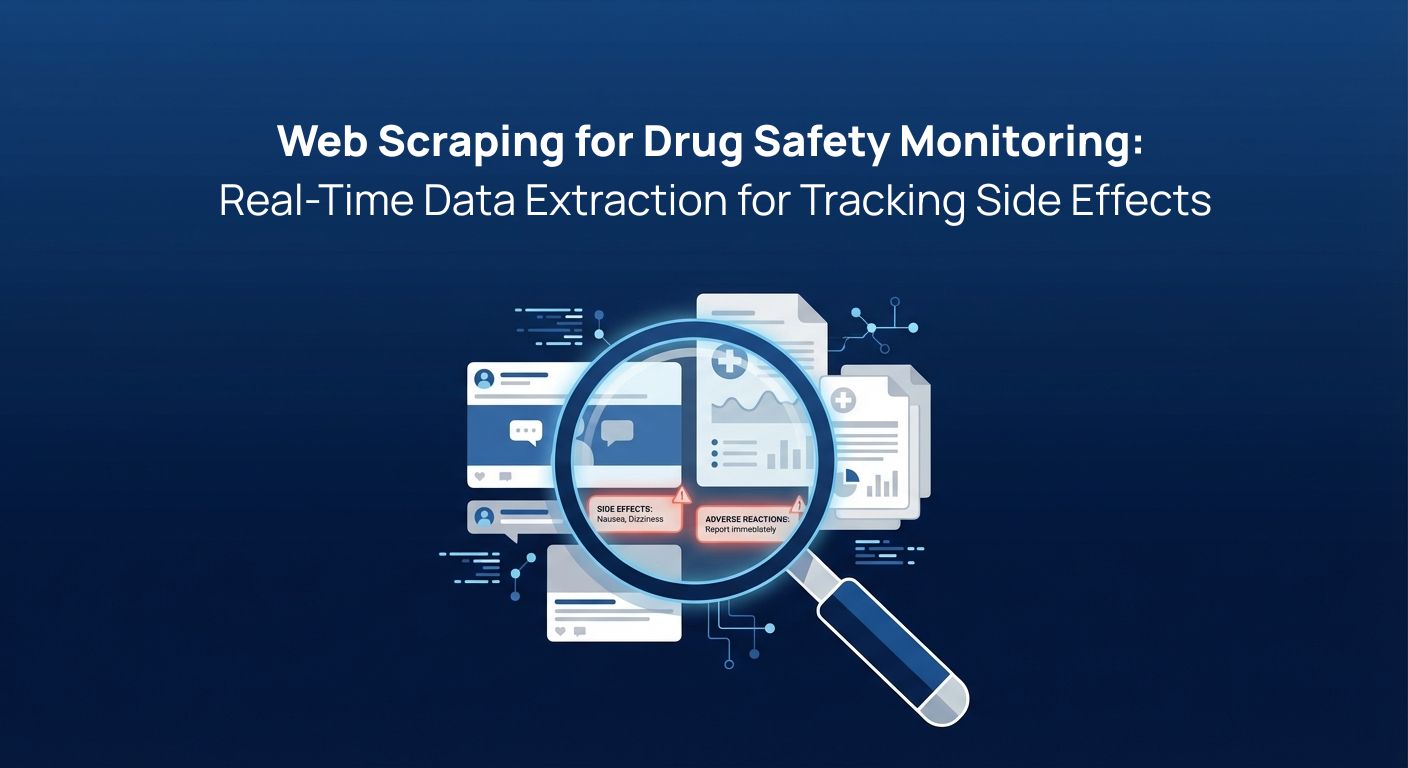
Web Scraping for Drug Safety Monitoring: Real-Time Data Extraction for Tracking Side Effects
Quick Summary: Web scraping and public web data extraction can help pharmaceutical companies detect drug side effects faster by monitoring publicly available discussions and medical publications. This case study explains how a pharma company used web scraping to collect real-time signals about adverse drug reactions and turn scattered public information into structured safety data. Imagine […]

Analyzing Celebrity Impact on Consumer Behavior through Social Media Data: Taylor’s Version
This case study takes a deep dive into the powerful influence of global pop star –Taylor Swift. By extracting social media data using carefully selected keywords and hashtags, we analyze patterns and trends that reflect the powerful gravitational pull of her influence on consumers. Continue reading for jaw-dropping insights. The Power of Celebrity Influence Celebrities […]
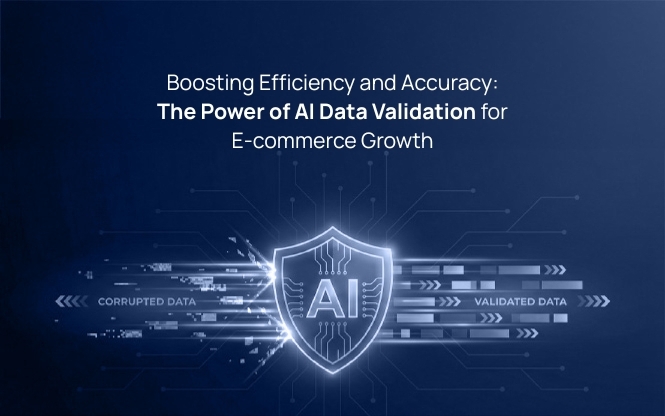
Boosting Efficiency and Accuracy: The Power of AI Data Validation for E-commerce Growth
In e-commerce, one wrong product detail can cost you a sale, or worse, a customer’s trust. As businesses scale, ensuring the accuracy and consistency of their data becomes an increasingly complex challenge. Similarly, for a growing electronics retailer, managing an expanding catalog of products with manual data validation was a recipe for errors, delays, and […]
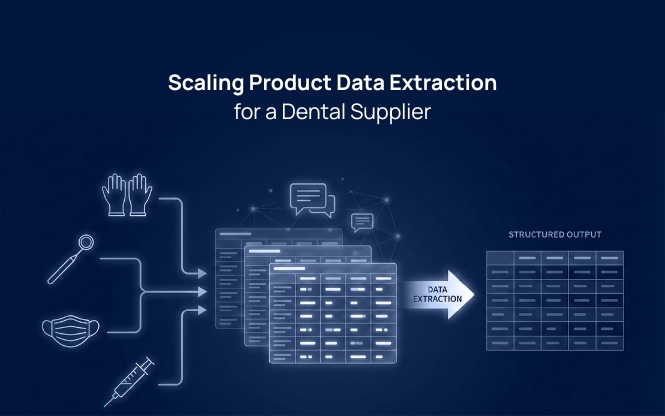
How Proactive Communication Scaled a Product Data Extraction Project for a Dental Supplier
The dental products retail industry is thriving in the online business sector. As more dental professionals turn to digital platforms for sourcing products, those who can harness the power of big data are gaining a competitive edge. One of the most effective ways to leverage this data is through product data extraction—the process of automatically […]
How a Leading Consumer Electronics Company Leveraged Automated Customer Review Extraction
Customer reviews serve as the backbone of product development and consumer insights. For one leading consumer electronics brand, these reviews were essential for fueling machine learning models that perform sentiment analysis and inform key business decisions. However, the frequent removal of reviews by platforms due to policy violations creates significant challenges, leaving gaps in the […]

Powering a Booking Intelligence System with Real-Time Hotel Data Extraction
In the travel industry, booking data is the pulse that reveals how markets move. It captures the patterns of demand, competition, and consumer intent like who’s booking, where, when, and at what price. This information fuels dynamic pricing, helps forecast occupancy, and enables travel platforms and hotels to anticipate market shifts rather than react to […]
How ESG Advisory Firms Can Leverage Automated Article Extraction for Smarter Insights
Government websites and official press releases are goldmines for ESG (Environmental, Social, Governance) intelligence. Every update – whether it’s a new regulation, policy amendment, or court directive can shape how ESG advisory firms advise their clients. Yet, these updates are scattered across hundreds of government portals, each with its own format, language, and publishing schedule. […]

Seamless Vehicle Data Extraction for a Leading Automotive Intelligence Provider
In the automotive industry, having access to comprehensive, real-time vehicle information is essential for making informed decisions. However, gathering this data from online sources comes with many challenges, such as security barriers, IP restrictions, and complex firewall configurations. These can significantly disrupt the flow of critical data needed to support key business operations. In this […]
High-Coverage POI Data Extraction For Powering FMCG Market Strategy
Finding the right retail locations is a lot like navigating a city without street signs – you might eventually reach your destination, but not without wasted time, missed turns, and lost opportunities. Points of Interest (POI) data acts as those street signs, offering clear visibility into where consumers shop, dine, and gather. For global brands […]
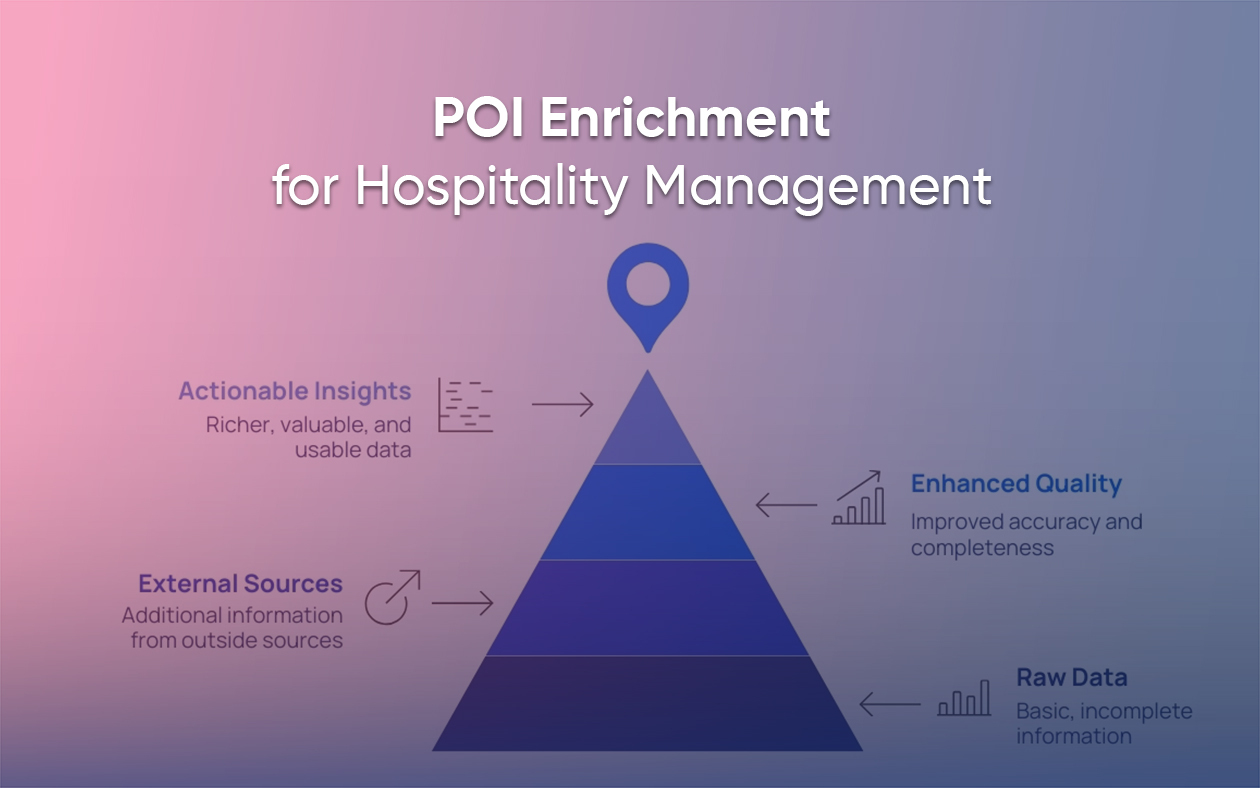
POI Data Enrichment for a Leading Hospitality Management Company
Data is valuable, but enriched data is priceless. Data enrichment is the process of adding value and further information to an existing dataset to improve its quality, accuracy, and completeness. It involves taking raw, incomplete data and enhancing it with additional and meaningful information from external sources. It turns a basic dataset into something richer, […]
Location Intelligence in Retail: Real Use Cases From Grocery Stores
Do you know what separates successful retailers from the ones that are closing down? One key factor is using location intelligence in retail to make informed decisions. Modern retailers scrape the internet to find out competitor store hours, demographic shifts, and foot traffic patterns to find impactful location strategies. And the numbers back it up. […]
How Web Scraping Saved a Vehicle Data Platform
How Grepsr rescued a vehicle data platform from a major OEM block—restoring 100% uptime, 99.9% data accuracy, and real-time API performance for VIN checks and insurance quotes.
Mapping LA Wildfire Impact with POI Data
POI data extraction and reverse geocoding transformed wildfire impact maps into precise addresses, enabling targeted disaster relief.
How a Real Estate Agency Gained Competitive Intelligence with Real-Time High-Quality Datasets
Gathering structured real estate data from various government sites and public records at scale poses significant challenges.
Unraveling Job Market Dynamics: Leveraging Data Analytics for Competitive Edge
The notion of hiring the “right” candidate needs clarification of what’s “right” for your organization. Starting from the alignment of values, motivation, ambition, and technical skills required for the position.

Introduction to Web Scraping & RPA
Web scraping automatically extracts structured data like prices, product details, or social media metrics from websites. Robotic Process Automation (RPA) focuses on automating routine and repetitive tasks like data entry, report generation, or file management.

Car Rental Data Unwrapped: Merry Miles and the Christmas Story in the UK
Delve into the festive drive as we analyze 50K+ car rental records from ‘Sixt – Rent a Car’ during December 2023. From the holiday surges on Christmas Eve to discovering budget-friendly gems like the Kia Picanto, come with us as we decode the Merry Miles of Christmas car rentals in the UK.

NYC POI Data Dynamics: Decoding Impermanence
Geographical locations or POIs are not entities that last for posterity. We collected NYC POI data to decode the various dynamics that may help executives make informed decisions within the backdrop of impermanence.

Revving Up for E-commerce Success in Q4: Leverage Web Scraping
Inflationary pressures, rising prices, and the looming possibility of an impending recession have dealt an unwarranted blow to e-commerce sales over the last three quarters.

Harnessing POI Insights: The Web Scraping Advantage
Points of Interest (POIs) are more than just points on a map. They are filled to the brim with actionable data like addresses, names, contact details, and working hours. POI data also includes images, which add a visual component to the data. With web scraping, you can get the advantage you need to harness POI insights.
Top Six E-commerce Datasets: Web Scraping Use Cases
The irreversible rise of e-commerce has been a similar phenomenon around the world. In 1998, the entirety of the e-commerce market stood at just $5 billion.
Analyzing US Job Postings Data to Understand Job Market & Economy
The US economy was forecast to spiral into a recession in 2023. Yet, despite fears, if current job listings and hiring trends are to be believed, the current economic reality appears to be quite different. The robust nature of the current US job market is proving to be one of the main drivers of the country’s strong economy.

Enabling Market Expansion: Data Refinement at Grepsr
Any data is only as good as the insights derived from it. However, before we begin the analysis, the data must be put through adequate pre-processing techniques that standardize, aggregate, and categorize the dataset.
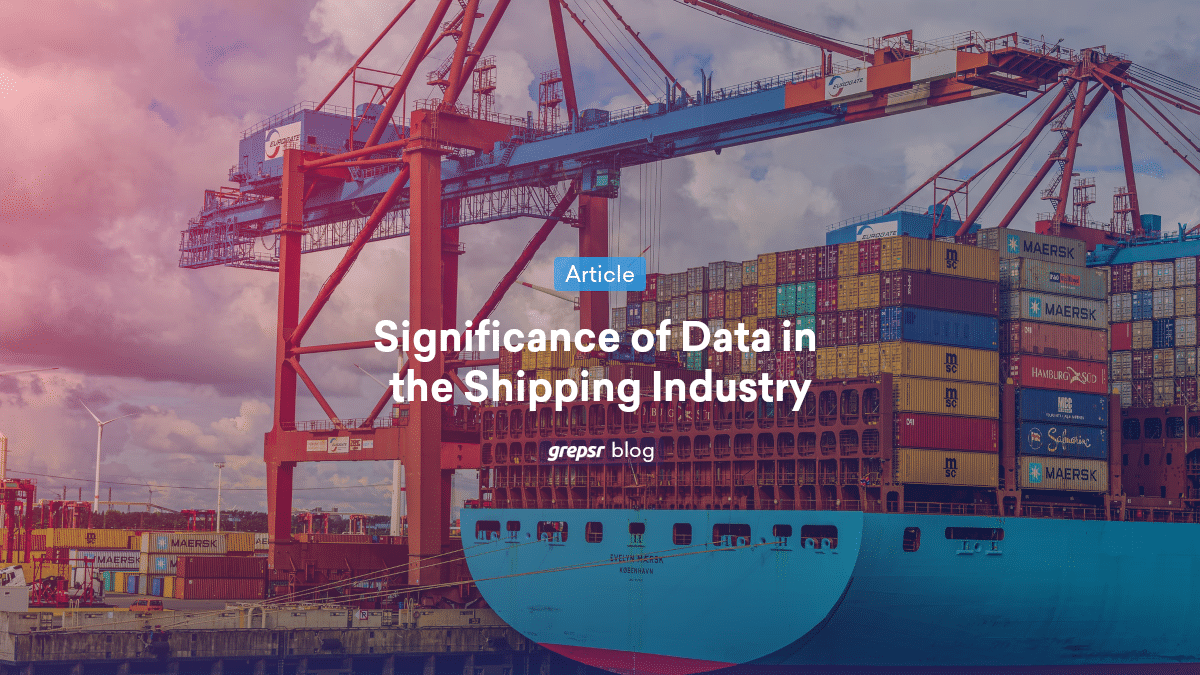
Impact of Shipping Data in the Shipping Industry
Before the pandemic, the global supply chain relied on predictable inventory flows. There was high schedule reliability, which meant the carriers usually followed the same schedules. This ensured the arrival of inventory in time, replenishment of stores, and constant operation of the factories.
