
Announcement: Grepsr has been ranked as the #1 web scraping service provider by Tech Times!


Search here
Can't find what you are looking for?
Feel free to get in touch with us for more information about our products and services.
 Use Cases
Beyond the Death: Turning Obituary Data Into Fraud Detection Signals

Every year, pension funds and insurers pay out benefits to people who are no longer alive to receive them. The infrastructure meant to catch a death hasn’t caught up yet, so checks keep getting cut and policies stay active while the record goes unverified.
The Social Security Death Master File (DMF) is the default source that most financial institutions usually rely on. However, it lags the actual date of death by 4 to 6 months. In that window, checks can keep getting cut, policies stay active, and beneficiary records go unverified.
To close that gap, death audit and locator service providers work with pension funds, insurers, banks, and healthcare providers.
How? With a simple insight:
Obituaries are often published within days of a death, long before any government database catches up. If you could reliably turn obituary listings into structured, searchable data, you’d have a fraud and compliance signal faster than almost anything else available.
But there’s a catch, obituaries are not built to be structured data. They’re prose, written by grieving families, published on funeral home and memorial sites with no consistent format.
Getting a name, a date of birth, or a service location out of that text reliably, and at scale, meant solving a very different kind of extraction problem than most scraping projects Grepsr faces.
The Client and Their Requirements
This is a story about a client that is a death audit and locator service provider. They work with pension funds, insurers, banks, and healthcare providers to catch deaths faster than traditional record sources.
Their business depends on closing exactly the kind of gap described above: the earlier a death is confirmed, the sooner a benefit payment stops, a policy gets flagged, or a beneficiary record gets updated.
They came to Grepsr with a specific, two-source obituary data project:
- For one site they requested a full scrape of every available listing, followed by a daily scrape to catch new obituaries as they’re published. This wasn’t a one-time pull; it needed to run as an ongoing, recurring pipeline to keep pace with the site.
- For another site, instead of an exhaustive crawl, the client wanted a randomized sample of 100,000 listings drawn from across the U.S. So they can have a representative dataset without the overhead of scraping the entire site.
Each obituary had to be turned into structured and usable fields:
Full name; date of birth, date of death, and age; the obituary text itself; the source URL; funeral home name and address; funeral service date and location, and more.
The Real Challenge: Turning Prose into Data
Usually, the data extraction projects Grepsr gets are structured, with prices in price fields, product names in title tags, and everything else following a predictable layout. Obituaries, on the other hand, don’t work that way.
They’re a short piece of prose written by a grieving family member or funeral home staffer. The facts a fraud-detection system actually needs, like date of birth, date of death, and age, are buried inside sentences rather than sitting in labeled fields.
That created a few distinct extraction problems.
Names had to be split without a reliable pattern.
Full names on the page came as a single string, sometimes with a nickname in quotes, a maiden name in parentheses, or a suffix. Splitting that reliably into first, middle, and last name meant handling different formats for each individual obituary.
Dates and age lived inside narrative sentences, not fields.
A date of birth or death might appear as “born on March 4, 1952” in one obituary and “entered eternal rest on 3/4/2021 at the age of 68” in another. There was no consistent structure to hook into, so DOB, DOD, and age all had to be parsed out of free text with enough reliability to trust downstream.
Service details multiplied per record.
A single obituary could reference several distinct events: a visitation, a funeral mass, a graveside burial, each with its own date and location. Some records in the dataset carried as many as six separate events. Each one needed to be captured as its own structured entry rather than flattened into a single field.
Funeral home and publisher attribution weren’t standardized across sites.
Obituary sites present this information differently, so the extraction logic had to normalize funeral home name, address, and “published by” text consistently across two sites that don’t share a layout.
What especially made it hard was doing it at scale, across two different sites, on a recurring daily basis, without the parsing breaking every time an obituary was worded a little differently than the last one.
The Approach
Grepsr built two distinct obituary data collection strategies matched to two distinct goals, rather than treating both sites as a single uniform scrape.
- For the primary obituary platform, the initial run captured every available listing to establish a full baseline.
The daily incremental scrape that followed didn’t re-crawl the entire site each time; it used date-wise filtering to isolate newly published listings and exclude records already captured, keeping the pipeline efficient as the dataset grew. - For the secondary memorial site, the 100,000-listing sample was pulled through random URL sampling across the site’s U.S. listings. Rather than targeting specific regions or date ranges, the resulting dataset reflected a broad, unbiased cross-section rather than a skewed slice.
- Parsing free-text obituaries into structured fields, names, dates, ages, and service events, isn’t something Grepsr trusted to automation alone. A human-in-the-loop QA step reviewed the collected obituary data output before delivery, catching the edge cases that inconsistent obituary formatting is prone to producing. Such as a misread nickname as a middle name, a service date parsed from the wrong sentence, and so on.
- Grepsr delivered the final dataset to the client as a CSV file via email, on the same recurring cadence.
The Outcome
With this ongoing project, now our client, the death audit service provider can
- Get an early death-detection signal that financial and healthcare institutions couldn’t get from government death records alone. All before a stale record turns into an overpayment, an unflagged policy, or an unverified beneficiary claim.
- Feed obituary data directly into their own matching and verification systems. Since it arrives pre-structured- name, DOB, DOD, funeral details, service events, instead of as raw text they’d otherwise have to clean up first.
- Trust the data enough to act on it quickly. Because a human-in-the-loop QA step means efficiency never comes at the cost of accuracy.
- Offer the institutions they serve a faster confirmation loop, a death identified through an obituary, verified, and surfaced well before it would show up through traditional channels.
- Strengthen their own value proposition to pension funds, insurers, and banks. Since faster and more reliable death detection translates directly into reduced overpayment and fraud exposure for the clients they serve.
Takeaway
The most valuable data isn’t always sitting in a structured database somewhere, waiting to be queried. Sometimes it’s published every day, in plain text, by people who have no idea they’re creating a signal anyone else needs.
Obituaries were never designed to be a fraud detection tool. But once that free text gets parsed, structured, and delivered reliably, it becomes exactly that: a faster, more human source of truth than the records built to replace it.
This project is also a reminder that web scraping, done well, isn’t just pulling records off a page. It’s deriving meaning from what’s already public. Anyone can grab the text of an obituary.
Turning a grieving family’s words into a clean, structured, trustworthy dataset, at scale, every single day, is a different problem entirely. That’s the part that actually matters.
If your business depends on knowing something before everyone else does, the data you need might already be public. It just hasn’t been scraped and structured yet.
Talk to Grepsr about a tailored scraping solution built to surface the signals your business can’t afford to miss. \

Shaping a prosperous future with data-driven decisions

Beyond the Data: Consulting for Smarter, POI-Driven Business Decisions
Planning a business expansion is similar to plotting a journey on a map. Just a destination is not enough – you need the right routes and key landmarks along the way.In the same way, identifying the ideal locations for growth starts with the right data, but raw data alone is like a map with no […]
Before It Trends: Social Listening at Scale for a Global FMCG Brand
Most brands don’t know what to monitor when they come to you. There’s no keyword list waiting to be handed over, no tidy set of hashtags someone already tracks. That decision hasn’t been made yet, and it turns out to be most of the work. Meanwhile, the thing worth tracking is already moving. New words […]
From Product Catalogue to AI Citation: AI Prompt Monitoring for Brand Visibility at Scale
Each passing day, we users skip traditional search engines like Google and Bing for our queries. We directly ask an AI instead, like ChatGPT, Perplexity, or Gemini, and act on whatever answer comes back, often without checking a second source. Even when making a purchase decision, buyers rely on AI. The response is assembled from […]

Competitor Location Monitoring at Scale: Tracking Dealer Network Change Over Time
Markets shift constantly, and most of that shifting happens quietly. A competitor expands into a new region, pulls back from another, and neither move comes with an announcement. For a manufacturer trying to track where rivals are gaining ground, the only real signal is where their dealers show up next. But here’s the thing: a […]

The Hidden Number: How Grepsr Cracked Real-Time Stock Data for a Major Retail Network
Some websites don’t hide their data behind a locked door; they hide it behind a maze. A major retailer’s stock levels were never listed anywhere on its site; the only way to find the real number was to keep adding items to a cart until it broke. This is how Grepsr turned that breaking point […]
The Data Marathon: How Grepsr Keeps Millions of Health Insurance Records and 350+ Data Pipelines Flowing
A partnership story from the health insurance data industry When a New York-based health insurance data and API platform set out to build a standardised data layer for the employee benefits industry, the product vision was straightforward: Give brokers, benefits administrators, and health insurance carriers a single, standardised data layer including provider networks, plan details, […]

Web Scraping for Competitive Market Insights: Powering $3 Billion in EBITDA Through Data-Driven Pricing
Setting prices for products is similar to adjusting the sails on a boat. If you don’t read the wind properly, you’ll either be stuck in place or heading in the wrong direction. Data is the wind that helps you steer a steady course. In an economy where every dollar counts, businesses can’t afford to guess […]
Web Scraping for Drug Safety Monitoring: Real-Time Data Extraction for Tracking Side Effects
Quick Summary: Web scraping and public web data extraction can help pharmaceutical companies detect drug side effects faster by monitoring publicly available discussions and medical publications. This case study explains how a pharma company used web scraping to collect real-time signals about adverse drug reactions and turn scattered public information into structured safety data. Imagine […]

Analyzing Celebrity Impact on Consumer Behavior through Social Media Data: Taylor’s Version
This case study takes a deep dive into the powerful influence of global pop star –Taylor Swift. By extracting social media data using carefully selected keywords and hashtags, we analyze patterns and trends that reflect the powerful gravitational pull of her influence on consumers. Continue reading for jaw-dropping insights. The Power of Celebrity Influence Celebrities […]

Boosting Efficiency and Accuracy: The Power of AI Data Validation for E-commerce Growth
In e-commerce, one wrong product detail can cost you a sale, or worse, a customer’s trust. As businesses scale, ensuring the accuracy and consistency of their data becomes an increasingly complex challenge. Similarly, for a growing electronics retailer, managing an expanding catalog of products with manual data validation was a recipe for errors, delays, and […]
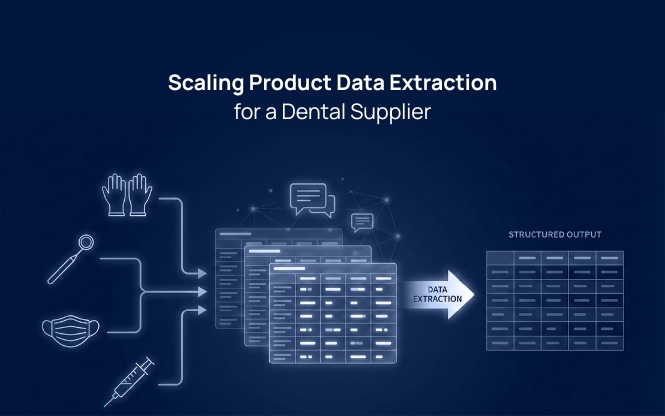
How Proactive Communication Scaled a Product Data Extraction Project for a Dental Supplier
The dental products retail industry is thriving in the online business sector. As more dental professionals turn to digital platforms for sourcing products, those who can harness the power of big data are gaining a competitive edge. One of the most effective ways to leverage this data is through product data extraction—the process of automatically […]
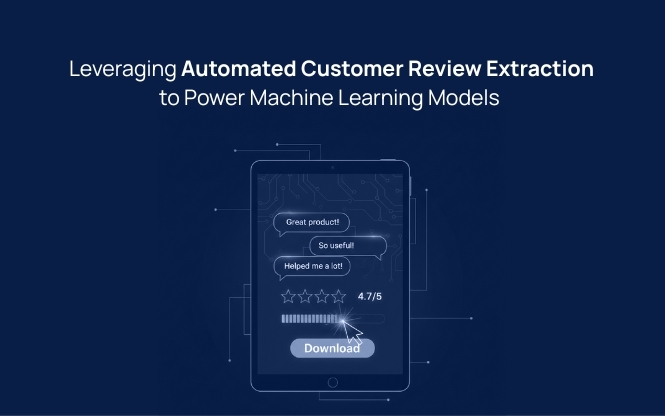
How a Leading Consumer Electronics Company Leveraged Automated Customer Review Extraction
Customer reviews serve as the backbone of product development and consumer insights. For one leading consumer electronics brand, these reviews were essential for fueling machine learning models that perform sentiment analysis and inform key business decisions. However, the frequent removal of reviews by platforms due to policy violations creates significant challenges, leaving gaps in the […]

Powering a Booking Intelligence System with Real-Time Hotel Data Extraction
In the travel industry, booking data is the pulse that reveals how markets move. It captures the patterns of demand, competition, and consumer intent like who’s booking, where, when, and at what price. This information fuels dynamic pricing, helps forecast occupancy, and enables travel platforms and hotels to anticipate market shifts rather than react to […]
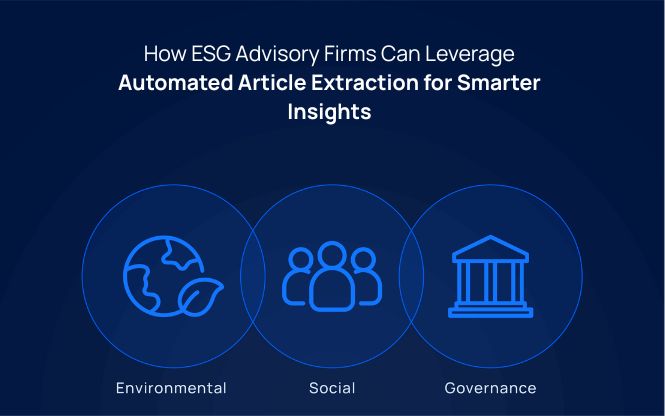
How ESG Advisory Firms Can Leverage Automated Article Extraction for Smarter Insights
Government websites and official press releases are goldmines for ESG (Environmental, Social, Governance) intelligence. Every update – whether it’s a new regulation, policy amendment, or court directive can shape how ESG advisory firms advise their clients. Yet, these updates are scattered across hundreds of government portals, each with its own format, language, and publishing schedule. […]

Seamless Vehicle Data Extraction for a Leading Automotive Intelligence Provider
In the automotive industry, having access to comprehensive, real-time vehicle information is essential for making informed decisions. However, gathering this data from online sources comes with many challenges, such as security barriers, IP restrictions, and complex firewall configurations. These can significantly disrupt the flow of critical data needed to support key business operations. In this […]
High-Coverage POI Data Extraction For Powering FMCG Market Strategy
Finding the right retail locations is a lot like navigating a city without street signs – you might eventually reach your destination, but not without wasted time, missed turns, and lost opportunities. Points of Interest (POI) data acts as those street signs, offering clear visibility into where consumers shop, dine, and gather. For global brands […]
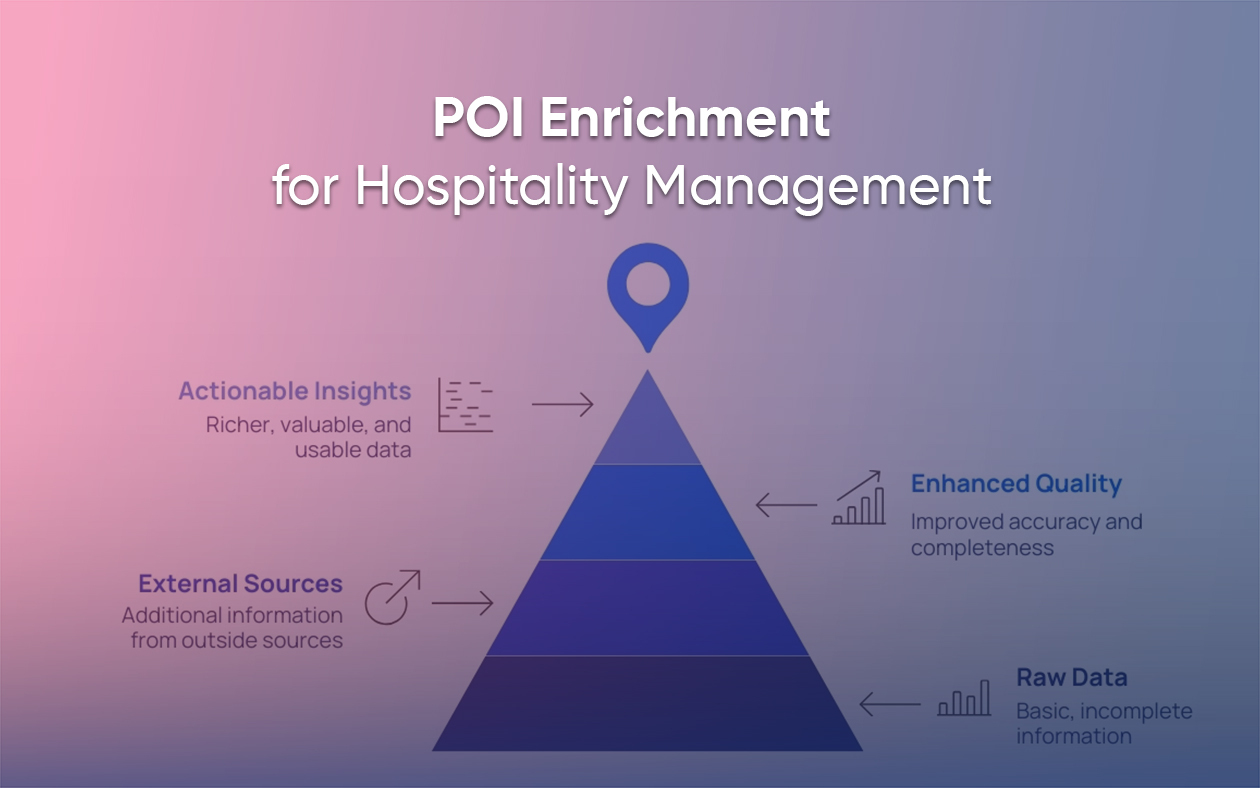
POI Data Enrichment for a Leading Hospitality Management Company
Data is valuable, but enriched data is priceless. Data enrichment is the process of adding value and further information to an existing dataset to improve its quality, accuracy, and completeness. It involves taking raw, incomplete data and enhancing it with additional and meaningful information from external sources. It turns a basic dataset into something richer, […]
Top Six E-commerce Datasets: Web Scraping Use Cases
The irreversible rise of e-commerce has been a similar phenomenon around the world. In 1998, the entirety of the e-commerce market stood at just $5 billion.
Location Intelligence in Retail: Real Use Cases From Grocery Stores
Do you know what separates successful retailers from the ones that are closing down? One key factor is using location intelligence in retail to make informed decisions. Modern retailers scrape the internet to find out competitor store hours, demographic shifts, and foot traffic patterns to find impactful location strategies. And the numbers back it up. […]
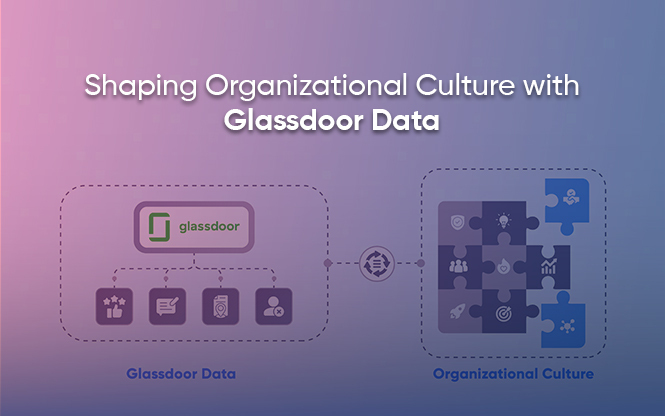
Shaping Organizational Culture with Glassdoor Data
Glassdoor Data offers a detailed look into organizational culture by analyzing employee reviews and ratings. This data provides insights into company dynamics, regional trends, and the impact of major events, helping businesses improve employee satisfaction and cultural alignment. Netflix’s culture deck, crafted by Reed Hastings, champions employee autonomy and creativity, even offering unlimited vacations as […]
How Web Scraping Saved a Vehicle Data Platform
How Grepsr rescued a vehicle data platform from a major OEM block—restoring 100% uptime, 99.9% data accuracy, and real-time API performance for VIN checks and insurance quotes.
Mapping LA Wildfire Impact with POI Data
POI data extraction and reverse geocoding transformed wildfire impact maps into precise addresses, enabling targeted disaster relief.
How a Real Estate Agency Gained Competitive Intelligence with Real-Time High-Quality Datasets
Gathering structured real estate data from various government sites and public records at scale poses significant challenges.

What Is Shipping Data & Why It’s Critical for Logistics Performance
Before the pandemic, the global supply chain relied on predictable inventory flows. There was high schedule reliability, which meant the carriers usually followed the same schedules. This ensured the arrival of inventory in time, replenishment of stores, and constant operation of the factories.
Unraveling Job Market Dynamics: Leveraging Data Analytics for Competitive Edge
The notion of hiring the “right” candidate needs clarification of what’s “right” for your organization. Starting from the alignment of values, motivation, ambition, and technical skills required for the position.

Enabling Market Expansion: Data Refinement at Grepsr
Any data is only as good as the insights derived from it. However, before we begin the analysis, the data must be put through adequate pre-processing techniques that standardize, aggregate, and categorize the dataset.

Introduction to Web Scraping & RPA
Web scraping automatically extracts structured data like prices, product details, or social media metrics from websites. Robotic Process Automation (RPA) focuses on automating routine and repetitive tasks like data entry, report generation, or file management.

Car Rental Data Unwrapped: Merry Miles and the Christmas Story in the UK
Delve into the festive drive as we analyze 50K+ car rental records from ‘Sixt – Rent a Car’ during December 2023. From the holiday surges on Christmas Eve to discovering budget-friendly gems like the Kia Picanto, come with us as we decode the Merry Miles of Christmas car rentals in the UK.
NYC POI Data Dynamics: Decoding Impermanence
Geographical locations or POIs are not entities that last for posterity. We collected NYC POI data to decode the various dynamics that may help executives make informed decisions within the backdrop of impermanence.

Revving Up for E-commerce Success in Q4: Leverage Web Scraping
Inflationary pressures, rising prices, and the looming possibility of an impending recession have dealt an unwarranted blow to e-commerce sales over the last three quarters.

Harnessing POI Insights: The Web Scraping Advantage
Points of Interest (POIs) are more than just points on a map. They are filled to the brim with actionable data like addresses, names, contact details, and working hours. POI data also includes images, which add a visual component to the data. With web scraping, you can get the advantage you need to harness POI insights.
Analyzing US Job Postings Data to Understand Job Market & Economy
The US economy was forecast to spiral into a recession in 2023. Yet, despite fears, if current job listings and hiring trends are to be believed, the current economic reality appears to be quite different. The robust nature of the current US job market is proving to be one of the main drivers of the country’s strong economy.
