




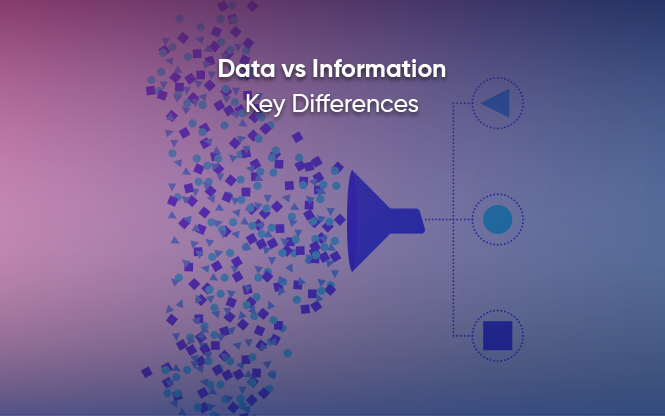
Data Vs Information: What’s the Difference? (2026 Guide)
Quick Answer: Data refers to raw, unprocessed facts and figures collected from various sources, while information is data that has[…]
Latency vs Accuracy Tradeoffs in Large-Scale Data Extraction Systems
Large-scale data extraction systems operate under constant pressure to balance speed and precision. On one hand, businesses want fresh data[…]
Handling Unstructured to Structured Transformation at Scale
Most of the world’s data is unstructured. Web pages, PDFs, documents, and semi-structured content contain valuable information, but they are[…]
Data Quality Assurance in Web Scraping: Validation, Testing, and QA Pipelines
Web scraping pipelines are only as valuable as the data they produce. Even when extraction succeeds, issues like missing fields,[…]
Change Detection vs Data Extraction: When to Use Each and Why It Matters
Modern data teams rely on web data for a wide range of use cases including price tracking, competitive monitoring, and[…]

How Enterprises Evaluate Data Providers: Procurement Criteria and Red Flags
Selecting a data provider is a high-stakes decision for enterprises. The quality, reliability, and governance of external data directly impact[…]
Multi-Source Data Fusion: Combining Web Scraped Data with APIs and Internal Data
Enterprises rarely rely on a single source of data. Instead, they combine web scraped data, third party APIs, and internal[…]

Scaling Scrapers Across Regions: Handling Geo-Restrictions and Localization
The web is not uniform. Content varies by geography, language, and access policies. A website that looks and behaves one[…]

Ethical Web Data Collection: Compliance Frameworks for Enterprises
As organizations rely more on web data to power analytics, AI systems, and competitive intelligence, the question of how that[…]
Data Normalization at Scale: Turning Messy Web Data into Analytics-Ready Datasets
Web data rarely arrives in a clean, structured, and consistent format. It comes from diverse sources, each with its own[…]
