announcement-icon

Web Scraping Sources: Check our coverage: e-commerce, real estate, jobs, and more!

search-close-icon

Search here

Can't find what you are looking for?

Feel free to get in touch with us for more information about our products and services.

User Behavior Analytics: Web Data for UX Optimization

Most e-commerce teams already collect some level of user analytics, but many still struggle to turn that information into better journeys. They know traffic is coming in, pages are being viewed, and carts are being abandoned, yet the real reasons behind those patterns often stay hidden. That is why e-commerce user behavior data matters so much. When you look beyond topline metrics and study how people move, hesitate, compare, and drop off, you get a much clearer view of what needs to change.

The strongest UX programs do not rely on a single source. They combine clickstream analysis, session replay data, selective UX scraping, and public market signals to understand both what users are doing on your site and what expectations they bring from the wider digital landscape. That broader view is where a managed data partner like Grepsr becomes useful. Instead of leaving teams stuck in manual tracking, Grepsr helps transform scattered web data into reliable inputs for analysis, segmentation, testing, and smarter UX decisions.

Why User Behavior Analytics Matters

Good UX work begins with observation, not guesswork. A checkout flow may look simple in a design review and still fail in real life because users do not trust a field, cannot find delivery details, or get distracted on mobile. A category page may have strong traffic but low engagement because filters are confusing or product comparisons require too many steps. User behavior analytics helps teams see these gaps before they become revenue leaks.

This also matters beyond design. Behavior data supports merchandising, retention, and personalization decisions because it reveals intent at a much more practical level. When businesses connect first-party analytics with structured external signals from search, marketplaces, reviews, and competitor experiences, they can optimize for real behavior rather than assumptions. Grepsr’s E-Commerce Data Extraction Services is a useful example of that approach, which focuses on dependable, production-ready data rather than one-off scraping.

Clickstream Analysis: Tracing the User Journey

Clickstream analysis is one of the clearest ways to understand navigation behavior. It shows the sequence of actions users take, which pages they enter through, what they click next, where they loop back, and where they disappear. On an e-commerce site, this helps teams answer practical questions very quickly. Are visitors moving from search to product pages, then abandoning before applying filters? Are mobile shoppers reaching checkout but leaving when shipping costs appear?

This is also where drop-off analysis becomes useful. A single exit point is not always a problem, but repeated exits at the same step usually signal friction. When you compare those paths by traffic source, device, category, or customer cohort, patterns become easier to act on. That is how teams begin to segment customers using web-based data in a meaningful way. New visitors, price-sensitive shoppers, loyal repeat customers, and high-intent comparison users rarely behave the same way, so they should not all be pushed through the same journey.

For most teams, the challenge is not whether clickstream data exists. It is whether the data is clean, connected, and useful enough to support decisions. Tools such as Google Analytics provide event-based journey data and privacy controls, but many businesses still need additional structure, enrichment, and external context. 

Session Replay Data: Observing User Interactions

If clickstream analysis tells you where users went, session replay shows you how they behaved along the way. This can reveal hesitation that aggregated reports never capture. You might see repeated cursor movement around a form label, rapid back-and-forth scrolling on a product page, or rage clicks on an element that looks interactive but does nothing. Those moments are often the difference between a page that seems fine in reporting and a page that quietly frustrates real users.

Session replay becomes even more useful when paired with heatmaps and user flow tools. Platforms like Microsoft Clarity and its heatmaps documentation make it easier to see where attention focuses, where users stop engaging, and which parts of a page go unnoticed. For UX teams, this is especially valuable on collection pages, landing pages, and checkout steps, where layout changes can directly influence conversion.

The key is to treat session replay data as a diagnosis, not spectacle. The goal is not to watch random recordings all day. The goal is to pair replay patterns with measurable business questions. Why are users abandoning a flow after selecting size, and why does one landing page attract clicks but not scroll depth? Why do mobile users interact differently from desktop users? Once teams frame replay data around such questions, it becomes much easier to prioritize fixes and measure improvement.

UX Scraping: Expanding the View Beyond Your Own Site

UX scraping is where many teams widen their perspective. Your own analytics can explain what users do on your site, but it cannot always explain what shaped their expectations before they arrived. Publicly available digital signals from search results, marketplace listings, product pages, reviews, navigation patterns, pricing displays, delivery promises, and competitor content can all influence user behavior. When these signals are extracted in a structured way, they become a useful input for UX benchmarking.

For example, if users repeatedly exit your PDPs to compare elsewhere, scraped competitor page structures may help explain why. Another site may surface delivery dates earlier, display trust badges more clearly, or reduce the amount of effort needed to compare variants. In those cases, UX optimization is not only an internal design exercise. It becomes a market-alignment exercise. This is one reason Grepsr’s article on tracking demand, trends, and consumer signals is relevant here. The same external signals that help forecasting teams can also help UX and product teams understand the environment users are reacting to.

Grepsr is particularly well-suited to this layer because it can collect and normalize public web data at scale without forcing in-house teams to maintain brittle pipelines. It works around consumer trend forecasting, and the Tradeswell customer story shows the broader value of structured external data: once the collection becomes dependable, teams can stop chasing raw inputs and start using them to improve decisions.

Building a Data-Driven UX Strategy

The best UX strategies usually combine four layers. First, collect clean, first-party behavioral signals, such as pathing, clicks, scroll depth, and conversion events. Second, review session-level evidence to better understand friction. Third, layer in external web data that helps benchmark navigation, content, and trust signals against what users see elsewhere. Fourth, run changes through testing so that every improvement is measured instead of assumed.

That process is also what makes A/B testing more useful. When teams test without context, they often experiment with surface-level changes that do not solve the real problem. But when tests are informed by behavior analytics and structured public data, they become more strategic. You are not only changing a headline or moving a button. You are testing whether a different delivery message, richer comparison layout, simpler filter pattern, or stronger social proof better matches what your users are already responding to across the market.

This is also the right place to be careful with privacy. Personalization can improve relevance, but it should never come at the expense of user trust. Teams should favor aggregated, consent-aware, and anonymized analysis wherever possible, especially when combining multiple data streams. Grepsr’s piece on privacy-compliant ecommerce personalization is a strong internal reference here because it frames personalization as a data-quality and governance problem rather than just a targeting opportunity.

In practice, that means businesses should use behavior data to simplify journeys, reduce friction, and create more relevant experiences without becoming intrusive. Done well, UX optimization feels natural to the customer. They simply find what they need faster, understand the offer more clearly, and complete the journey with less effort.

Conclusion: Turn Behavior Data Into Better UX Decisions

User behavior analytics works best when it moves beyond dashboard watching and becomes part of how teams design, prioritize, and test. E-commerce user behavior data can show where users drop off, what confuses them, how different segments navigate, and which experiences no longer align with market expectations. Once that insight is enriched with external web data, it becomes even more useful for UX optimization, conversion improvement, and long-term product strategy.

That is where Grepsr fits naturally. Through managed web data extraction, e-commerce data services, and workflow-ready delivery through the Grepsr API, businesses can bring external behavior signals, public UX benchmarks, and structured market data into the same decision-making process. The result is a UX program that is less reactive, more evidence-based, and far more useful to the business.

FAQs: E-commerce User Behavior Data

1. What is e-commerce user behavior data?

It is the information created when users interact with an e-commerce site, including page paths, clicks, scrolls, filters, cart actions, and conversion events. When analyzed properly, it helps teams understand intent, friction, and opportunities to improve UX.

2. How do teams collect clickstream and session data?

Most teams collect first-party event data through analytics platforms and pair it with session replay or heatmap tools. The real challenge is usually not the collection itself, but organizing the data so it is easy to compare across pages, devices, and customer segments.

3. What is UX scraping in this context?

UX scraping refers to extracting publicly available web signals that help benchmark user experience, such as page structure, listing content, trust elements, review placement, delivery messaging, or competitor flow patterns. It adds external context to your own analytics.

4. How can user behavior analytics reveal drop-off points?

By tracing navigation paths and reviewing session evidence, teams can see where visitors repeatedly hesitate or exit. Those repeated exits often point to unclear messaging, poor navigation, weak trust signals, or unnecessary friction in the flow.

5. Can web-based data help segment customers?

Yes. Behavior patterns can be grouped into useful segments such as first-time visitors, repeat customers, comparison shoppers, or high-intent users. Those segments can then guide priorities for UX changes, merchandising, messaging, and testing.

6. How should teams balance personalization and privacy?

They should prioritize consent-aware tracking, aggregate analysis where possible, and careful governance around how user data is stored and activated. Personalization should improve relevance without becoming invasive or hard to explain.

7. Where does Grepsr add the most value?

Grepsr is most useful when teams need reliable, structured external web data to support analysis, benchmarking, personalization, and strategic UX work without building and maintaining complex internal collection pipelines.

BLOG

A collection of articles, announcements and updates from Grepsr

ecommerce fraud detection web data

Fraud Prevention in E-commerce with Web Scraping

Fraud in e-commerce rarely manifests as a single obvious event. It appears as small signals spread across many places: a suspicious seller pattern on a marketplace, a cluster of reused shipping details, repeated account access attempts, or sudden product and pricing changes that do not fit normal demand. For fraud analysts, security teams, and risk […]

marketplace monitoring web scraping

Monitoring Marketplaces: Amazon, eBay, and Beyond

Marketplaces move fast. Prices change midday, sellers rotate in and out, ratings shift after a single viral review, and a “great listing” can quietly lose the Buy Box without anyone noticing until sales dip. That is why web scraping for marketplace monitoring has become a daily need for marketplace sellers, brand managers, and retail analysts. […]

real estate risk assessment data

Property Risk Assessment with Alternative Data

Risk shows up in real estate long before it appears in a valuation report. A neighborhood can change. A drainage issue can turn into recurring flood losses. A new road project can improve accessibility or bring noise and safety concerns. For risk analysts, underwriters, and real estate developers, the challenge is not “finding data.” It […]

real estate lead generation data

Lead Generation for Real Estate Using Web Data

Real estate lead generation has changed. It is no longer just about running ads and hoping the phone rings. Today, the teams that win are the ones who build a steady pipeline of intent signals, organize them fast, and follow up in a way that feels relevant. That is where real estate lead generation data […]

NLP-and-Web-Scraping

NLP and Web Scraping: Extracting Insights from Text Data

The internet has answers to questions people never ask in surveys. Why customers really dislike a feature. What competitors are quietly changing. Which risks keep surfacing in local conversations before they appear in official reports? That is precisely where NLP web scraping shines. Web scraping brings in real-world text at scale, and NLP turns that […]

data lake web scraping

Data Lakes vs. Data Warehouses: Storing Massive Web Data

If your team collects a large amount of information from the web, you need a centralized location for it. The right home enables faster analysis, keeps costs under control, and simplifies governance. The two most common choices are a data lake web scraping and a data warehouse web scraping. They solve different problems. In many companies, they […]

webhook web scraping

Event-Driven Workflows: Triggering Actions from Web Data Events

Data on the web never stands still. Prices change, competitors update their pages, and new content appears in minutes instead of days. Teams that stay ahead are the ones who react to these changes as they happen, not hours later. Event-driven workflows, often powered by webhook web scraping, make this possible by continuously monitoring defined […]

Building-Training-Data-Pipelines-for-Machine-Learning

Building Training Data Pipelines for Machine Learning

Great models start with great data. A training data pipeline is the engine that turns messy inputs into clean, valuable datasets your models can trust. When this engine is well designed, experiments move faster, model quality improves, and production issues shrink. This guide walks through every stage. You will plan with a clear objective, choose […]

Effective-Strategies-for-acquiring-and-preparing-web-data-for-AI

Effective Strategies for Acquiring and Preparing Web Data for AI

Great models start with great data. If your team relies on AI training data web scraping, the way you plan, collect, and prepare that data determines how well your models perform. This guide shows a simple path from clear objectives to clean, training-ready datasets—covering machine learning dataset collection, data acquisition for AI, and practical prep […]

Web Data as a Service: Transforming Business Insights

When Maya, a data-driven Product Manager at a fast-growing retail app, looked at her weekly dashboards, she felt a familiar lag. Market figures were changing faster than her batch jobs could keep up with.  She needed fresher intelligence without spinning up another internal scraping project. That was the moment she explored Web Data as a […]

qualitative vs quantitative data analysis methods

Qualitative and Quantitative Data Analysis Methods

This is one piece of a three-part series that looks at the various methods, techniques, and essential steps to ensure superior data analysis. The majority of leaders from high-performing businesses attribute their success to data analytics. According to a survey done by McKinsey & Company, respondents from these companies are three times more likely to […]

real time web data feeds

Real-Time Web Data Feeds: Delivering Fresh Insights for Businesses

In a dynamic business environment, staying ahead of the competition requires quick access to the latest data. Real-time web data feeds provide a continuous stream of fresh insights, empowering business analysts, data engineers, and operations managers to make informed decisions at speed.  Instead of waiting for end-of-day reports, your teams see what is happening right […]

Automating-Market-Intelligence-for-Enterprises-with-Web-Data

Automating Market Intelligence for Enterprises with Web Data

Your business runs on timely signals. The question is, are you seeing them early enough to act? A small price change, a surge in reviews, or a quiet product launch can tilt a quarter. When those signals arrive late or incomplete, plans drift and teams chase guesses. That is why market intelligence web scraping should […]

Web Data Pipelines

Scalable Web Data Pipelines: Boost Your Business Efficiency

You might be losing the full potential of utilizing the data for your business growth because of limited web data pipelines. Data Pipelines play an essential role and behave as a central point of business data architecture. How to make sure you have an efficient and smooth flow of data? Well, that’s by having scalable […]
AI-Powered-Healthcare-Thumbnail

AI-Powered Web Scraping for Healthcare

Diseases don’t wait for quarterly reports. Outbreaks, drug reactions, and patient sentiment float online long before being visible in formal datasets.  Smart scraping lets public health systems keep up by converting online chatter into real-time, structured signals. Let’s see how web scraping for healthcare gets the work done. But first, care for a refresher? The […]

Web-Data-AI

Web Data is the Ultimate AI Training Asset—Here’s Why

Web data is essential for AI, but collecting it at scale is complex. Grepsr delivers clean, compliant data to power better models. AI breakthroughs were thought to depend on deep insights into human cognition and neural networks. Whilst these factors are still important, data and compute resources have more recently come to the forefront. In […]

Real-Time-Data-Thumbnail

Real-Time Data: What Is It and Why It Matters

Real-time data powers instant decision-making across industries. This blog unpacks what it is, why it matters, and how brands like Shein use it to lead the market. “At many of these companies today, including, I suspect, Shein, it’s not the fashion experts designing clothes,” says Lu, a researcher at the University of Delaware, in an […]

2024-year-review-thumbnail

The 2024 Shift: Web Data, AI, and the Evolution of Innovation

In 2024, web data shifted from traditional uses to driving AI innovation. It’s role in training advanced models reshaped industries and enabled smarter solutions. Back in 2012, web scraping was simple and nearly free. Websites used plain HTML, and building a basic crawler took minutes. There were no CAPTCHAs, no IP blocks—just raw access to […]

Data-Offense-Thumbnail

Why Web Data is the Offense your Business needs to Win

For those who know to use it right, web data is plain kinetic energy. Data sets you free.  Your sales figures have significantly increased compared to last year. So, all is well and good. Or, is it?  What if your competition is recording 50 times your turnover, and you don’t even know about it?  The […]

Why-Data-Strategy-Thumbnail

Data-Driven Decision Making: Why a Data Strategy is Business 101

Data-Driven Decision Making (DDDM): A business approach where decisions are made based on verified data analysis rather than intuition, enabling organizations to identify patterns, predict trends, and make informed choices that improve performance and reduce risk. Are you drowning in, or swimming through your data? Your business is likely flooded with data: customer intel, operational […]

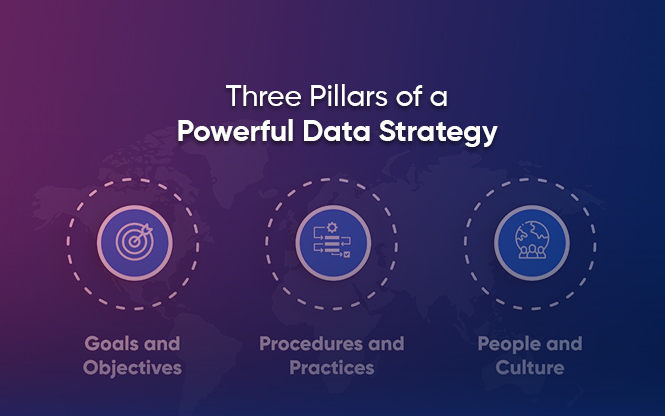
What Are the 3 Pillars of a Powerful Data Strategy? Real-Life Examples + Framework (2026)

The three pillars of a powerful data strategy are: By the time you finish reading this article, human activity on the web will generate 27.3 million terabytes of data. According to Bernard Marr, author of Data Strategy, in the 21st century, “every business is a data business.” Whether you’re a small business owner on Instagram […]

IMDb-Data-Thumbnail

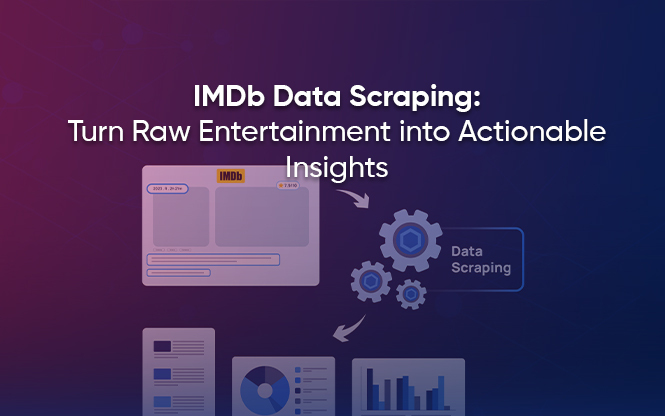
IMDb Data Scraping: Turn Raw Entertainment into Actionable Insights

What if you could predict the next sleeper hit, build your own personalized recommendation engine, and forecast trending travel destinations? This isn’t science fiction. This is the power of IMDb data scraping.  IMDb is perhaps the most authoritative voice in movie and TV content for good reason — with 200+ million unique monthly visitors and […]

Benefits of Proactive Analytics

What is Proactive Analytics? How Netflix, Spotify, and Walmart Make Billions (2026)

Netflix, Spotify, Walmart, and other giants haven’t bet on their billion-dollar fortunes by shooting in the dark.  These companies’ proactive analytics allow them to curate hyper-targeted services that offer a core feature to their customers: personalization. The question is — are you still relying only on historical data to drive your business?  We’re living in […]

data visualization

Data Visualization Is The Cockpit of Your Business — Here Are 5 Reasons Why

“Why the cockpit?”, you may wonder. In an airplane, we know that the cockpit contains a clear dashboard with intricate buttons and metrics that help the pilot navigate and control the aircraft. Similarly, with data visualization, you can monitor performance, compare with benchmarks, identify trends, and make informed decisions that keep your business on the […]

data analysis guide

Data Analysis: Five Steps to Superior Data

This is one piece of a three-part series that looks at the various data analysis methods, techniques, and essential steps to ensure its superiority. Data analysis, as defined by Wikipedia, is a key process within data science that involves inspecting, cleansing, transforming, and modeling data to uncover valuable insights, guide conclusions, and support decision-making. Data […]

Make Data Make Sense: Most-Used Techniques in Data Analysis

This is one piece of a three-part series that looks at the various methods, techniques, and essential steps to superior data analysis.

data analysis

Business Data Analytics — Why Enterprises Need It

Objectivity vs subjectivity The stories we hear as children have a way of mirroring the realities of everyday existence, unlike many things we experience as adults. An old folk tale from India is one of those stories. It goes something like this: A group of blind men goes to an elephant to find out its […]

why data visualization is important

Why Data Visualization Matters to Your Business

There are several reasons why we believe that visual representation of data is becoming an integral part of Big Data analytics or any other kind of data-driven analytics, for that matter

data mining during covid

Role of Data Mining During the COVID-19 Outbreak

How web scraping and data mining can help predict, track and contain current and future disease outbreaks

Data Analytics for Better Business Intelligence

Advanced information technology has brought a massive paradigm shift in every aspect of human life We spend more and more of our working hours on the digital screens, either generating or aggregating digital data. Internet, what would have seemed something unimaginable only a few decades ago, has become an essential part of our daily businesses. […]

Location Analytics: ‘Where’ is the Knowledge of Data

Digital Technology and Rediscovery of Geography A substantial amount of data that Grepsr processes and provides to its business partners worldwide contains location-specific information. According to IDC, an American data research firm, 80% of data collected by organizations has location element, and according to ABI Research, location analytics market will rise up to $9 billion by […]

Data Mining: How Can Businesses Capitalize on Big Data?

In the recent years, data mining has become a prickly issue. The big controversies and clamors it has gathered in the political and business arenas suggest its importance in our time. No wonder, it is used as a household name in the business world. Data mining, in fact, is an inevitable consequence of all the technological innovations […]

arrow-up-icon