Last updated: November 23, 2026
RPA for data extraction uses software robots to repeat what a person does in a browser (sign in, filter, paginate, copy fields) and save the results in a consistent structured format. It suits repetitive, rule-based web data collection where speed, accuracy and schedules matter. This guide gives a six-step plan, habits that reduce blocks and compliance points for RPA developers and CTOs.
RPA web scraping is the use of software robots that mimic human actions in a browser to visit pages, apply filters, navigate pagination and capture web data into a structured format, on a schedule.
If your team still collects web data by hand, the work is slow, inconsistent and hard to scale. RPA web scraping uses software robots to repeat the steps a person takes in a browser and saves the results in a structured format. IBM describes robotic process automation as software that automates repetitive, rule-based tasks, which is what much web data extraction involves. This guide gives a six-step plan, habits that reduce blocks, and compliance points.
What Is RPA Web Scraping?
RPA web scraping is the use of software robots that mimic human actions in a browser to visit pages, sign in where permitted, apply filters, navigate pagination and capture web data into a structured format, on a schedule. The value is straightforward:
- Speed and uptime: Bots can run on predictable schedules.
- Accuracy: Scripts and validations reduce human error.
- Scalability: Adding sources becomes a configuration task rather than a hiring plan, though each source still needs a terms check.
For a plain-English pairing of scraping and RPA, see Grepsr’s introduction to web scraping and RPA.
Why Does RPA Matter to Developers, Automation Engineers and CTOs?
Streamlined processes: RPA removes manual copy-paste work, so developers can spend time on logic, tests and monitoring.
Better data for models and BI: With scripted extraction and checks, dashboards and ML pipelines receive more stable inputs. See web scraping data quality and how Grepsr approaches data quality.
Cost control at scale: Manual collection costs grow with coverage, while automation spreads setup effort across many runs.
Faster adaptation: Sites change layouts and flows. Clean bot design and versioned selectors make updates quicker and safer.
What Is a Practical Plan to Implement RPA Web Scraping?
1) Start with a clear brief
List target sites, required fields, refresh frequency, delivery format and acceptable lag. Keep the initial schema small and agreed with downstream users.
2) Choose the right approach
For full control, build in your preferred RPA studio. For less maintenance, Grepsr offers a web scraping solution and data as a service; confirm formats and cadence when scoping.
3) Design the bot flow
Map sign-in, filters, pagination and extraction rules. Add field-level checks for required values and formats. Prefer resilient CSS selectors or data attributes over brittle XPath.
4) Test on a small slice
Pilot one category or region. Compare the bot output to a known sample, then tune selectors, timeouts, retries and error handling. Document edge cases.
5) Deploy and monitor
Schedule runs, track success and volume, and alert on failures or schema drift. Publish a short runbook covering fields, refresh cadence and how to request changes. See monitoring and maintenance for web scraping.
6) Plan for change
Treat extraction logic like code: use staging, safe rollouts and versioned schemas so site updates do not break production.
For an end-to-end option, see Grepsr’s RPA web scraping page.
RPA vs Traditional Web Scraping: Which Should You Use?
| Factor | RPA bots | Code-based scraper or API |
|---|---|---|
| Control | Visual or low-code flows that mirror user steps | Full control over requests and parsing |
| Maintenance | Selectors and UI flows can break when pages change | Stable if an official API exists; scrapers need upkeep |
| Dynamic interfaces | Handles click-through interfaces and logins naturally | Needs a headless browser or endpoint access |
| Best fit | Rule-based workflows in UI-only systems | Large-scale or frequent data collection |
See also web scraping best practices for RPA integration and overcoming web scraping challenges with RPA.
How Do You Reduce Web Scraping Blocks?
CAPTCHAs, rate limits and bot detection are signals that a site wants to limit automated access. A few habits help:
- Check the rules first. The Robots Exclusion Protocol (RFC 9309) tells crawlers which paths a site prefers they avoid. It is not access authorization, so also review the site’s terms and look for an official API.
- Throttle and be polite. Avoid bursts that overload targets, tune retries and collect incrementally.
- Wait for events, not fixed sleeps. Use headless browser waits for page events.
- Detect change. Watch for DOM shifts and field drift and rework selectors when layouts change.
See how to handle CAPTCHAs and anti-bot protections.
What Are the Security, Compliance and Responsible Automation Points?
- Data protection: If your pipeline touches personal data, align with GDPR principles such as purpose limitation, data minimization and security by design.
- Individuals’ rights: The GDPR grants rights such as access, rectification and erasure, so build processes to respond to requests.
- International transfers: Where personal data leaves the EEA, the GDPR requires a transfer mechanism such as an adequacy decision or standard contractual clauses.
- Source terms and ethics: Review each site’s terms, prefer official APIs where they meet your needs and keep audit trails from page to payload.
Is RPA Web Scraping Legal?
It depends on the site’s terms, the data and the jurisdiction. Robots.txt rules do not grant access rights, and personal data brings privacy obligations. See is web scraping legal?.
What Are Real-World Use Cases?
- Market and pricing intelligence: track assortments, promotions and prices by category and region.
- Lead generation: capture company and contact details from directories where permitted and where privacy rules allow.
- E-commerce operations: monitor stock status, content updates and reviews.
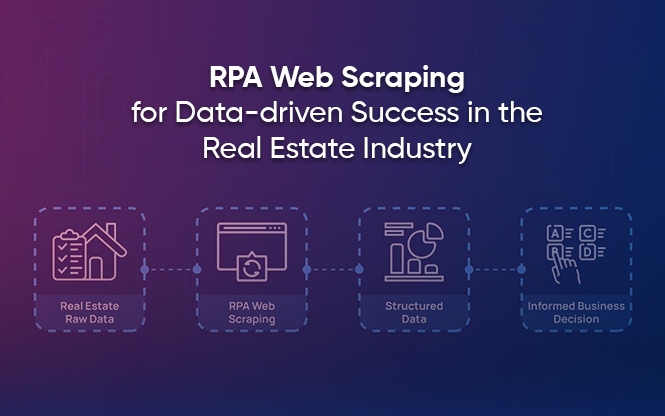
See Grepsr’s customer stories and the real estate RPA scraping guide for examples. For a worked example, see web scraping in RPA solutions: a real-life use case.
What Are the Limits of RPA for Web Data?
RPA bots rely on user-interface steps, so fragile selectors can break when a page changes. They can also be harder to scale than API-based or code-based collection when volumes or source counts grow. If an official API exists, use it; if maintenance is outgrowing your team, a managed service may fit better. Compare the full cost first; see in-house web scraping cost vs outsourcing.
Why Grepsr?
Grepsr offers managed extraction, quality checks and delivery options agreed per project, so your team can spend less time on upkeep. Explore web scraping and the web scraping API. Grepsr’s pricing page lists a Starter Pack from $100, priced on data records, at the time of this review (November 2026).
Conclusion
RPA for data extraction can turn repetitive web tasks into structured datasets. Start small, automate the repeatable steps and add quality checks and monitoring as you grow.

FAQs: RPA for Data Extraction
What is RPA web scraping?
It uses software robots to navigate websites and extract structured data automatically. IBM describes RPA as software that automates repetitive, rule-based tasks.
How do I avoid web scraping blocks?
Check the site’s terms and robots.txt, throttle requests, collect incrementally and monitor layout changes. Robots rules do not grant access rights.
What should CTOs prioritize for compliance?
If personal data is in scope, align with GDPR principles, document your legal basis and keep security controls and audit trails.
Can automated web robots handle complex websites?
Often, with headless browsers and resilient selectors, where the site’s terms allow. Managed services such as Grepsr can run this for lean teams.
What is the difference between RPA and web scraping?
Web scraping is the task of extracting data from web pages. RPA is a way to automate it by imitating user steps in a browser, and it also covers non-web tasks.
When should you use an API instead of RPA bots?
When an official API provides the data you need, since it is usually more stable and clearly permitted.
How do you keep RPA scraping bots from breaking when a site changes layout?
Use resilient selectors, monitoring and alerts, staged rollouts and versioned schemas.
Is RPA web scraping legal?
It depends on the site’s terms, the data and the jurisdiction. See is web scraping legal?.