Last updated: November 24, 2026
The most common myths about data scraping are that it is always illegal, that any website can be scraped, that you need to know how to code, that scraping and crawling are the same, that it works for collecting emails, and that it is fully automated. This post sorts 11 myths into those that are generally false and those that hold only when professionals build and maintain the scrapers.

Data scraping is the technological process of extracting available web data in a structured format. More businesses globally are realizing the usefulness and potential of big data, and migrating towards data-driven decision-making. As a result, there’s been a huge rise in demand in recent years for tools and services offering data for businesses via Data scraping and similar techniques.
Alongside its rise in popularity, we’ve also noticed a rise in myths and misconceptions regarding Data scraping and data extraction recently. We’ve taken a look at some of these myths (listed below) and tried to separate fact from fiction with the help of logical reasoning and some examples specific to our use-case here at Grepsr.
Myths that are generally not true:
- Web scraping is illegal
- Any website or data can be scraped
- You need to know how to code
- Scraping and crawling are the same
- Scraping can be used to collect emails
- Web scraping is fully automated
- Scraped datasets are only used for business
Myths that are true — for professionally managed platforms:
- Crawlers are robust, resilient and versatile
- Web scraping is cost-effective and efficient
- Web scraping is fully scalable
- Data extraction generates highly usable data
Some myths are generally false
There are lots of misleading information and myths about data scraping that are simply not true. We’ve tried to address some of those misunderstandings below.
Data scraping is illegal
Probably the most common misconception about web scraping or data extraction is that it is always illegal. That is not accurate as a blanket statement: scraping is a widely used technology that has the potential for a lot of good, but whether a particular use is lawful depends on the site’s terms, the type of data and the jurisdiction.

Issues and questions about the legality of web scraping arise with how people choose to use the resulting data. Each website has its own set of rules, or Terms of Service, that one needs to be familiar with beforehand and obey during the extraction process. The April 2022 Ninth Circuit ruling in hiQ v. LinkedIn was a preliminary-injunction decision that found serious questions about whether LinkedIn could use the Computer Fraud and Abuse Act to block access to public profiles. It also discusses LinkedIn’s User Agreement, so it does not mean public web data is free to scrape in every situation. See is web scraping legal?.
There’s also an ethical side to web scraping. If, say, you scraped some data that was not publicly available — you had to either pay for it or log in to access the pages — and you went ahead and republished it on to a public platform, then that would simply be unethical and could easily land you in legal hot water.
Verdict: Not illegal in most cases, but there’s also an ethical side.
Any website or data can be scraped
In terms of data scraping and the world-wide-web, the world is notyour oyster. In addition to the legalities and ethics of web scraping, there are numerous limitations and challenges associated with it. A website may seem good and easy to scrape, but if it prohibits scraping or contains copyrighted data, then there’s nothing you can do with the data you spent time and effort extracting.
In some cases, websites also pose various obstacles to crawlers even while collecting publicly available information. Gathering data from such websites requires an additional level of expertise, time and effort.
A similar misconception is that crawlers can crawl the entire web. Since each website is unique in design and structure, it is important to understand that a crawler is set up to work only on a specific website with a specific structure and layout. In that sense, data scraping is also not versatile. You can’t expect an Amazon crawler to work on eBay just because they’re both ecommerce websites in the same way that a neurologist can’t treat your diabetes just because they’re a doctor.
Verdict: Not true. A scraper’s scope is limited to the website structure it has been coded for.
You need to know how to code
There are many tools and services these days that are devoted to web scraping and data extraction. You don’t need to be a programmer at all if you need to scrape a website. Just a cursory Google search will list a whole host of services and software that can get you the data based on your requirements.
Since tools and software are pre-programmed to work off-the-box on specific websites, they may not fit requirements that are constantly evolving and customized. In those cases, a managed service such as Grepsr is one option: it can deliver web data based on your specific requirements, with scope agreed per project.
Verdict: Not true. There are many solutions specializing in data extraction which can do the job for you.
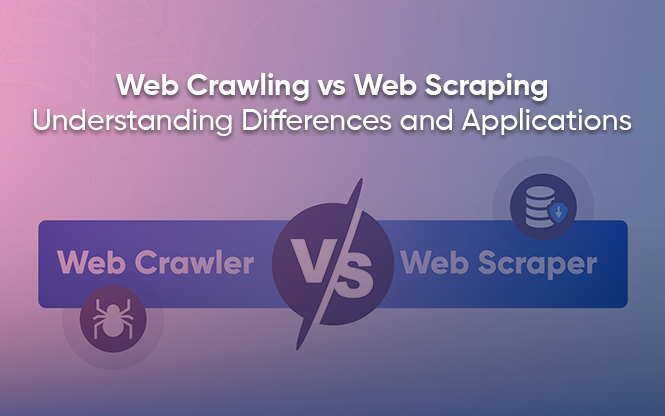
Scraping and crawling are the same
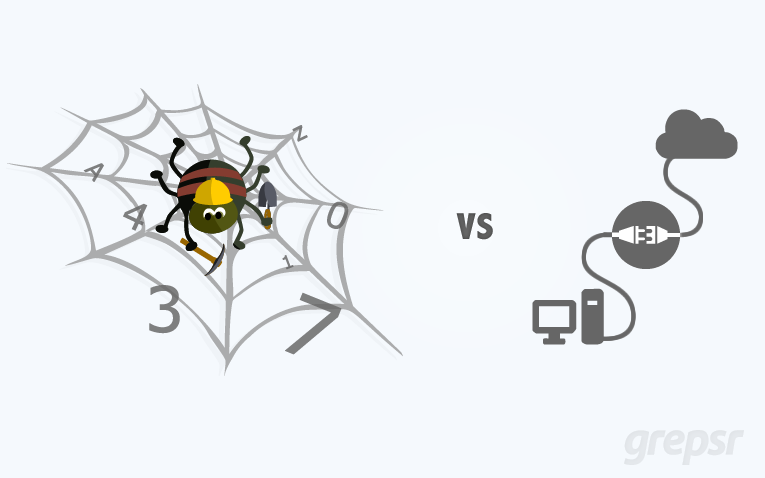
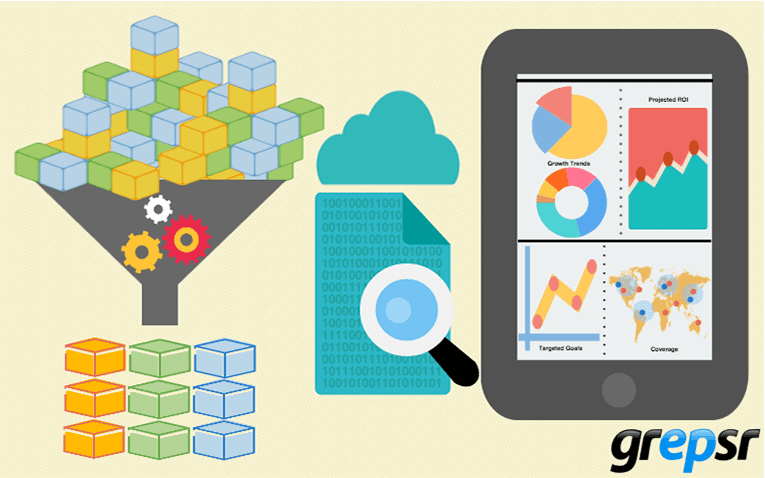
This is a major misconception about data scraping or web data extraction. Although most people use the terms web scraping and web crawling interchangeably, they are very different in their underlying technology and processes. Data scraping is an automated way of collecting specific data points from websites via tools or services. Scrapers automate visits to web pages to extract these data fields, which are for analysis and decision-making in later stages.
On the other hand, web crawling uses bots or crawlers to index generic website data.
Search engines like Google and Bing use crawler bots to extract general data points (page titles, page snippets, URL paths, etc.) to display in search results.
Verdict: Not true. The key difference is in the technology they use.
Scraping can be used to collect emails
Another common misconception is that web scraping can be used to gather email addresses for lead generation. While this is true in theory, it is generally useless in action.
Collecting personal information such as email addresses raises privacy-law and consent questions, and a list of scraped emails may be outdated or unsuitable for marketing. Check the applicable rules before collecting personal data.
Verdict: Not true in most cases. For the rest, not worth the hassle.
Data scraping is fully automated
Most people think web scraping is fully automated since it uses scraper bots, but that isn’t entirely true. Yes, after the initial setup, most processes run automatically as per design. However, human intervention is still necessary as there are various complexities along the way. So full automation is one of the popular myths about data scraping.
Specialists regularly need to monitor the source websites for structural changes and account for those through fixes and code modifications. This is why many businesses delegate data sourcing to a managed service such as Grepsr, which can include crawler monitoring and fixes; confirm what is included when scoping.
Verdict: Not true. Scrapers need human involvement at various times even after setup.
Scraped datasets are only useful for businesses
Empowered by up-to-date and high-quality data, businesses are able to get meaningful insights about themselves. As well as their competitors, and the market, which gives them a great competitive advantage. But thinking that web scraping only helps businesses with their growth is greatly underestimating its value and worth to other industries.

In industries like education, journalism and finance, web scraping is an important tool for research. Researchers and students can give more time to analyses and problem solving rather than having to worry about information sourcing. Similarly, data scraping helps journalists gather up-to-date and reliable information on current events. Likewise, stock marketers and investors stand to gain or lose a lot. This depends on how fresh and substantial their financial data is.
Verdict: Not true. Other industries can also benefit from web scraping.
Some myths are truer than others
There are numerous myths and misconceptions about web scraping that are quite simply not true. But there are also some myths that hold some truth, at least for professional services, like Grepsr. We’ve discussed a few of those below.
Scraper bots are robust and resilient
When you get down to the basics of a website’s design, they’re nothing but blocks of code. Scrapers are coded to look for fixed patterns in this code to extract specific data points. So if a website changes its pattern, the scraper would be unable to find the data points in the same locations, resulting in loss of data. This is why web scrapers need regular monitoring and therefore aren’t resilient.
However, scrapers built and maintained by experienced engineers can be more robust, with less need for regular maintenance, because source websites are monitored for changes. Scope is agreed per project.
Verdict: True if built and maintained by experienced engineers.
Data scraping is cost-effective and efficient
When businesses depend on large volumes of data, a managed provider is one option. Significant human, financial and technological investment is required to build in-house, and in-house teams can struggle with large data requirements.
Partnering with a specialized solution such as Grepsr can lessen the burden on in-house data teams. Grepsr’s pricing page lists a Starter Pack from $100, priced on data records, at the time of this review (November 2026).
Verdict: Often true, depending on volume and requirements.
Data scraping is fully scalable
Grepsr is a managed data acquisition provider; its engineers can plan capacity for larger volumes than many in-house teams handle, and volumes are agreed per project.
Scrapers and crawlers can be designed so they are expanded based on customer needs; confirm capacity when scoping.
Verdict: True where capacity is planned for; scope is agreed per project.
Data extraction generates highly usable data
Crawlers can be coded to extract the data points that match custom requirements.
Back-end validation steps help check datasets, and delivery can be aligned with client workflows; confirm which checks apply when scoping.
Verdict: True where validation is built into the pipeline; confirm when scoping.
Conclusion
Since data scraping is such a powerful tool with the potential to be a force for global good, there’s bound to be misleading information. So there are many myths about data scraping.
Therefore, it is important to understand its value, clear any misconceptions, and embrace it as an opportunity generator and a catalyst of growth for your business.
Related read:
Related reading: Legality of Web Scraping — An Overview
About Grepsr
Grepsr offers managed web data extraction. Get in touch with your requirements to discuss scope.
Related reading: Web Scraping Explained: Myths, Limits & What Actually Works; Is Web Scraping Legal? What the Law Says in 2026; Web Scraping Court Cases: What Landmark Rulings Mean for Your Data Collection; What Is Web Scraping? A Plain-English Guide to How It Works, Uses and Legality; Web Crawling vs Web Scraping: What Is the Difference? (Comparison, Examples and When to Use Each); Web Crawling vs Web Scraping for Business: Which Do You Need?; Avoid These 7 Common Web Scraping Mistakes That Hurt Your Business; What Enterprises Really Use Web Scraping For: 25 High Impact Use Cases Across Retail, Finance, Travel, and More.

Frequently Asked Questions
What is robots.txt and does it make scraping illegal?
Robots.txt is a file at the root of a website where the site lists paths it asks crawlers not to visit. RFC 9309 specifies it, says crawlers are requested to honor the rules, and states the rules are not a form of access authorization. It is a signal to respect, separate from a site’s terms of use.
What did the hiQ v. LinkedIn ruling decide about scraping public data?
In April 2022 the Ninth Circuit affirmed a preliminary injunction that kept LinkedIn from blocking hiQ’s access to public profiles, finding serious questions about whether LinkedIn could use the Computer Fraud and Abuse Act that way. It was a preliminary ruling in one case, and it also discusses LinkedIn’s User Agreement, so it does not settle every situation.
What kinds of scraping does Grepsr offer?
Grepsr describes custom and ready-to-use scrapers to collect web data reliably and at scale on its web scraping solution page, fully managed web data extraction as data-as-a-service, and a web scraping API for structured web data. Which option fits depends on whether you want a delivered dataset or an integration you control.
Last reviewed: November 24, 2026.