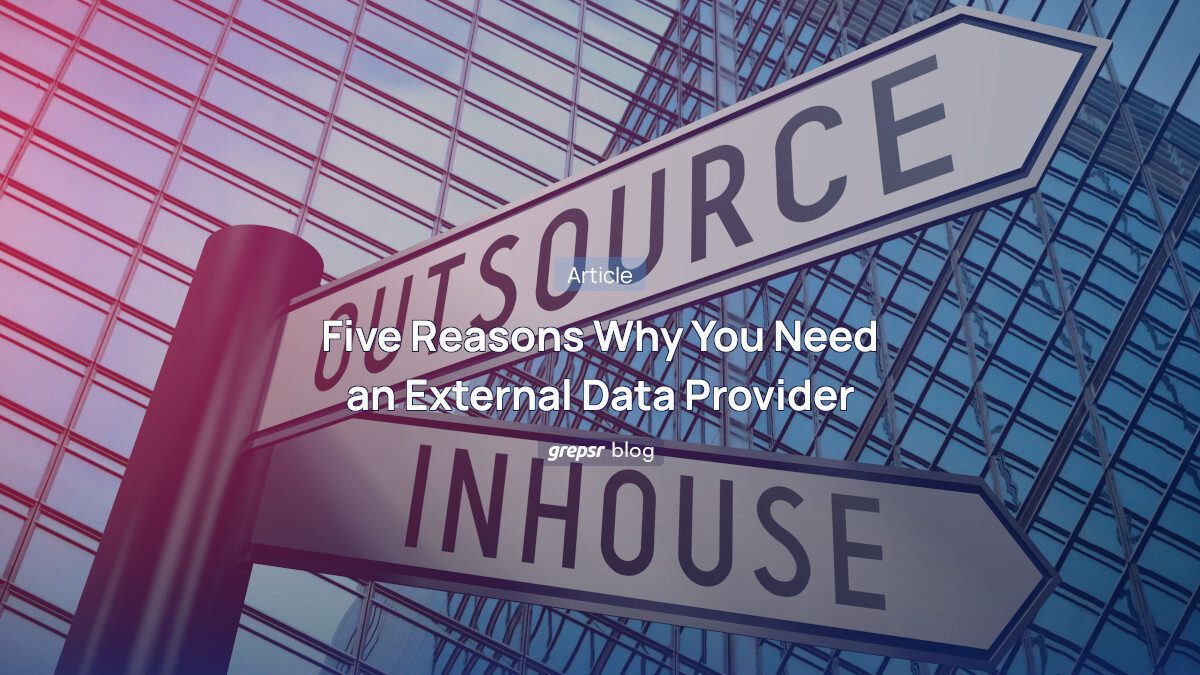
Quick answer: Outsource web scraping if you need data soon, expect your sources or volume to grow, or don’t want a single engineer to be a point of failure.
Hire a developer if scraping is core to your product and must live inside your own systems. Outsourcing typically gets data flowing faster and with more predictable costs; hiring gives you tighter control.
| Outsource if 2+ apply | Hire if 2+ apply |
|---|---|
| data needed in weeks not months | Scraping is the product |
| more than a handful of sources | strict in-house security or IP requirements |
| sources change often | very small, stable source list |
| No spare engineering capacity | you already have the engineers |
| Need scheduled delivery |
You need scraped data flowing into your systems. Do you post a job listing and wait six to eight weeks to fill it, or call a vendor who already has the infrastructure running?
That’s the actual decision in front of most teams, not “is web scraping worth doing,” but “who should build and run it.” Here’s how the two options compare on the things that actually matter: time, cost, and what happens when a target site changes its layout on a random Tuesday.
How long does it take to get data: Hiring vs Outsourcing?
Hiring a scraping developer means writing a job description, sourcing candidates, interviewing, negotiating an offer, and onboarding – a process that commonly runs 3-4 weeks before they write their first line of code. Then there’s ramp-up time on your specific data sources.
Outsourced web scraping involves paying a provider to build, run and maintain scrapers and deliver structured data, instead of employing your own scraping developer.
A managed service starts from a working infrastructure. Grepsr clients typically begin receiving data within 24 hours of kickoff, no hiring pipeline required.
What does outsourcing web scraping cost compared with hiring a developer?
This is where the comparison gets concrete. A full-time scraping developer includes salary with benefits, plus the tooling and proxy infrastructure they’ll need, plus the time a manager spends overseeing their work. Fully loaded, that’s commonly ~$150,000 per year in the US for one person, and one person is a single point of failure.
A managed service like Grepsr replaces that with a predictable monthly fee, starting at less than $5,000 per month, depending on scope that already includes the team, the infrastructure, and the maintenance. No recruiting costs, no benefits, no severance if the role doesn’t work out.
The maintenance problem nobody budgets for: Who fixes the scraper when a website changes?
This is the part that catches teams off guard. Websites change their layouts, add anti-bot measures, and restructure their HTML without warning and every time that happens, a scraper breaks.
An in-house developer now has to drop whatever else they’re working on to fix it, and if they’re on vacation or have left the company, your data pipeline just stops.
With a managed service, that maintenance is built into the fee. When a target site changes, the team monitoring it fixes it before you’d even notice the data gap.
Redundancy: one person vs. a team
Hiring gives you one person’s specific skill set and availability. If they’re out sick, in another meeting, or job-hunting, your scraping capacity is out too.
Outsourcing gives you access to a full team with overlapping expertise, no single point of failure, and no knowledge walking out the door when someone leaves. Here is a full cost breakdown of in-house scraping.
Scaling up or down
Data needs rarely stay flat. A single in-house developer has a ceiling, past a certain volume, you’re hiring a second person, then managing a small team, then dealing with the HR overhead that comes with it. A managed service scales with a conversation, not a hiring cycle.
Outsource vs. hire: side by side
| Outsource (managed service) | Hire a developer | |
|---|---|---|
| Time to first data | <48 hours | 3-4 weeks of hiring + ramp-up |
| Cost structure | Predictable monthly fee based on the number of records | Salary + benefits + tools + management time |
| Maintenance | Included | Falls on the developer (or goes unaddressed) |
| Redundancy | Team-based, no single point of failure | Dependent on one person |
| Scaling | Adjusts with request | Requires additional hires |
| Best for | Ongoing or growing data needs | Highly custom, in-house-only IP |
When does hiring a web scraping developer actually make sense?
Managed scraping isn’t the right call for every team.
An in-house hire or a hybrid of a small internal team plus a vendor for overflow can make more sense. If you need a scraper deeply embedded in a proprietary internal system, or you want full control over every line of code for security or IP reasons.
It’s worth being honest about that tradeoff before deciding.
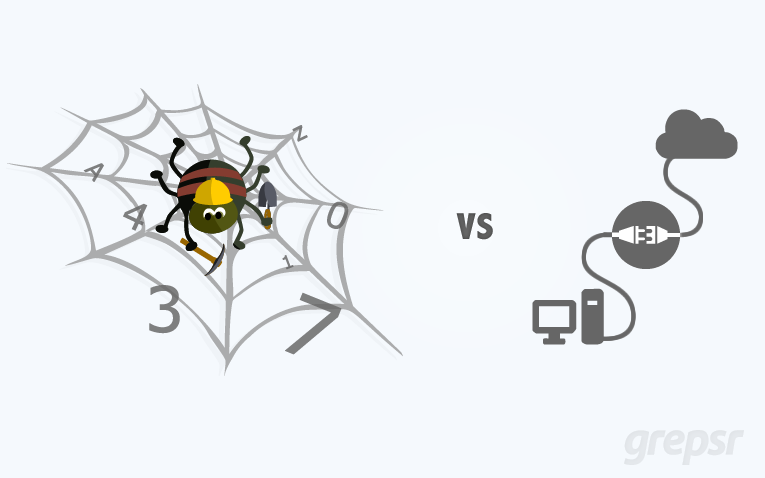
Read the pros and cons of cloud-based vs building your own scraper in detail.
So should you outsource or hire?
Hiring in-house gives you direct oversight but it also brings added time, overhead and reliance on a limited number of people.
A managed service like Grepsr gives you the speed, reliability and expertise of a dedicated team while keeping you informed and in control of the outcomes.
For businesses with ongoing data needs, outsourcing web scraping often means faster execution, more predictable costs and fewer operational risks.
Want to see what outsourcing your specific use case could cost?
Get a free cost estimate from Grepsr with no commitment required!
FAQ
Is outsourced web scraping legal?
Web scraping is legal in most jurisdictions when it targets publicly available data and respects a site’s terms of service and applicable data protection laws (like GDPR or CCPA). A reputable provider will build compliance into how they collect and handle data.
How fast can a managed service start delivering data?
Grepsr can deliver a sample within 24 hours and the full dataset in less than 48 hours after scoping.
What happens when a target website changes its structure?
With a managed service, the provider’s team detects and fixes broken scrapers as part of the service so you don’t need to notice the problem yourself. With an in-house scraper, it’s on your developer to catch and fix it, which can mean data gaps in the meantime.
Is it cheaper to hire a developer if I only need scraping occasionally?
Usually not. A full-time hire makes the most sense when scraping is a constant, high-volume need. For occasional or variable needs, a managed service’s pay-for-what-you-use structure tends to cost less than carrying a salaried role.
Can I switch from an in-house scraper to a managed service later?
Yes, most providers can take over an existing setup or rebuild it from your requirements without disrupting your current data flow. Make sure that you’re choosing the right web scraping service for your needs.
How much does a web scraping developer cost compared with a managed service?
A full-time hire has salary, benefits, tooling and management overhead; a managed service replaces that with a fee based on scope. Use the in-house cost estimate to compare, and see Grepsr’s pricing details for current plans.
Should I outsource web scraping or hire a developer?
Use the decision rule above: outsource for speed, scale and low maintenance; hire when scraping is core to your product.