Last updated: November 13, 2026
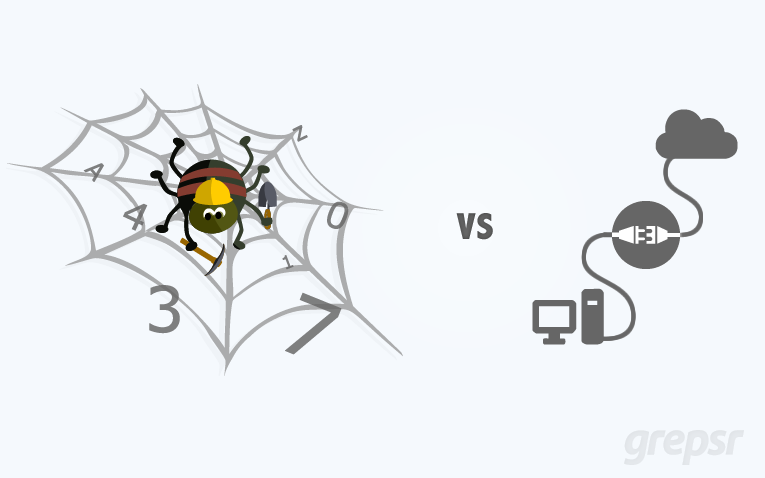
Web crawling discovers pages by following links and building a list or index of URLs; web scraping extracts specific data fields (such as product names and prices) from those pages into a structured format like CSV or JSON. Crawling answers ‘which pages exist?’, scraping answers ‘what data is on them?’. Most data projects use both: crawl to find the pages, then scrape the fields you need.
Bots make up a large share of web traffic. Imperva’s 2024 Bad Bot Report estimates that automated traffic is close to half of all web traffic, though that figure covers all bots, not only crawlers and scrapers. Among those bots, web crawlers discover new URLs and links, while web scrapers extract data from pages. This post explains the difference, the purpose of each and how they fit together. For a wider introduction, see our complete guide to web scraping.
What Is Web Crawling?
Web crawling is the process of using automated programs (called crawlers or spiders) that browse the web to discover new URLs and retrieve content from websites.
How it works:
- Starts with a seed list of URLs to visit
- Fetches content from each page (HTML, images, text, videos, CSS, JavaScript)
- Parses HTML to identify embedded hyperlinks
- Follows links to discover new pages
- Indexes information in a database (search index)
- Repeats the process continuously across the web
Purpose: crawlers systematically browse and index the web so search engines such as Google, Bing and Yahoo can return relevant results when users search.
Scope: crawlers aim to cover as much of the web as possible, across thousands or millions of sites. Our guides on crawling large websites without getting blocked and scaling a large-scale web crawler cover the practical side.
What Is Web Scraping?
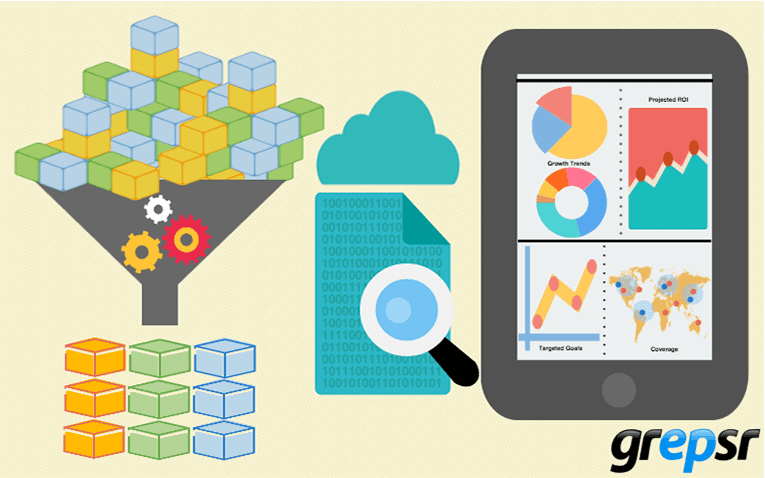
Web scraping is the process of fetching publicly available web pages, parsing their HTML and extracting specific data points into structured formats for analysis, aggregation or decision-making.
How it works:
- Identifies target URLs containing the desired data
- Fetches page content with HTTP requests
- Parses HTML to locate specific elements
- Extracts data points such as product names, prices and reviews
- Stores data in structured formats such as CSV, Excel or databases
Purpose: scraping extracts targeted information from selected pages to support business intelligence, competitive analysis, market research and pricing strategies.
Scope: scrapers focus on specific data fields from selected pages, though the scope can grow with business needs.
Tools and methods:
- Coding: Python libraries such as BeautifulSoup and Scrapy
- Self-serve tools: products such as Pline, which Grepsr offers for smaller extraction projects (check the site for its current features)
- Managed services: providers such as Grepsr for large-scale extraction
How Do Crawling and Scraping Work Together?
In a data extraction project, crawling and scraping usually go hand in hand. For instance, if you do not know the exact URLs you need data from, such as headsets on Amazon, a crawler finds the category and product pages. A scraper then extracts the fields you need from those pages, such as the product name and price.

What Are the Key Differences Between Web Crawling and Web Scraping?
The terms are often used interchangeably, but they describe different jobs.
| About | Web crawling | Web scraping |
|---|---|---|
| Goal | Discover and index pages | Extract specific data fields |
| Output | A list or index of URLs and page content | A structured dataset such as CSV or JSON |
| Typical scale | Broad, across many sites | Narrow, on selected pages |
| Who uses it | Search engines and site auditors | Businesses collecting data |
| Example tools | Googlebot, Scrapy spiders | BeautifulSoup, Scrapy, managed services |
| Compliance focus | robots.txt and crawl rate | Terms of service, privacy laws, copyright |
For the compliance row, rules vary by source and country, so check the position with legal counsel. See our guide on whether web scraping is legal.
Web crawling is the automated discovery and retrieval of web pages by following links. Web scraping is the automated extraction of specific data points from web pages into a structured dataset.
Do You Need a Crawler, a Scraper, or Both?
- You know the exact URLs: scrape them.
- You need to find the URLs first: crawl, then scrape.
- You need fresh data on a schedule: run both on a schedule.
- You only want to map a site’s structure: crawl.
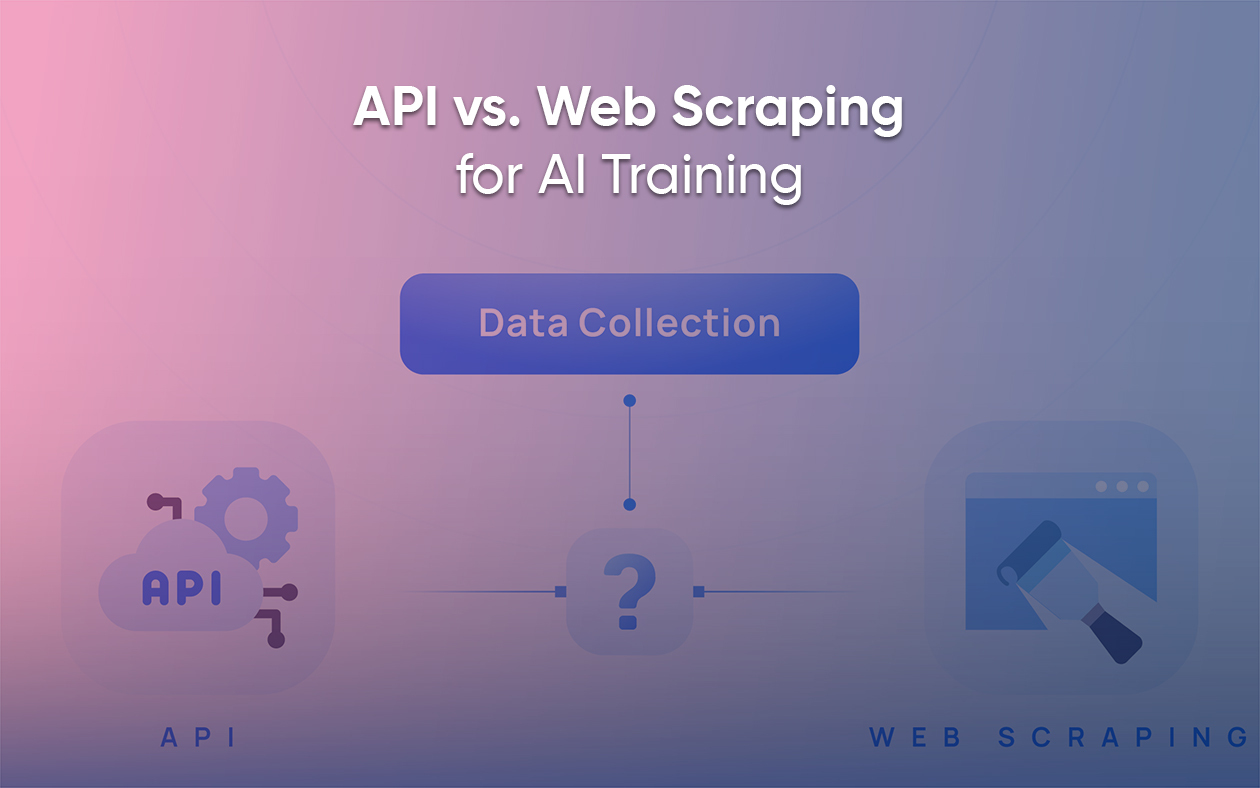
Our posts on combining crawling and scraping for business and overcoming crawling and scraping challenges show how teams do this in practice. If you are weighing scraping against an API, read web scraping vs API.
Do Crawling and Scraping Both Need to Follow robots.txt?
Both crawlers and scrapers should check a site’s robots.txt file, which sets out which parts of the site the owner asks bots to avoid. It is not a law, but ignoring it can weigh against you and is seen as poor practice. A site’s terms of service and applicable laws also matter, so confirm your use case with legal counsel.
When Should You Use a Managed Web Scraping Service Instead of DIY?
Someone writing scripts for data extraction faces many challenges that are hard to handle with limited resources. A tool helps, but still runs into anti-scraping measures such as CAPTCHAs and IP blocking, login requirements and scalability limits.
A managed provider takes this work on. Grepsr builds, runs and maintains the scrapers, manages anti-bot challenges and request pacing, and handles data cleaning, normalization and integration so you receive structured, ready-to-use data. Explore Grepsr’s web scraping solution and data-as-a-service offerings.
FAQs: Web Crawling vs Web Scraping
What is the difference between web crawling and web scraping?
Web crawling discovers and indexes web pages by following links, primarily for search engines. Web scraping extracts specific data points from selected pages for business analysis. Crawling maps the web broadly; scraping extracts precise information.
Do I need web crawling or web scraping for my business?
If you need to discover URLs or monitor website structures, you need web crawling. If you need specific data such as prices, reviews or contacts from known or discovered pages, you need web scraping. Most data extraction projects use both.
Is web scraping legal?
It depends on the source’s terms, the type of data and the laws that apply. Publicly available data is commonly collected, but you must respect terms of service, robots.txt and privacy laws such as the GDPR and CCPA. Confirm your use case with legal counsel.
How do search engines use web crawling?
Search engines such as Google use crawlers like Googlebot to discover web pages, retrieve content and build search indexes. When users search, the engine queries the index to return relevant results.
Is a web crawler the same as a search engine bot?
A search engine bot is one kind of web crawler. Crawlers are also used for site audits, price monitoring and data collection, and not every crawler belongs to a search engine.
Can you scrape a website without crawling it?
Yes. If you already know the URLs you need, you can scrape them directly. You only need a crawler when you have to discover the URLs first.
Does robots.txt apply to web scraping?
It is widely treated as a standard to respect for any automated access, including scraping. It does not replace a review of the site’s terms and the applicable laws, so get legal advice for your use case.
Which is harder to scale, crawling or scraping?
It depends on the project. Crawling at large scale needs careful scheduling, deduplication and politeness controls. Scraping at scale needs maintenance, because every source has its own layout that changes over time. Many teams find scraper maintenance is the larger ongoing cost.