Last updated: November 27, 2026
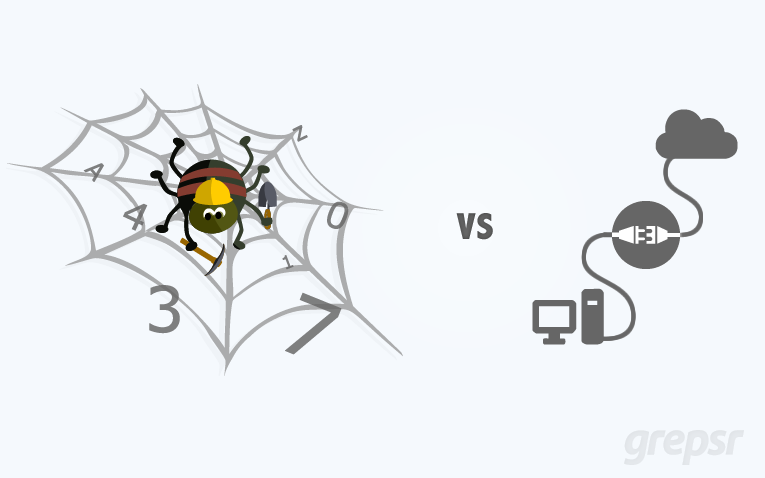
Robotic process automation (RPA) uses software robots that carry out user actions such as clicking and typing to automate repetitive tasks, and web scraping gives those bots a way to collect data from websites. Together they can handle rule-based, repeatable web tasks such as filling forms and extracting the resulting data. This post walks through RPA use cases in banking and insurance.

Imagine a world where you no longer have to do the repetitive grunt work that neither sparks joy nor creativity.
It completely vanishes from your sight as you have digital robots that tirelessly do structural tasks following a regular pattern without any turmoil.
As a result, you are released from the shackles of mundane labor.
This spectacle exists at the core of Robotic Process Automation, RPA.
To lay the groundwork for web scraping in RPA, let’s unravel the four kinds of structural organizational change concepts for IT-enabled enterprises:

Automation: Automation is one of the most common strategies of all posing as a low-risk and low-return organizational change. It makes the redundant tasks of operation smooth and efficient by reducing the need for human resources and using control systems.
Rationalization: Following automation, Rationalization is the second most common form of organizational change. It evaluates the business’s standard operating procedures to streamline business processes and redesign workflows while omitting bottlenecks.
Business Process Redesign: Then comes the robust and tough form of organizational change with high risk and high return. It involves analyzing, simplifying, and redesigning operations for better speed, quality, and customer support. It rearranges workflows and merges stages to eliminate inefficient, repetitive, and paper-intensive tasks.
Paradigm Shifts: Finally, the most radical change in an organization is the Paradigm shift. The entire nature of the business is re-conceptualized, completely altering its products and services.
For example, due to the impact of the internet, every industry is shifting towards e-commerce from retail to automobile. So, it definitely carries higher returns for the business but also poses substantial chances of failure.

Automation: RPA
Let’s zero in on the low-hanging fruit that leads to further steps for greater returns, i.e. Automation.
It can do wonders for businesses by ridding human resources of their repetitive, mundane tasks that involve no decision-making by using bots and freeing up time for individuals to focus on strategic activities.
It enables them to draw meaningful, problem-solving, and innovative ideas that can later turn into reality with proper planning and execution.
The rewards of automation are tremendous.
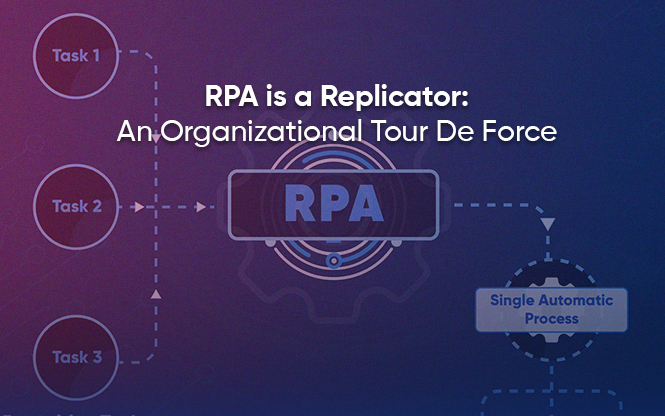
Now, along the same lines, there’s “RPA” which stands for Robotic Process Automation.
It refers to workflow automation solutions that use software robots, or bots, to carry out user actions such as clicking and typing.
RPA streamlines tedious and manual business processes with automation so that you can focus on high-value duties.
Integrating it into daily operations can help a business improve productivity, accuracy, and efficiency.
Some instances of RPA use in common tasks are:
- Data Entry and Validation: RPA automates data entry tasks by extracting data from one system and entering it into another. It also maintains consistency and accuracy while doing so.
- Report Generation:Bots generate reports by assembling data from multiple sources into predefined templates and distributing them to the stakeholders involved.
- Invoice Processing: Invoice processing is simplified by using RPA which automatically extracts data from invoices, matches it with purchase orders, and updates the accounting system.
- Customer Service: RPA can send automated responses to common inquiries, freeing humans from simple requests and involving them only when complexities escalate.
Learn more about RPA & Web Scraping here:
Related reading: Introduction to Web Scraping & RPA | Grepsr
RPA Use Case: Insurance
Let’s dive into the real-life use cases of RPA industry-wise.
The insurance industry is reaching new heights of technological evolution.
Artificial intelligence, machine learning, Internet of Things (IoT), smart data analytics, and telematics are some of the emerging technology trends shaping the insurance industry.
Leaving the traditional model behind, now is the time to leverage data to appeal to your customers.
Traditionally, insurers assess risk based on general demographic information and historical data that led to the calculation of premiums.
Today’s data-driven model assists insurers in utilizing a broad range of data sources including individual behavior and lifestyles.
This transformation has led to cutting-edge analytics and algorithms that create personalized risk profiles of policyholders that enable more accurate and tailored pricing.
Similarly, customer engagement and interaction with the company used to be limited to the point of sale or filing a claim.
However, today the insurers engage with their clients periodically and offer personalized risk mitigation advice with the help of current data.
Thus, this helps in nurturing relationships and communication between the policyholder and insurer.
Now, getting back to the IT revolution in the insurance industry, Robotic Process Automation (RPA) is also on the verge of breaking records.
There are several instances where RPA is extremely beneficial.
- Claims Processing: From validating the policyholder information to assessment of damage reports, RPA makes it as easy as pie.
- Underwriting: RPA bots are prompt in evaluating the risk factors, collecting vehicle information, and pulling credit reports to make the underwriting process simpler.
- Fraud Detection/Prevention: RPA assists in analyzing claim data for anomalies and flagging suspicious claims to detect fraudulent activity.
- Data Analytics/Reporting: Efficient generation of reports and dashboards with the help of bots that summarize key metrics and KPIs for data-driven business decisions.
Illustrative Scenario (Not a Customer Story): Collecting Data from a Multi-Step Web Form
This scenario is hypothetical. It does not describe a Grepsr customer or report any results. Objective: use an RPA bot with a crawler to collect data that an organization is permitted to access behind a multi-step web form. Before automating any site, review its terms of service, robots.txt (which is not a form of access authorization) and any API or licence option, and avoid collecting personal data without a lawful basis under rules such as the GDPR and CCPA.
Step 1: Fill out the information form.

Now, this is a tedious process that must be completed to reach the next step which is web scraping the final database.
However, this manual task follows a predictable pattern suitable for RPA. It follows a fixed input/output format, has defined triggers, operates on rules, and is repetitive.
Step: 2
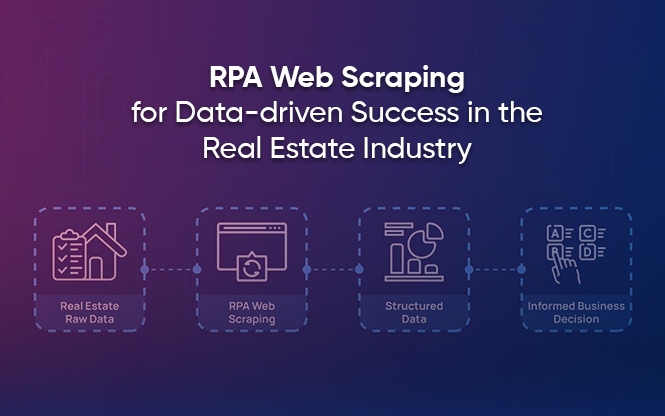
Furthermore, automating this process is done with the help of RPA web scraping using a crawler. The crawler is already set with the information that needs to be entered.
Step: 3
Next, as the crawler engages with the user interface, the process continues till different layers are revealed.
Step: 4
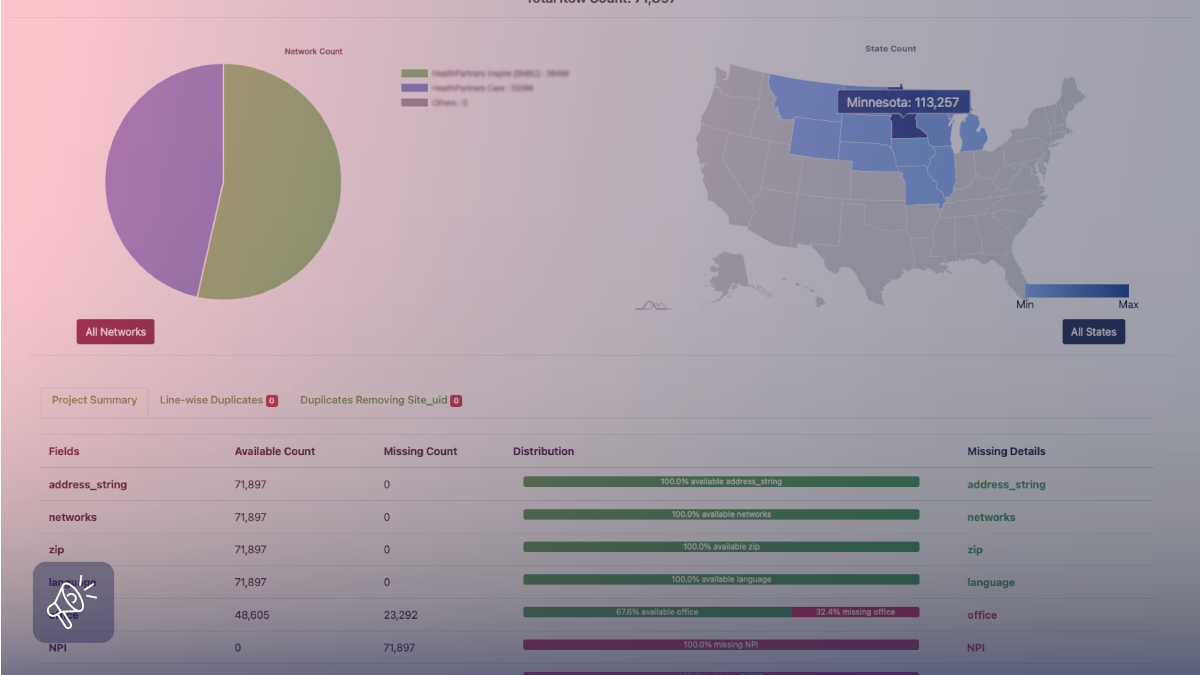
Eventually, you reach the page that holds the data you need.
Then afterward you can start the data extraction process.
The Future Outlook
RPA is widely adopted today.
Multiple sectors such as healthcare, insurance, logistics, banking & finance, manufacturing, etc., adopt it to streamline their operations at reduced costs.
RPA is evolving with the integration of bots with Big Data, AI, and machine learning. It is expanding its horizons from automating only structured procedures to providing solutions for problem-solving and decision-making.
The future look at RPA shows that the bots have the potential to grow beyond automating repetitive workflows.
RPA bots may increasingly be combined with AI, ML, and Natural Language Processing.
Additionally, RPA analyzes existing workflows to identify automation opportunities and make improvements. Whilst enabling bots to handle unstructured data, perform basic human interactions, and make decisions.
With AI integration and cloud deployment, RPA is evolving into a more capable technology.
To combine RPA with web data collection, see Grepsr’s web scraping solution. Grepsr’s pricing page lists a Starter Pack from $100, priced on data records, at the time of this review (November 2026).
Related reading: RPA for Data Extraction: Automating Web Scraping with Bots; Web Scraping Best Practices for RPA Integration; Common Challenges in Web Scraping and Their Solutions Using RPA; RPA is a Replicator: An Organizational Tour De Force; How RPA Web Scraping Automates Market Research Across Industries; How to Automate Data Extraction: A 6-Step Guide for Business Teams; What Is Web Scraping? A Plain-English Guide to How It Works, Uses and Legality.
Frequently Asked Questions
What is RPA?
Robotic process automation refers to workflow automation solutions that use software robots, or bots, to carry out the user actions a person would perform. The post describes bots handling tasks such as data entry and validation, report generation, invoice processing and routine customer service replies, which frees people from repetitive work so they can focus on higher-value duties.
How does web scraping fit into RPA?
The post shows an RPA bot using a crawler to work through a multi-step web form and reach a database page, then extracting the data from it. The task suits automation because it has a fixed input and output format, defined triggers, rules and repetition. Scraping is the data-collection step inside that automated workflow.
Which tasks are suitable for RPA?
Tasks that follow a predictable pattern: a fixed input and output format, defined triggers, rule-based steps and repetition. The post gives data entry, report generation, invoice processing and insurance claims processing as examples. Work that needs judgment or handles unstructured data is harder to automate, though the post expects RPA to move toward it.
Last reviewed: November 27, 2026.