The best consulting advice is only as good as the data behind it. Yet most firms still rely on manual research to power market analyses, competitive benchmarks, and client strategies, burning analyst hours on work that can be automated.
Web scraping services exist to solve exactly this problem. If you’ve been curious about how they work and whether they’re right for your practice, here are the answers.
1. What is a web scraping service?
It’s the automated extraction of publicly available data from websites, including competitor pricing, job postings, product listings, company profiles, news, and financial data delivered to you as a clean, structured dataset.
With a fully managed service like Grepsr, you define what data you need and in what format; Grepsr handles everything else, from building the crawlers to delivering the output on your preferred schedule.
2. Why do consulting firms need web scraping?
Because the data that matters most to your clients is scattered across hundreds of web sources and changes constantly. Manually tracking competitor pricing, market entries, hiring signals, or regulatory filings across dozens of sources is slow and error-prone.
Grepsr processes 600M+ records per day across 10,000+ web sources for Big 4 consultancies: BCG, Deloitte, EY, KPMG and much more, so they work at the kind of scale and speed no analyst team can match manually.
See exactly how consultants use Grepsr to deliver faster, more credible outcomes for their clients.
3. What are the most common consulting use cases?
- Competitive intelligence — pricing, product positioning, retail store location, geographic expansion, messaging
- Market sizing and landscape mapping — aggregating data from directories, portals, and databases
- Pricing analysis — tracking competitor price points and discount structures in real time
- Industry trend monitoring — job postings, news archives, patent data, R&D signals
- M&A and due diligence — structured data from target company sites, review platforms, and supplier directories
- Client reputation and risk monitoring — Social media sentiment, controversies, regulatory exposure
Grepsr has a dedicated Management Consulting practice built around all of these. For a real example of pricing intelligence in action, see how a US-based pricing and analytics consulting firm used Grepsr’s market data to support over $3 billion in EBITDA improvements for their clients.
4. Why use Grepsr instead of doing it in-house?
Building scrapers is easy. Maintaining them is a full-time job. Websites change constantly, and every change breaks crawlers. Anti-bot systems like IP blocking, CAPTCHAs, JavaScript rendering add another layer of complexity.
Grepsr’s crawlers bypass these automatically, and the team monitors every run to catch failures before they affect your deliverables. Consulting firms using Grepsr report a 4x improvement in data turnaround time compared to in-house approaches.
Not sure which model fits your firm? This guide on choosing the right web scraping service breaks it down.
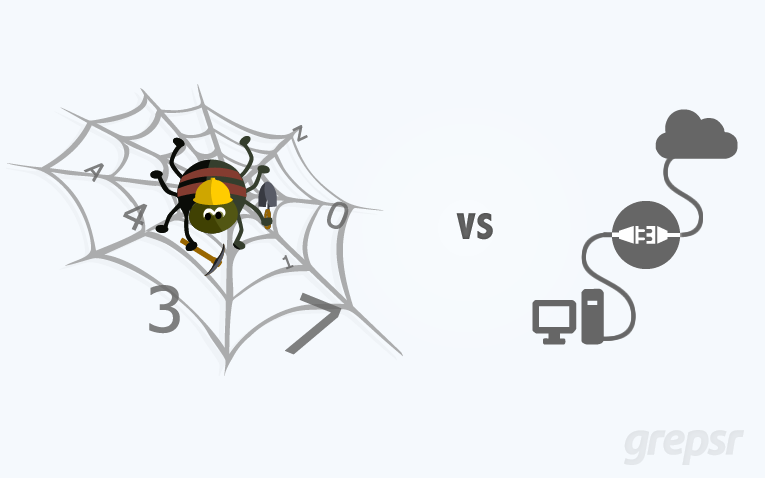
5. What’s the difference between a self-serve tool and Grepsr?
Self-serve tools require your team to build, configure, and maintain scrapers. Grepsr is a fully managed service; you describe the data you need, and Grepsr delivers it.
When a source site changes at midnight, Grepsr fixes it. When you need data in a format your Tableau dashboard expects, Grepsr delivers it that way. No engineering overhead on your end.
Check out this page for an honest comparison: Web Scraping Tool Vs Service
6. Is web scraping legal?
Scraping publicly available data is generally legal. The hiQ v. LinkedIn ruling affirmed this in the US. Grepsr stays within legal boundaries by focusing on publicly accessible data, respecting robots.txt protocols, and adhering to data protection regulations including GDPR and CCPA.
Every project is evaluated for compliance before work begins, so your firm isn’t left to manage that risk alone. Review Grepsr’s full security and compliance posture at the Grepsr Trust Center.
7. How accurate is the data Grepsr delivers?
With 14+ years of experience in the industry, Grepsr guarantees 99% data accuracy across all deliveries. Every dataset goes through stringent automated and manual QA checks before it reaches you. Crawlers are monitored continuously, and anomalies are flagged and corrected before they affect downstream deliverables.
As one consulting client put it: “They went the extra mile in helping us scope the relevant websites in order to have the most well-organized output.” Read more on Grepsr’s customer stories page.
8. In-house vs. freelancer vs. Grepsr — what’s the right choice?
| In-house | Freelancer | Grepsr | |
|---|---|---|---|
| Setup time | Weeks to months | Days to weeks | <24 Hours |
| Ongoing maintenance | Your team | Renegotiation each time | Included for free |
| Multi-source scale | Heavy engineering lift | Limited | Core capability |
| Data quality assurance | Manual | Variable | Systematic, 99% accuracy |
| Output format | Full control | Variable | CSV, JSON, XLS, API, direct DB |
| Best for | Stable, high-volume use cases with dedicated devs | One-off, simple scrapes | Multi-client, ongoing, or complex needs |
9. How is the data delivered?
However your team works. Grepsr delivers data in CSV, JSON, and XLS formats, and can push directly to Dropbox, Azure, email, SFTP, or via API. Power BI, Tableau, and Excel all ingest these natively.
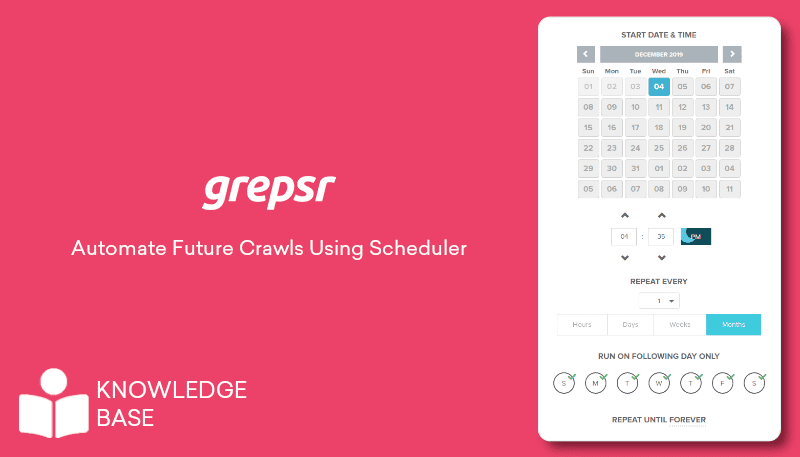
You can also set custom delivery schedules: daily, weekly, or monthly, so data arrives exactly when your workflows need it. See the full capabilities on the Grepsr Data Management Platform page.
10. How fast is the turnaround?
For standard projects with clear requirements, Grepsr typically delivers an initial dataset within a few business days. Once a pipeline is live, it runs on a fixed schedule – no chasing, no delays.
For consulting teams where speed is non-negotiable, Grepsr delivers data within 12 hours of project confirmation. This turnaround is reserved exclusively for our consulting partners.
One e-commerce consulting firm saw 15% ROI gains for their clients after switching to Grepsr’s data pipelines and cited Grepsr’s quick turnaround as a key reason for the partnership. Read the full story.
11. What happens when a website changes mid-project?
Grepsr catches it before you do. Thanks to our dedicated customer success managers who continuously monitor your projects and our crawlers are also monitored automatically, so the team repairs failures as they occur without you needing to flag them. This is what separates a managed service from a one-time build, and it’s especially important for long-running client engagements.
A good example: Grepsr monitors 350+ active data pipelines for a single health insurance data client, maintaining continuity across millions of records month over month. See how that works →
12. Can Grepsr handle niche or complex sources?
Yes. Regulatory databases, legal research platforms, niche B2B industry portals, sites with heavy JavaScript rendering, geographically segmented content, Grepsr handles all of it. Clients like BCG and EY rely on Grepsr for exactly this reason.
For a sense of the breadth, Grepsr has extracted data from 65,000+ PDF documents across Multilateral Development Bank websites for a single research client, a project that would have been impossible to do manually. Browse the full web scraping solutions page to see what’s covered.
13. How does Grepsr protect client confidentiality?
NDAs are standard. Each client’s data pipelines, source configurations, and deliverables are fully isolated, nothing is shared across accounts. Internal access is limited to the team working on your project.
Grepsr is also ISO, SOC-certified and AICPA-compliant, with a public Trust Center for full transparency on security and compliance practices.
14. What does it cost?
Pricing scales with the number of sources, data volume, and refresh frequency. The ROI math is simple: if an analyst spends two weeks manually pulling market data for a client deliverable, that’s thousands of dollars in labor for a single project.
Grepsr delivers the same dataset faster, at a fraction of that cost and the savings multiply across concurrent engagements. See pricing details →
Ready to put better data behind your client work?
Your competitors aren’t waiting for better data. The firms winning client mandates today are the ones who’ve replaced manual research with automated, always-on data pipelines.
Grepsr makes that possible, without adding headcount, engineering resources, or operational overhead.