Last updated: November 13, 2026
Mobile app scraping is collecting the data an app shows its users, such as prices, availability and listings, by capturing and replaying the app’s background API calls or by automating on-screen interactions. It is harder than website scraping because apps have no page source to inspect, often use binary formats like Protobuf, and add protections such as SSL pinning, rotating tokens and device fingerprinting.
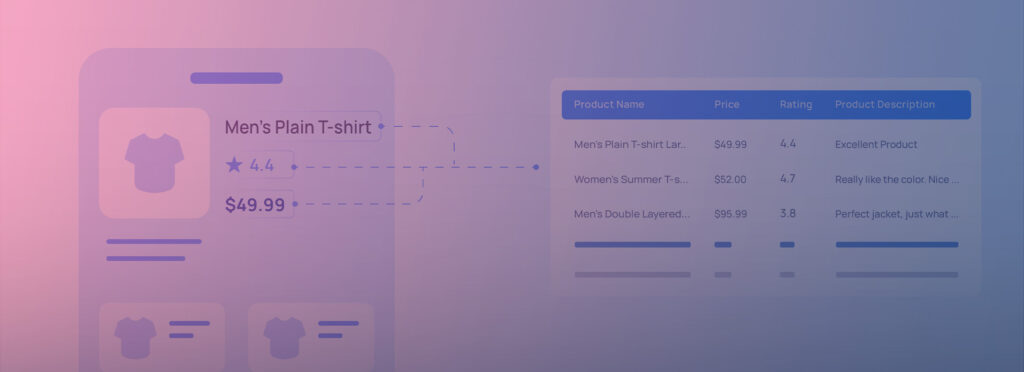
Mobile apps have become central to consumer behavior and business growth. In fact, consumers spent $167 billion directly in mobile apps in 2025, with non-gaming apps surpassing gaming revenue for the first time, showing how central mobile ecosystems have become to consumer behavior and business growth. As more user activity moves to mobile, a growing share of valuable data such as pricing, availability, popular locations and product details lives in app ecosystems. That data matters for businesses that want to monitor markets in real time.
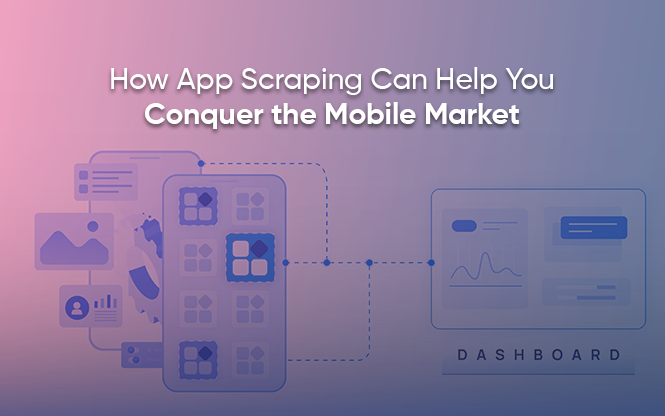
Accessing it is harder than it sounds. Websites serve content as HTML you can inspect, while mobile apps fetch their data through background APIs, often in compact formats and over encrypted channels. Extracting data from a mobile app, known as app scraping, therefore calls for a more advanced approach: identifying API endpoints, handling authentication tokens and dealing with protections such as SSL pinning and device fingerprinting.
The table below summarizes the three main methods, which are covered in detail later in this post.
| Method | How it works | Use when | Main challenge |
|---|---|---|---|
| API interception | Captures the app’s server requests and replays them programmatically | The app fetches data from identifiable endpoints | SSL pinning, rotating tokens and binary formats |
| Reverse engineering | Analyzes the app’s code to find hidden endpoints and request formats | Endpoints are not visible in traffic | Obfuscated code and changing app versions |
| UI automation | Replicates user taps and navigation and reads data from the screen | Data is only available on screen | Slower, and sensitive to interface changes |
App scraping is the extraction of structured data from a mobile application, either by intercepting and reproducing its server requests or by automating its user interface, and delivering the result as a dataset in CSV, JSON or through an API. For related reading, see our guide to scraping data from mobile apps and mobile sites for e-commerce and how app scraping can reveal hidden insights.

Why Is Data Inside Mobile Apps Hard to Scrape?
On a website you can right-click, inspect the page and watch network requests in your browser. A mobile app does not give you that view. The content a user sees, such as restaurant lists, prices and ratings, arrives through background requests and may be encrypted. Capturing it usually means using an emulator or an interception tool on a device set up for debugging.
Several features make app data harder to reach:
- No page source. An app has no HTML page to inspect, so you cannot read its structure from the screen alone.
- API-based data transfers. Apps fetch data from their servers in the background. The APIs are normally undocumented and meant for the app itself.
- Non-standard data formats. Apps often use compact formats such as JSON and Protobuf that are not visible in the interface.
- Encryption and security. Many apps use SSL pinning, token rotation and device validation, which make it hard to intercept or replicate requests.
How Does App Scraping Differ From Website Scraping?
| Website scraping | Mobile app scraping | |
|---|---|---|
| Data source | HTML pages | Background API responses |
| Inspectability | Easy with browser tools | Needs interception or reverse engineering |
| Data formats | HTML, JSON | JSON, Protobuf, gRPC, custom encoding |
| Protections | CAPTCHAs, IP blocks | SSL pinning, rotating tokens, device fingerprinting |
| Effort | Lower to moderate | Higher |
What Makes Mobile App Scraping Difficult?
Now that you know how apps protect their data, here are the challenges in practice.
What Data Formats Do Mobile Apps Use?
Apps use formats optimized for speed and efficiency, but they are harder to work with:
- JSON: common, but often deeply nested and wrapped in unexpected structures.
- Protobuf (Protocol Buffers): compresses data into binary, which is unreadable without decoding tools.
- Custom encryption: some apps scramble data in transit.
Even after you capture the data, you still need to decode and restructure it before it is usable.
How Do You Find an App’s Hidden APIs?
Apps normally do not publish their API documentation, so you may have to work it out from the app’s traffic or code. Even then, it is not always simple:
- Apps may use gRPC, which sends requests in binary form over HTTP/2 and is harder to intercept.
- They may use WebSockets for real-time updates, which keep a connection open and stream data.
- Headers often include authentication tokens, device identifiers and signatures that change frequently.
Replaying an API call outside the app is not as simple as copying a URL, because you have to reproduce what the app sends.
What Security Layers Block App Scraping?
Apps are designed to resist outside access, and their protections are often stricter than those of websites:
- SSL pinning stops proxy tools from capturing traffic.
- Dynamic tokens expire quickly or are tied to specific devices or sessions.
- Device fingerprinting checks for consistency in app version, operating system and even screen size.
- Code obfuscation makes it harder to see how requests are built.
Each defense adds friction, and most apps use several at once. Our guides to rotating and residential proxies and enterprise anti-bot solutions cover related techniques for websites.
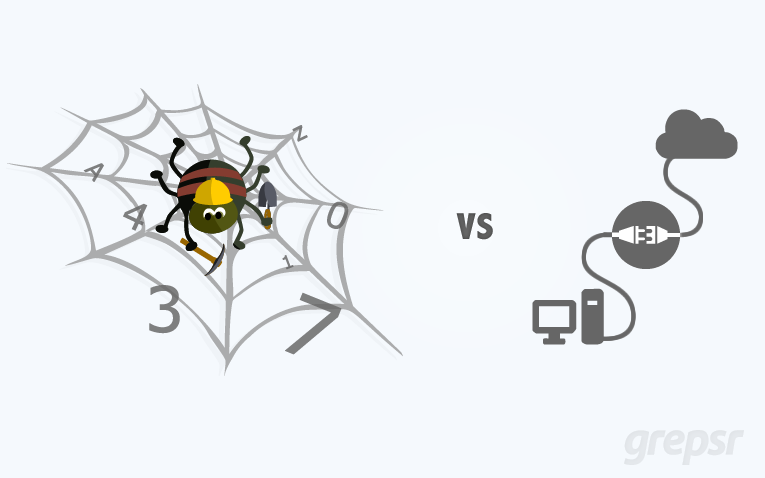
Should You Scrape the App, the Mobile Website or an API?
Check for easier routes before you scrape an app:
- Is the same data on the website? If so, scraping the site is usually simpler. See web scraping vs API for how the options compare.
- Is there an official API? An official API is the most stable source, if it covers the fields you need.
- Is the data only in the app? Then app scraping may be the only route.
What Data Can You Collect From Mobile Apps?
In delivery apps, data such as restaurant availability, pricing and delivery times can reveal useful market insights, but it is hard to access. Other examples depend on the app and your use case, and Grepsr can scope them with you. For an example of how this works in practice, see our customer story on app scraping done right and our e-commerce industry page.
How Does Grepsr Scrape Mobile Apps?
To scrape a mobile app you need to reproduce a real mobile device accurately, sometimes down to the operating system version, screen resolution and app version. Grepsr handles these challenges as a managed service, so your team does not have to run proxies or emulators.
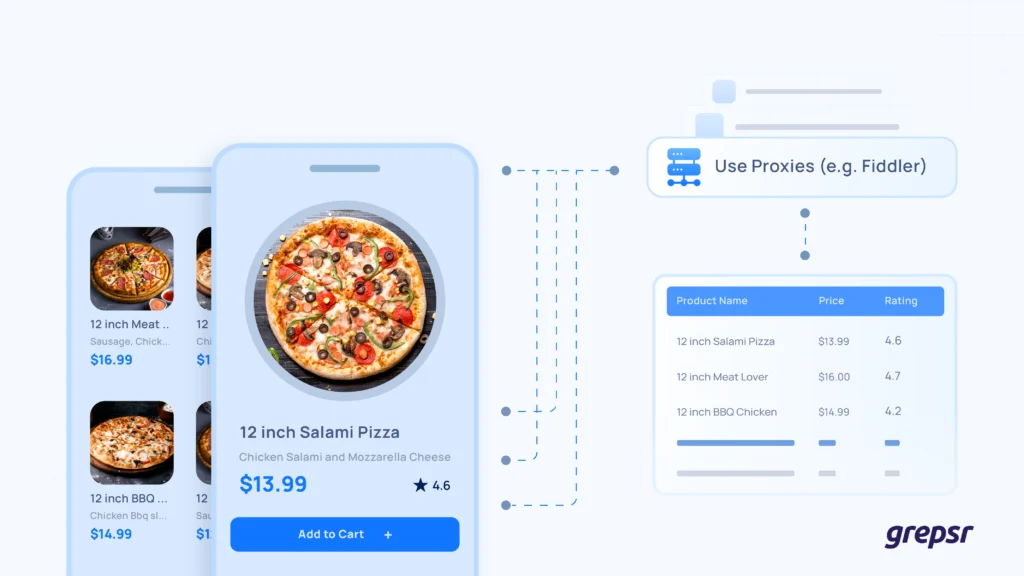
The techniques depend on the app:
API Interception
The team observes how the app talks to its server and captures API calls with traffic analysis tools. Once the requests that carry the data, such as product lists and prices, are identified, they are replicated programmatically.
Reverse Engineering
For apps that do not expose their APIs openly, the team analyzes the app’s code (the APK on Android or the app binary on iOS) to find endpoints, request formats and parameters, so communication can be reproduced outside the app.
Authentication Handling
Apps often use rotating tokens or device-specific credentials. Handling login flows, session refresh and token rotation keeps extraction running.
Automated Workflows
When data is reachable only through on-screen elements, automated processes replicate user actions such as tapping and navigating, using UI automation tools such as UI Automator, and capture the data from the interface.
Is Mobile App Scraping Legal?
It depends on the app’s terms of service, the data you collect, whether you bypass access controls and the privacy laws that apply. App terms often restrict automated access, and techniques such as circumventing security protections can raise additional legal issues. Personal data needs a lawful basis. Confirm your use case with legal counsel before you start, and see our guide on whether web scraping is legal.
What Do You Get From a Managed App Scraping Service?
- Structured datasets from apps that browser tools cannot scrape.
- Scoped support for login flows, session tokens and device-bound data, confirmed per project.
- Automated extraction and delivery in the format you choose, such as CSV, JSON or an API, through data-as-a-service.
- A fully managed service with no infrastructure to maintain or scripts to debug.
Explore Grepsr’s web scraping solution to see how this fits your project.
Frequently Asked Questions
What is mobile app scraping?
Mobile app scraping is the extraction of structured data from a mobile app, either by capturing and replaying its server requests or by automating its user interface.
Can you scrape data from a mobile app without an API?
Yes, in some cases. If no API is accessible, data can be collected by automating the app’s interface and reading what appears on screen. This is usually slower and more sensitive to interface changes.
What is SSL pinning and why does it block scraping?
SSL pinning makes an app accept only its own server’s certificate, so a proxy tool that tries to inspect the traffic is rejected. It is one of the protections that make app traffic hard to capture.
Is it legal to scrape a mobile app?
It depends on the app’s terms, the data and the laws that apply where you operate. App terms often restrict automated access, and personal data is regulated. Confirm your use case with legal counsel.
How is app scraping different from web scraping?
Websites serve HTML you can inspect. Apps fetch data through background APIs in compact formats and add protections such as SSL pinning, rotating tokens and device fingerprinting, so app scraping usually takes more effort.
What formats can app data be delivered in?
App data can be delivered as CSV or JSON files, or through an API.