Building an in-house web scraping system can look affordable and efficient at first.
You already have engineers. You already have cloud infrastructure. You may only need a few websites. So why not build it yourself?
That logic works for small one-off projects. But production web scraping is rarely just “write a script and collect the data.” Once the project grows, the real cost starts showing up in places that are easy to underestimate: developer time, proxy management, site changes, QA, compliance review, failed runs and ongoing maintenance.
A scraper is a little like a delivery route. The first trip may be simple. But when roads close, traffic patterns change and new destinations get added, someone has to keep adjusting the route. Web scraping works the same way. Websites change layouts. Anti-bot systems evolve. Data fields move. Pages break. And the business still expects clean data on time.
That is why many companies compare in-house scraping against a managed service like Grepsr before committing engineering resources.
The Visible Cost of In-House Web Scraping
The most obvious cost is engineering.
According to the U.S. Bureau of Labor Statistics, the median annual wage for software developers was $133,080 in May 2024. That is before benefits, management time, recruiting costs, cloud infrastructure and tooling.
And one engineer is rarely enough for a production scraping operation.
A serious in-house setup may need support across:
- Scraper development
- Data parsing and normalization
- Proxy and IP management
- Cloud infrastructure
- Storage and delivery pipelines
- QA and monitoring
- Error handling and retries
- Compliance review
- Ongoing maintenance when websites change
That means the real cost is not just “developer salary”. It is the cost of building and maintaining a small data operations function.
The Hidden Cost: Maintenance
The first version of a scraper is usually the easiest part.
The harder part is keeping it working.
Websites change HTML structures, rename fields, block suspicious traffic, load data dynamically or change their APIs without notice. A scraper that worked yesterday can fail tomorrow because a button changed, a field moved or a page started loading content differently.
For an internal team, every failure creates a chain reaction:
The scraper breaks.
The dataset is incomplete.
The dashboard becomes unreliable.
The analyst raises a ticket.
The engineer stops other work to debug it.
That maintenance burden is where in-house scraping becomes expensive.
It is not always a large dramatic failure. Sometimes it is death by a thousand small fixes.
Infrastructure Costs Add Up Too
In-house scraping also requires infrastructure.
At minimum, teams may need servers, storage, queues, logging, monitoring, retry logic and delivery systems. At scale, they may also need proxy networks, browser automation, CAPTCHA handling, IP rotation and data validation workflows.
Cloud infrastructure can be flexible, but it is not free. AWS describes its pricing as pay-as-you-go, where customers pay for the services they use. That model is helpful, but it also means costs grow as scraping volume, compute needs, storage and data transfer increase.
For a small project, infrastructure may be manageable.
For a recurring data operation across hundreds or thousands of pages, it becomes another system your team has to monitor, optimize and pay for.
Opportunity Cost: What Your Engineers Are Not Building
The biggest cost may not appear on the invoice.
When engineers spend time building and maintaining scrapers, they are not building your core product, improving internal tools or solving customer-facing problems.
That is the opportunity cost.
If web data is central to your business, an internal team may make sense. But if scraping is a support function, building everything in-house can pull technical talent away from higher-value work.
This is where the build-vs-buy question becomes practical.
Do you want your engineers managing scrapers?
Or do you want them using the data?
Time to Production Matters
In-house scraping takes time.
Before the first reliable dataset is delivered, teams may need to scope requirements, write crawlers, handle blocked requests, test data quality, build delivery pipelines and create monitoring systems.
That can delay business decisions.
A managed service can shorten the path from requirement to usable data because the scraping infrastructure, QA process and delivery workflow already exist.
For fast-moving use cases like pricing intelligence, market research, lead generation, ecommerce monitoring or AI training data, speed matters. A delayed dataset can mean missed opportunities.
Why Managed Web Scraping Can Be More Cost-Effective
A managed web scraping service reduces the need to build and maintain scraping infrastructure internally.
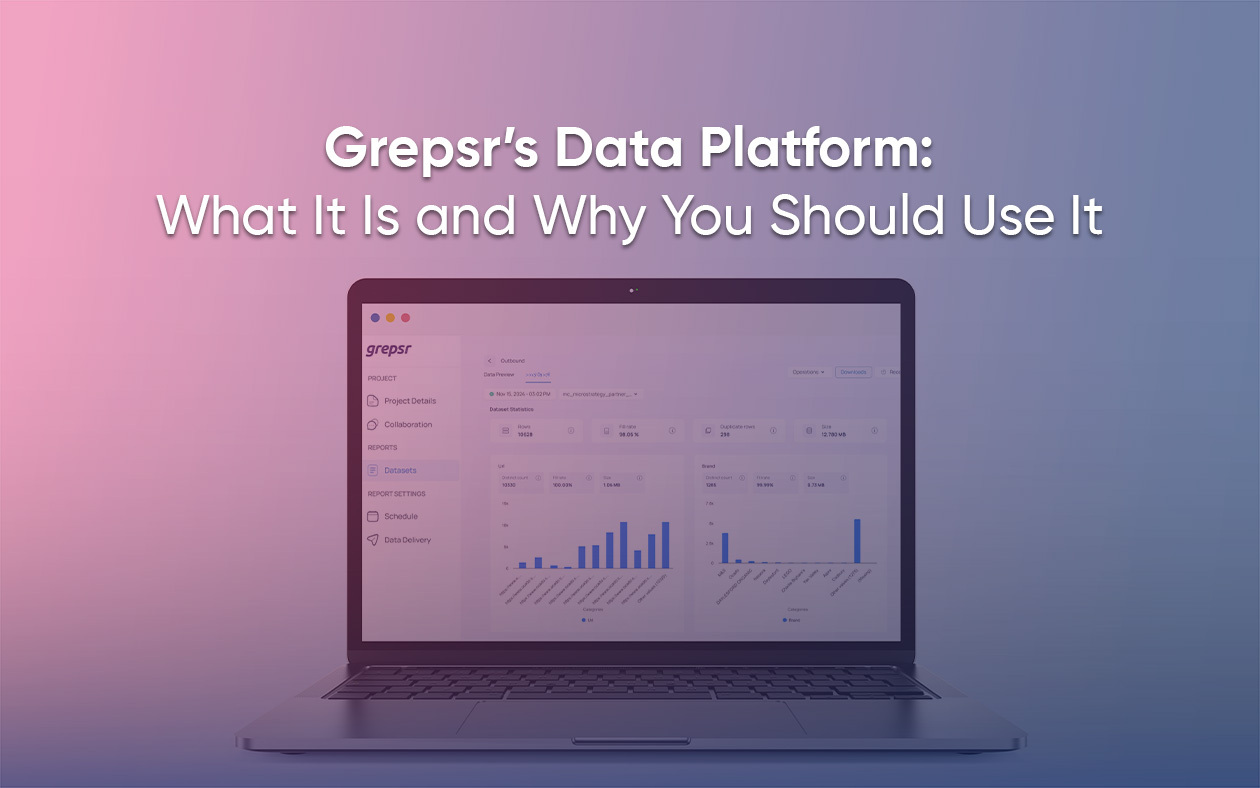
With Grepsr, the work does not stop at extraction. The service covers the broader workflow: collecting, cleaning, structuring and delivering web data into the systems a business already uses.
That matters because most companies do not just need raw scraped pages. They need reliable datasets that are ready for reporting, analysis or automation.
Grepsr supports delivery through formats and channels such as CSV, JSON, XML, NDJSON, S3, SFTP, databases and REST API. That allows teams to connect web data directly to existing data pipelines instead of manually handling files.
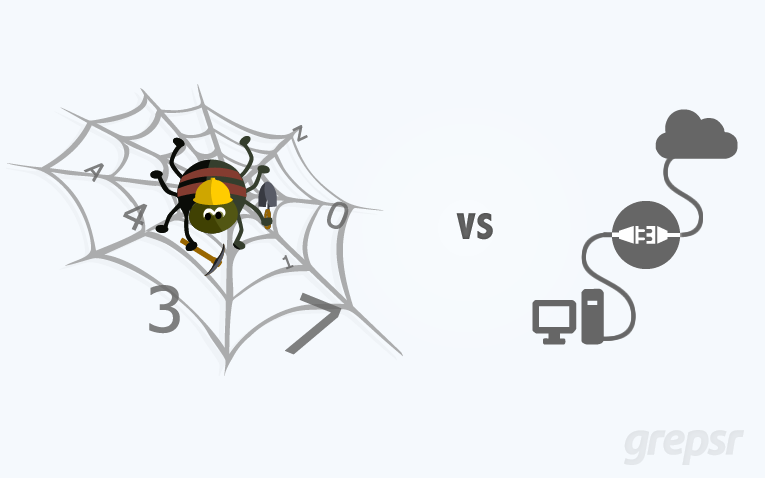
In-House vs Managed Web Scraping: A Practical Comparison
| Factor | In-House Web Scraping | Managed Service Like Grepsr |
|---|---|---|
| Upfront setup | Requires internal planning, development and infrastructure | Managed by an experienced scraping team |
| Engineering time | Ongoing internal commitment | Internal team can focus on using the data |
| Maintenance | Internal team handles site changes and failures | Provider manages scraper updates and fixes |
| Infrastructure | Requires servers, storage, monitoring and proxy setup | Infrastructure is handled as part of the service |
| Data quality | Must be built and monitored internally | QA and structuring are part of delivery |
| Scalability | May require more engineers and systems | Can scale without adding internal headcount |
| Delivery | Must be built into internal pipelines | Data can be delivered through API, S3, SFTP, databases or files |
| Best fit | Core scraping teams with long-term technical capacity | Businesses that need reliable data without managing scrapers |
When In-House Web Scraping Makes Sense
In-house scraping is not always the wrong choice.
It can make sense when:
- Scraping is a core part of your product
- You have dedicated engineering capacity
- Your sources are stable and limited
- You need full control over every technical layer
- You are working on a small internal experiment
For narrow one-time projects, a DIY scraper may be enough.
But for recurring, production-grade web data, the cost equation changes quickly.
When Outsourcing Makes More Sense
Outsourcing to a managed service makes more sense when:
- You need data from many websites
- Data quality and uptime matter
- Internal engineering time is limited
- You need scheduled delivery
- Websites change often
- You need structured data delivered to S3, API, databases or SFTP
- You want faster turnaround without hiring a scraping team
This is where Grepsr is a strong fit.
We help companies avoid the operational burden of building scrapers, maintaining infrastructure and fixing broken workflows. Instead, teams get clean, structured data delivered where they need it.
Conclusion: The Real Cost Is Not Just the Scraper
The real cost of in-house web scraping is not the first script.
It is the people, infrastructure, maintenance, monitoring, QA and lost engineering focus required to keep that script working in production.
For companies that need reliable web data without turning their engineering team into a scraping operations team, a managed service like Grepsr is often the more practical choice.
Grepsr helps businesses move faster by handling extraction, cleaning, structuring and delivery so teams can focus on decisions, not maintenance.
Stop spending engineering time on scraper upkeep. Get clean web data delivered directly into your workflow with Grepsr!
Frequently Asked Questions
Is in-house web scraping cheaper than outsourcing?
It can be cheaper for small one-time projects. But for recurring data extraction, the cost of engineers, infrastructure, maintenance, QA and failed runs can make in-house scraping more expensive over time.
What are the biggest hidden costs of in-house web scraping?
The biggest hidden costs are maintenance, broken scrapers, site changes, proxy management, monitoring, data quality checks and the opportunity cost of using engineers on scraping instead of core product work.
When should a company use a managed web scraping service?
A managed service is usually better when the company needs recurring data, multiple sources, reliable delivery, clean structured output and support for changing websites.
Can Grepsr deliver data into existing pipelines?
Yes. Grepsr supports delivery through options such as API, S3, SFTP, databases and structured file formats like CSV, JSON, XML and YAML.
Is outsourcing web scraping faster than building in-house?
In many cases, yes. A managed service already has scraping infrastructure, QA processes and delivery workflows in place, which can reduce setup time compared with building everything from scratch.