AI and ML models are only as good as the data they’re trained on. Yet for most teams, data collection is the slowest, messiest part of the pipeline, not the modeling.
Whether you’re building NLP systems, training computer vision models, or running predictive analytics, the bottleneck is almost never the algorithm.
It’s getting enough clean, structured, domain-specific data at scale. Here’s what AI/ML teams need to know about web scraping services and how Grepsr helps you get from data gap to deployment faster.
1. What is web scraping and why do AI/ML teams use it?
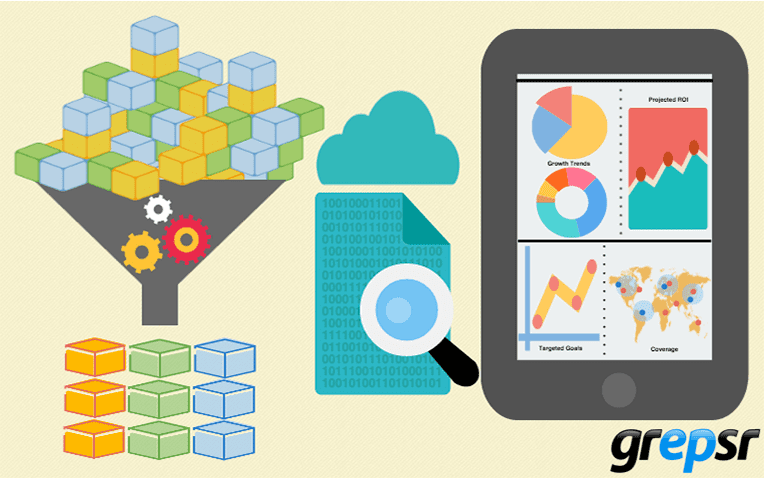
Web scraping is the automated extraction of publicly available data from websites, including text, images, structured metadata, reviews, listings, and more, delivered as clean, ready-to-use datasets.
AI/ML teams use it to build training corpora, validate models against real-world data, and keep production models updated as the web evolves. Grepsr’s managed data extraction service handles the collection infrastructure so your team can focus on model development, not data pipelines.
2. What kinds of data can Grepsr collect for AI/ML training?
Text corpora for NLP and LLM fine-tuning, image datasets for computer vision, structured product and listing data for recommendation systems, user review data for sentiment models, behavioral and interaction records for predictive analytics, and historical time-series data for forecasting models.
Grepsr supports collection across text, tables, images, and metadata in formats including JSON, CSV, YAML, and XML from virtually any publicly accessible source. See the full range of AI/ML training data applications Grepsr supports.
3. Why not just collect training data in-house?
Most domain-specific AI projects don’t fail because of model architecture, they fail because the training data pipeline breaks. ML teams can fine-tune transformers and optimize inference, but when models move from research to production, the friction almost always appears in the data layer.
Anti-bot systems, JavaScript rendering, IP rate limits, and constantly changing site structures require dedicated engineering to manage. Grepsr handles all of that, so your team isn’t pulled off model work to fix scrapers.
4. What’s the difference between a one-time dataset and an ongoing data pipeline?
A one-time dataset works for initial model training but leaves you with a static snapshot that ages quickly. An ongoing pipeline keeps your training data current, critical for models that need to reflect real-world changes in pricing, sentiment, language patterns, or behavior.
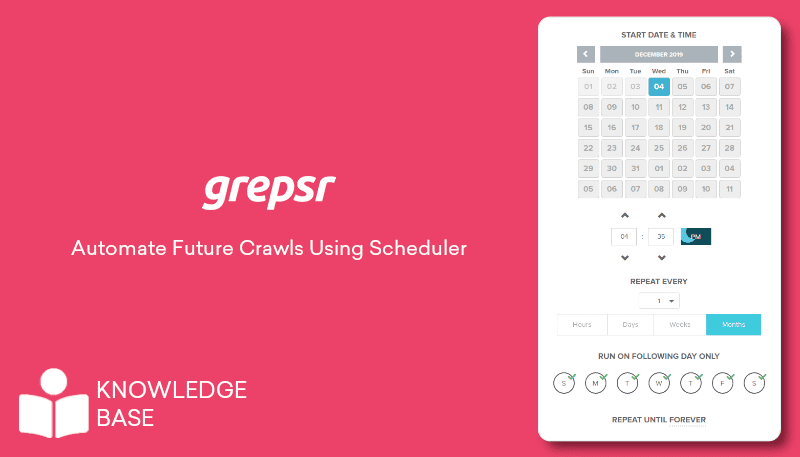
Grepsr supports both: one-time bulk extractions for baseline training sets, and scheduled recurring pipelines for continuous model retraining and validation. Learn how Grepsr structures ongoing data delivery for AI teams.
5. What are the most common AI/ML use cases Grepsr supports?
- NLP and LLM training: large text corpora from forums, blogs, reviews, and news sources
- Computer vision: image datasets from publicly available media and product repositories
- Sentiment analysis: review and feedback data across platforms and categories
- Predictive analytics: real-time and historical behavioral, pricing, and market data
- Recommendation systems: structured product, listing, and interaction data
- Speech recognition: video metadata, transcriptions, and audio-linked content at scale
For a real example: Grepsr extracted metadata and transcriptions from 1 million videos for a leading AI company building a multimodal speech recognition system, then scaled further to download 500K+ full video files as project needs evolved.
6. How does Grepsr ensure training data quality?
Bad training data produces bad models. Grepsr applies automated and manual QA checks to every dataset before delivery, validating completeness, removing duplicates, flagging anomalies, and standardizing formats across sources.
As one client put it: “Got what I needed at a fair price. Customer service was clear and helpful. Deliverables were problem-free and prompt.” For AI teams, this means less preprocessing overhead and fewer data quality surprises mid-training. Read more about Grepsr’s data quality process.
7. Can Grepsr handle the scale AI training actually requires?
Yes. Grepsr processes 600M+ records per day across 10,000+ web sources. In 2022, a leading AI company partnered with Grepsr to support multiple concurrent client projects requiring large-scale data collection. Grepsr’s infrastructure scaled dynamically to meet demand without disrupting delivery timelines.
See the full customer story. For AI teams, this kind of scalability is the difference between a dataset that’s big enough and one that’s actually sufficient for robust generalization.
8. In-house vs. freelancer vs. Grepsr — what’s the right choice for AI teams?
| In-house | Freelancer | Grepsr | |
|---|---|---|---|
| Setup time | Weeks to months | Days to weeks | <24 Hours |
| Ongoing maintenance | Your engineering team | Renegotiation each time | Included |
| Scale | Constrained by internal infra | Limited | 600M+ records/day |
| Data formats | Full control | Variable | JSON, CSV, YAML, XML, DB-ready |
| QA and validation | Manual | Variable | Systematic, 99% accuracy |
| Anti-bot handling | Build and maintain yourself | Hit or miss | Handled automatically |
| Best for | Stable, narrow scraping with dedicated devs | One-off, simple datasets | Large-scale, multi-source, ongoing AI pipelines |
9. What data formats does Grepsr deliver for AI pipelines?
JSON, CSV, XLSX, XML, and YAML all structured and QA-tested before delivery. Grepsr can also deliver directly to databases or integrate with your existing ML pipeline via API.
Data arrives clean and consistent across sources, reducing the preprocessing step that typically eats into model development time. If you have a unique format requirement, Grepsr’s team will run a feasibility check before the project starts.
10. Can Grepsr collect image and video data, not just text?
Yes. Grepsr collects diverse data types including text, structured metadata, images, and video files. The data can also be collected in form of reels/shorts of videos or images from social media.
The speech recognition project involved downloading and processing over a million hours of raw video files at scale, a bandwidth-intensive extraction that required significant infrastructure management.
For computer vision teams that need image datasets from publicly available repositories, Grepsr can scope and deliver these alongside structured metadata.
11. How does Grepsr handle anti-bot protections on data sources?
JavaScript rendering, CAPTCHAs, IP rate limiting, and dynamic content loading are standard obstacles Grepsr’s crawlers handle automatically.
As anti-bot technology has become more sophisticated, the technical barrier to web data extraction has risen significantly, making managed services increasingly valuable for AI teams that can’t afford to have their data pipelines blocked mid-project.
Grepsr monitors every run and resolves failures before they affect your delivery schedule.
12. Is web-scraped training data legally and ethically safe to use?
Scraping publicly available data is generally legal. The hiQ v. LinkedIn ruling affirmed this in the US. Grepsr operates within legal boundaries by focusing on publicly accessible sources, adhering to robots.txt protocols, and complying with GDPR and CCPA.
For AI teams, this matters because training data provenance is increasingly scrutinized, both by regulators and in model documentation. Grepsr evaluates every project for compliance before work begins. Review Grepsr’s full security and compliance posture at the Grepsr Trust Center.
13. How quickly can Grepsr deliver an initial training dataset?
For well-scoped projects with defined sources and fields, Grepsr delivers an initial sample dataset within a few business days, before committing to a full-scale run.
This sample-first approach lets your team validate data quality and structure against your model requirements before the full extraction begins. Once approved, Grepsr scales to the full dataset and maintains the pipeline on your preferred schedule.
14. What does it cost, and how do we justify it?
Pricing scales with data volume, number of sources, and delivery frequency. The ROI case for AI teams is direct: engineer time spent building and maintaining scrapers is engineer time not spent on model development.
A logistics company using Grepsr’s data to train a predictive delivery-time model achieved 10% faster delivery estimates, the dataset paid for itself in model performance alone. See pricing details →
Your models are waiting on your data. Don’t let that stay true.
Your competitors aren’t waiting for better training data. The teams shipping smarter models faster are the ones who’ve already solved the data pipeline problem. Grepsr exists to solve it for you, clean, structured, domain-specific web data at the scale your models actually need. Talk to a data expert →