The Short Answer
A managed data-as-a-service (DaaS) provider ensures accuracy by building quality control into every stage of the data lifecycle: agreed definitions before collection, validation at extraction, automated checks across the full dataset, human review of edge cases, continuous monitoring of sources, and contractual accuracy commitments. Because the provider owns the whole pipeline, errors are caught and corrected before the data reaches your team.
Grepsr has run this fully managed data-as-a-service model for 14+ years, serving 1,500+ enterprise clients and delivering 10B+ records per month at 99.5% data accuracy. The sections below explain how each layer works and what to ask any provider before you sign.
Why Accuracy Gets Harder as Datasets Grow
Small datasets can be checked by eye. Large ones cannot, and three forces make errors more likely as volume rises.
- Source variety. Millions of records usually come from hundreds or thousands of websites, each with its own layout, formats, and update cycle.
- Source change. Websites redesign, rename fields, and add anti-bot defenses without notice. A pipeline that was correct last month can return partial or shifted data today.
- Silent failure. A broken extractor often still returns data. Prices land in the wrong column, a currency symbol disappears, or a field fills with default values, and nothing crashes to signal the problem.
Accuracy at this scale comes from the process around the data. Grepsr’s guide to the biggest web scraping challenges covers these failure points in more detail.
Step 1: Define Accuracy and Schema Before Collection Starts
Accuracy is measurable only against a written definition. A managed provider starts by agreeing with the client on what a correct record looks like.
- Field-level schema. Each field gets a data type, format, allowed values, and a rule for missing data (for example, price as a decimal with a currency code, never a text string).
- Source of truth. The team confirms which page, field, or document counts as the authoritative value when a source shows conflicting information.
- Acceptance criteria. Both sides agree on the accuracy threshold, completeness target, and freshness window the delivered data must meet.
This step removes ambiguity early. When a record is later flagged, there is a clear standard to judge it against. At Grepsr, every project starts with a consultation to review data needs and key KPIs, and a sample dataset is provided for approval before full-scale extraction. Our guide to the characteristics of high-quality data covers the five attributes most teams define accuracy against.
Step 2: Validate at the Point of Extraction
The cheapest place to fix an error is where it happens. Each record is checked as it is collected, before it joins the larger dataset.
- Type and format checks confirm that dates parse as dates, prices as numbers, and URLs as valid links.
- Range and logic checks flag values that cannot be right, such as a negative price, a product rated 7 out of 5, or a sale price higher than the list price.
- Required-field checks reject records missing mandatory fields instead of passing them downstream.
- Normalization converts units, currencies, and date formats into one standard so records from different sources compare cleanly.
Records that fail are routed to a review queue. The pipeline does not deliver them as if they were valid. Grepsr’s data management platform adds AI-assisted validation, where teams write custom data rules in plain English and the system flags inconsistencies before they reach a workflow. For more on standardizing formats, see what data normalization is and why enterprises need it.
Step 3: Run Automated QA Across the Full Dataset
Record-level checks catch individual errors. Dataset-level checks catch patterns that only show up at scale.
- Deduplication finds repeated records, including near-duplicates with slightly different names or URLs.
- Completeness profiling measures the share of populated values per field and compares it to the previous delivery.
- Distribution and anomaly detection flags sudden shifts, such as average price jumping 40% overnight or a field that is suddenly empty for one source.
- Volume checks compare record counts against expected totals, so a scrape that returns half the usual rows triggers an alert.
- Cross-source reconciliation compares the same entity across sources and surfaces conflicts for resolution.
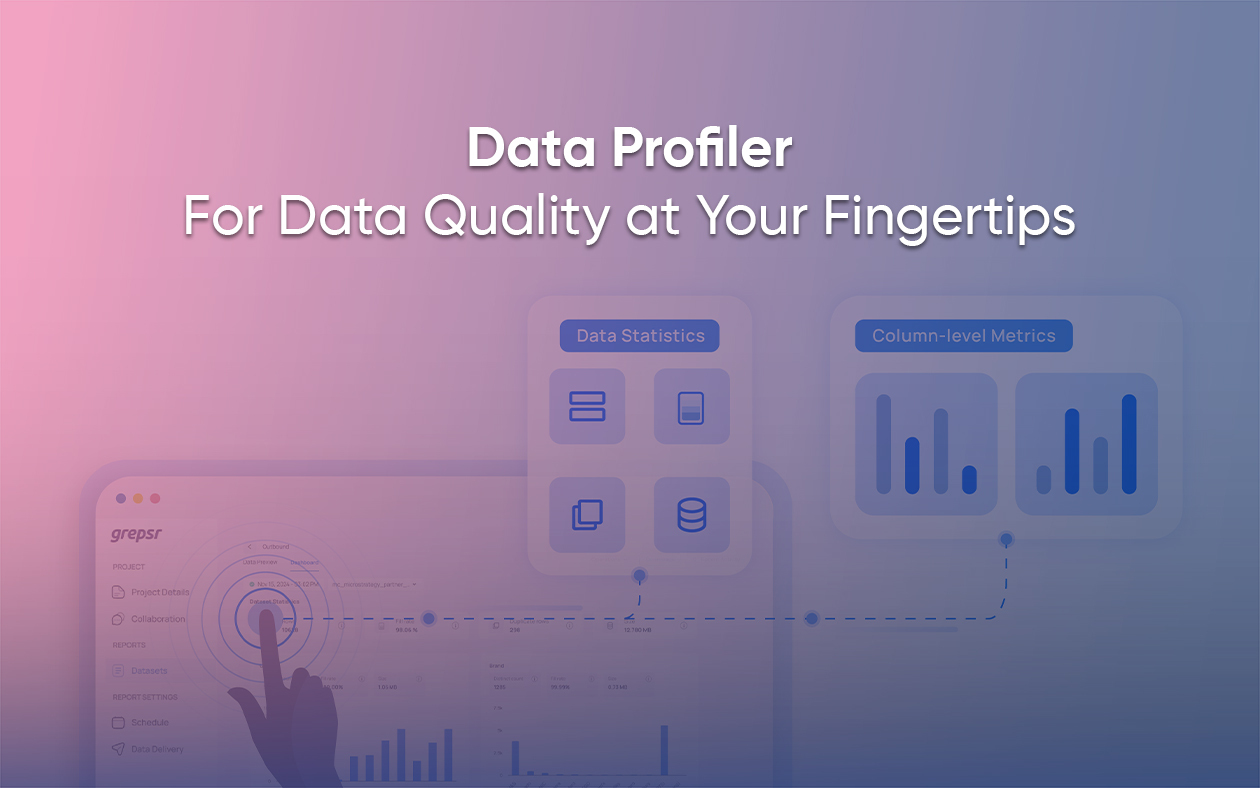
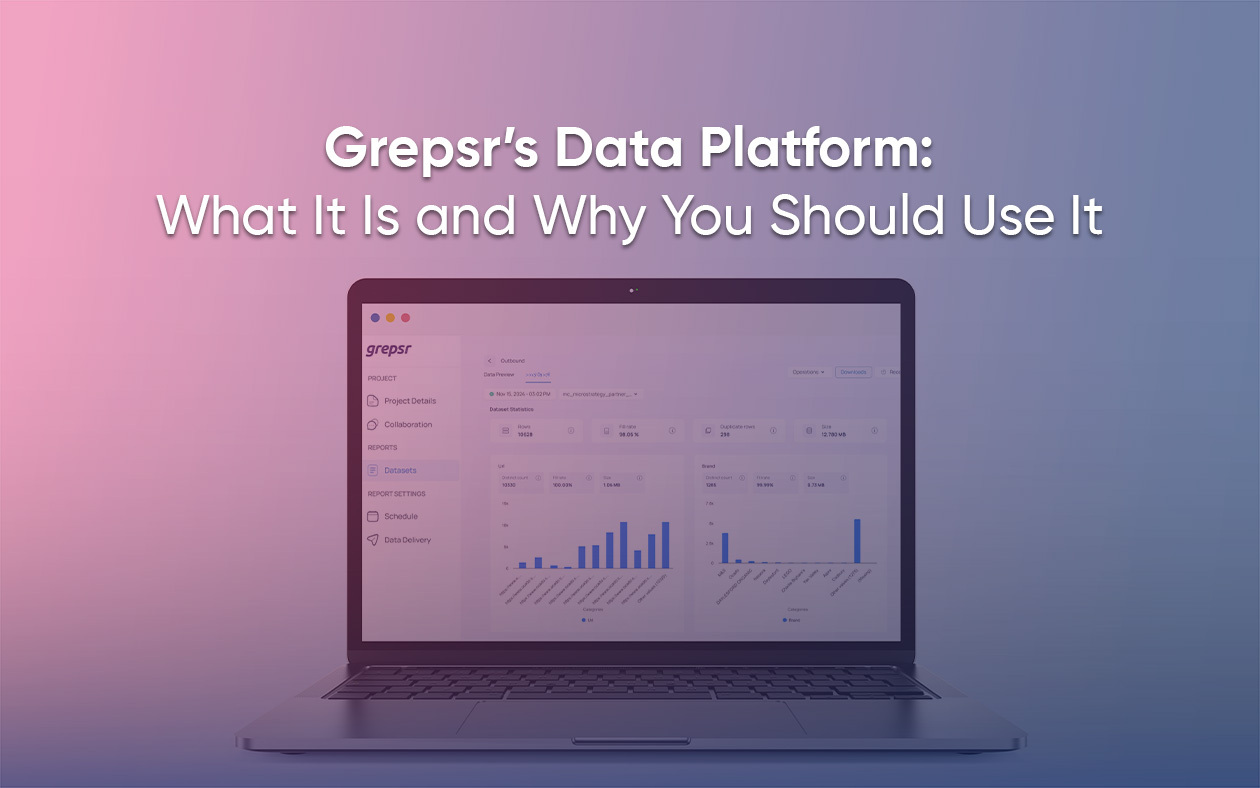
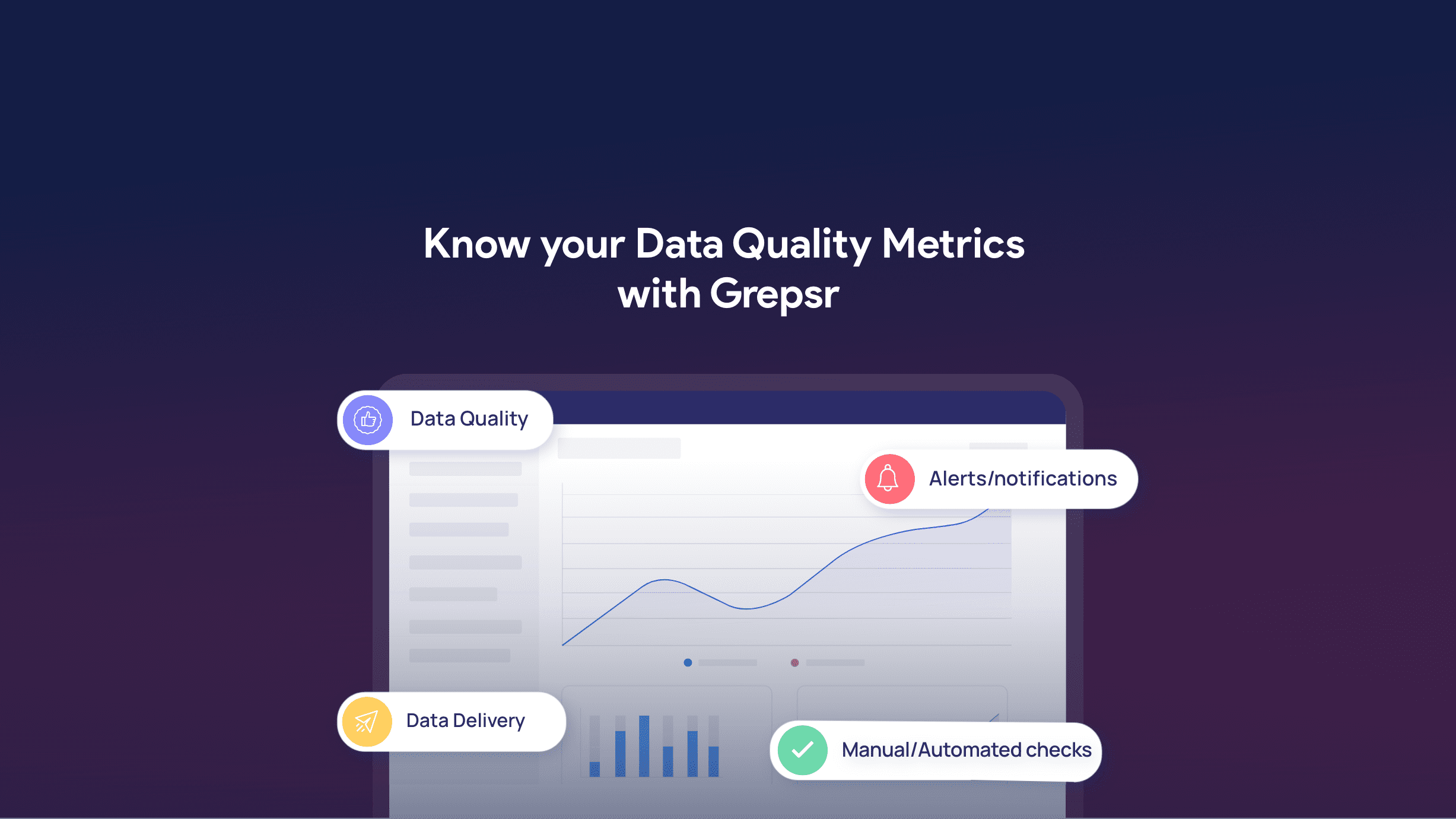
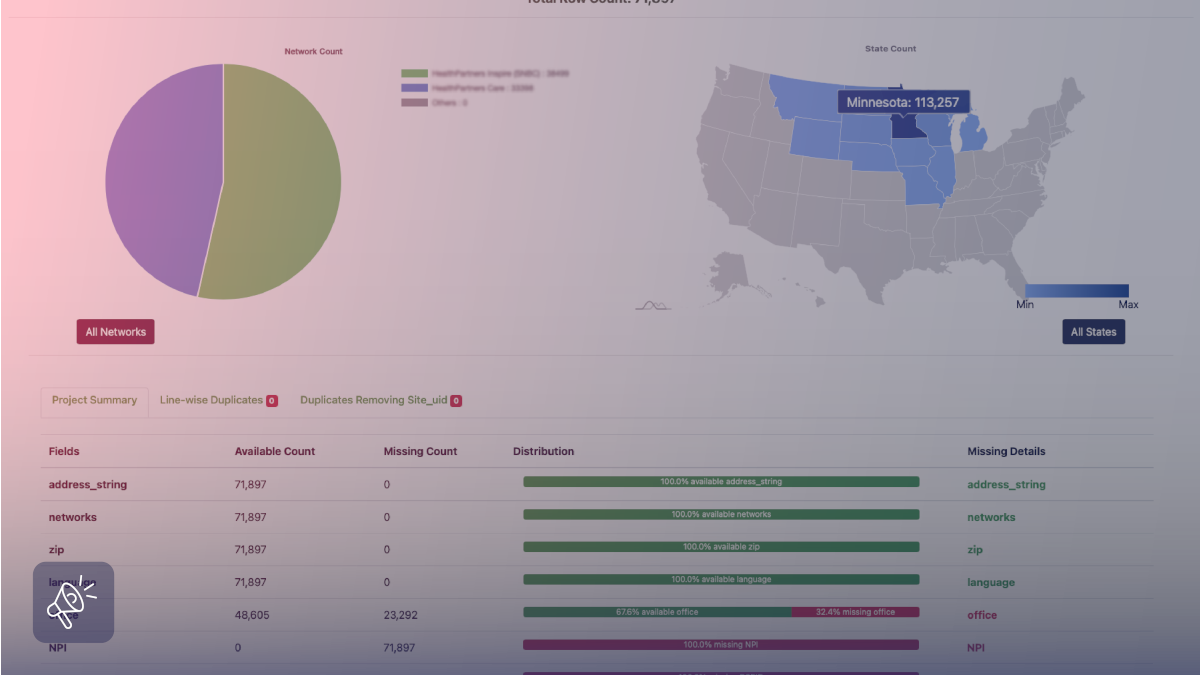
These checks run on every delivery. Each run produces a quality report that shows which rules passed and which records need attention. On Grepsr’s platform, the Data Profile Dashboard shows quality metrics for any report, and new data is automatically compared with past results to check for inconsistencies. Data Profiler for Data Quality at Your Fingertips explains how the dashboard works.
Step 4: Add Human Review Where Automation Falls Short
Rules confirm that a value is well-formed. They cannot always confirm that it is right. A price can be a valid number and still belong to a different product variant.
Human QA analysts handle the judgment calls:
- Sampling records from each delivery and checking them against the live source
- Resolving flagged records from the validation and anomaly queues
- Reviewing new sources before they enter production
- Feeding corrections back into the rules, so the same error is caught automatically next time
This loop is where a managed service differs most from a self-serve tool. The people who review the data also know the client’s requirements, so corrections reflect what the client needs. At Grepsr, every dataset goes through automated validation plus manual QA before delivery, and expert QAs monitor fill rates and duplication and flag anomalies in real time. Enhance Web Scraping Data Quality walks through the approach.
Step 5: Monitor Sources and Maintain Pipelines Continuously
Accuracy at launch decays unless someone keeps watching the sources. A managed provider treats maintenance as part of the service.
- Automated monitoring tracks extractor health, response codes, record counts, and field-level fill rates on every run.
- Alerting notifies engineers when a metric drifts outside its normal range, often before the client sees a delivery.
- Rapid repair means engineers update extractors when a website changes layout, then re-run the affected data.
- Backfill and re-delivery replaces bad records with corrected ones, so the dataset history stays consistent.
Because the provider owns maintenance, the client’s engineers spend their time on the data instead of repairing scrapers. Grepsr runs proactive site change monitoring, so changes are detected and handled before a pipeline breaks. For the scheduling and monitoring side, see orchestrating data workflows.
Step 6: Back Accuracy With SLAs and Transparent Reporting
The final layer turns quality practices into commitments the client can hold the provider to.
- Service-level agreements put accuracy, completeness, and delivery timing in writing, with defined remedies if a target is missed.
- Quality reports accompany each delivery and show pass rates, flagged records, and corrections made.
- Feedback channels let the client report an error and get it fixed, with the root cause addressed in the pipeline.
- Dedicated support gives the client a named team that knows their data, so issues move quickly from report to resolution.
A stated accuracy figure is only meaningful when it comes with a definition of how it is measured and a commitment behind it. Every Grepsr engagement runs to a written SLA with defined delivery windows, a 99.5% contractual accuracy SLA, and a dedicated account manager. See the data-as-a-service page for the full model, and pricing for how usage-based billing works.
How to Evaluate a Provider’s Accuracy Claims
Use these questions in vendor conversations. A strong provider answers each one with specifics.
| Question to ask | What a strong answer includes |
|---|---|
| How is accuracy measured? | A written formula, a sample method, and the fields it covers |
| Is accuracy guaranteed in the contract? | An SLA with a numeric target and a defined remedy |
| What happens when a source changes? | Automated detection, a repair timeline, and re-delivery of affected data |
| Where does human review happen? | Named QA steps for sampling, flagged records, and new sources |
| What do I receive with each delivery? | A quality report with pass rates and corrections |
| Who do I contact about an error? | A dedicated team and a stated response time |
| Can I see references at my scale? | Clients with comparable volume and source complexity |
Grepsr’s guide to choosing the right web scraping service covers the wider checklist, including compliance, pricing, and support. To see how Grepsr answers these questions on your own data, request a sample dataset before you commit.
Frequently Asked Questions
What does “data accuracy” mean in a DaaS context?
Data accuracy is the share of delivered records whose values match the authoritative source and the agreed schema. Providers should state which fields are measured and how samples are drawn.
Can automation alone guarantee accurate data?
Automation catches format errors, outliers, duplicates, and volume drops at high speed. Human reviewers confirm context-dependent values that rules cannot judge, so the strongest pipelines combine both.
How often should accuracy be checked?
Checks should run on every delivery, with continuous monitoring between deliveries. Quarterly or annual audits leave long windows where errors go unseen.
What is the difference between accuracy and completeness?
Accuracy measures whether the values in a record are correct. Completeness measures whether all expected records and fields are present. A dataset needs both to be reliable.
Why choose a managed provider over building scrapers in-house?
A managed provider takes on source monitoring, repairs, QA, and SLA commitments. Your team receives validated data and spends its time on analysis and product work. Grepsr’s breakdown of in-house scraping cost versus outsourcing compares the two in detail.