Last updated: November 18, 2026
A commercial real estate (CRE) data strategy is a plan for which datasets you collect, where they come from, how often they refresh and how they feed decisions on leasing, acquisition and portfolio risk. A working strategy usually combines licensed platforms, public datasets and controlled web extraction in one standard schema. This guide lays out a four-layer CRE data stack, the main source types, how to track rents and occupancy, and the compliance checks to run first.
A commercial real estate data strategy is a documented plan for sourcing, standardizing and refreshing the property, market and tenant data a CRE team needs to make leasing and investment decisions.
How Do Residential and Commercial Real Estate Data Needs Differ?
Residential data is often transaction-heavy and relatively standardized. Commercial data is less so: lease structures vary, tenant quality matters more, and the market can change block by block.
| Need | Residential | Commercial |
|---|---|---|
| Leasing context | Rents and sales | Asking vs effective rent, concessions, term length |
| Tenant context | Limited | Credit, industry exposure, renewal likelihood |
| Standardization | Relatively standardized | Varies by lease and asset |
| Comp availability | Plentiful sales comps | Fewer, less comparable comps |
CRE teams need more than sales comps. They also need space-specific context (floor, frontage, loading, ceiling height, parking ratios) and operational context (capex history, maintenance patterns, utility constraints).
Start your CRE strategy by defining the decision you want to improve: leasing, acquisition, portfolio risk, development feasibility or brokerage prospecting. The data you collect should follow that purpose.
What Is the Difference Between Residential and CRE Web Data Collection?
Residential collection focuses on listings and sales on consumer portals. CRE collection often involves licensed platforms, lease terms and tenant information, which raises licensing and personal data questions. For the residential view, see real estate web scraping.
What Does a Commercial Real Estate Data Stack Include?
Most CRE strategies end up with four layers.
Layer 1: Asset and Building Fundamentals
Your base truth: building specs, ownership signals, location, zoning, unit mix, GLA/NLA, parking, amenities and any available history.
Layer 2: Market and Comp Signals
Office market data and retail comparables: asking rents, effective rents where possible, vacancy and availability, absorption, pipeline and sublease inventory.
Layer 3: Tenant and Demand Signals
Tenant mix, categories, anchor presence, co-tenancy effects, footfall proxies for retail and local employment drivers for office and industrial.
Layer 4: Alternative Signals
News, construction permits, business openings and closures, mobility or POI changes and localized risk layers. These are often early-warning signals. See location intelligence in real estate.
When these layers are connected, your analysis is consistent. When they are separate, every analyst builds a new story from scratch.
Where Does Commercial Real Estate Data Come From?
A healthy strategy combines licensed sources with public datasets and fills gaps through controlled web extraction.
| Source type | What it gives | Access and licensing | Refresh | Gap it leaves |
|---|---|---|---|---|
| Licensed platforms and marketplaces | Listings, comps, market context | Licensed products with usage rules | Set by the provider | Cost, usage limits |
| Government datasets (Census, BLS, BEA, FRED) | Macro and regional drivers | Public, documented | Set by each agency | Not property-specific |
| Web extraction | Listings, tenant announcements, public notices | Subject to each site’s terms | Set by you | Each site’s terms |
Private and Marketplace Sources
Many CRE teams rely on industry platforms and marketplaces for listings, comps and market context. For what each platform offers, see its own website. Some platforms are licensed products with strict usage rules. Treat them as licensed inputs, not free web pages, and design your workflows accordingly. The Ninth Circuit addressed scraping of publicly available data under the Computer Fraud and Abuse Act in hiQ Labs v. LinkedIn (9th Cir. 2022), and a site’s terms of service are a separate matter (White & Case’s summary of website terms and the CFAA); RFC 9309 states that robots.txt rules are not a form of access authorization.
Government and Public Databases
Public datasets give you macro drivers and local pipeline signals. Good starting points include:
- Census Bureau APIs for many datasets, available through its developers portal.
- Building permits for construction and pipeline signals.
- FRED API for interest rates, inflation and employment proxies.
- BLS Public Data API for labor market and economic series.
- BEA API for GDP, industry and regional economic data.
Public sources are often a stable, documented backbone for a repeatable model.
How Do You Analyze Commercial Rent Trends and Occupancy?
Rent trends and occupancy show whether demand is strengthening or weakening.
Start With the Right Definitions
| Term | Meaning |
|---|---|
| Occupancy | Space that is occupied |
| Vacancy | Space that is unoccupied |
| Availability | Space that is marketed for lease, which may still be occupied |
| Asking rent | The rent a landlord advertises |
| Effective rent | Rent after concessions are taken into account |
| In-place rent | Rent in current leases |
| Market rent | What similar space is renting for now |
| Direct vacancy vs sublease supply | Space offered by the landlord vs space offered by a tenant |
If your portfolio spans multiple cities, lock these definitions early and apply them across datasets.
Track Rent Like a Timeline, Not a Snapshot
- Rent growth by micro-market and building class
- Time to lease and time on market
- Concession trends, often an early sign of softness
- Renewal versus new lease spreads
For retail, tenant mix, anchor strength and local footfall drive trends. A consistent proxy, such as POI density or business openings, can improve your read.
Occupancy Signals That Matter for Decisions
- Rising vacancy and rising concessions suggest pricing pressure is likely.
- Stable occupancy and rising rents suggest pricing power and scarcity.
- Rising sublease inventory can signal demand risk for office.
See analyzing real estate data for investment.
How Can Scraped Data Support CRE Investment Analysis?
Scraped data is most valuable where licensed products and public data leave gaps. Common uses include:
- Tracking active listings and price changes
- Monitoring new tenant announcements and store openings
- Mapping competitor leasing behavior in a corridor
- Building a tenant mix dataset across shopping centers
- Tracking construction updates and approvals through public notices
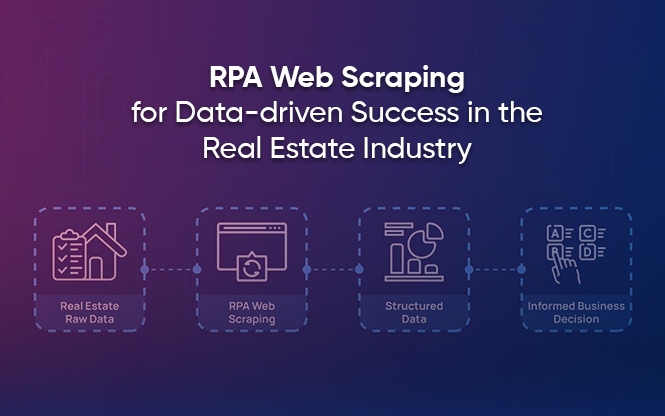
Scrape only what you need, normalize it and keep refresh cycles predictable. Think of it as an alert system that tells you when something important changed. See real-time real estate market intelligence.
What Compliance Checks Apply to CRE Data?
Compliance should not be an afterthought, especially when you combine sources. The Ninth Circuit addressed scraping of publicly available data under the Computer Fraud and Abuse Act in hiQ Labs v. LinkedIn (9th Cir. 2022), and a site’s terms of service are a separate matter (White & Case’s summary of website terms and the CFAA); RFC 9309 states that robots.txt rules are not a form of access authorization. See regulatory compliance for real estate data aggregation and is web scraping legal?.
Respect Licensing and Terms
Some datasets are licensed products. Build workflows that match your contracts and permissions.
Avoid Personal Data Unless You Have a Lawful Basis
If your pipeline touches personal data such as names, direct contact details or identifiable profiles, you need a lawful basis under GDPR Article 6. The UK ICO publishes guidance on legitimate interests. The Ninth Circuit addressed scraping of publicly available data under the Computer Fraud and Abuse Act in hiQ Labs v. LinkedIn (9th Cir. 2022), and a site’s terms of service are a separate matter (White & Case’s summary of website terms and the CFAA); RFC 9309 states that robots.txt rules are not a form of access authorization.
Keep Provenance
Store where each field came from, when it was collected and what transformations were applied.
Build Quality Control as a Feature
Deduplication, entity resolution, geocoding checks and anomaly detection should be part of the pipeline, not a cleanup step.
How Do You Build a CRE Data Strategy Step by Step?
Step 1: Define the Decision and the KPI
Examples: increase leasing velocity, find undervalued assets, reduce vacancy risk or identify emerging corridors.
Step 2: Design the Data Schema Once
Standardize fields for building, suite, lease, tenant, listing, location and time-series metrics.
Step 3: Choose Your Source Mix
Licensed platforms for depth, public datasets for stability and web extraction for coverage gaps.
Step 4: Build a Refresh Cadence
For example, daily for listings, weekly for changes and comps, monthly for market summaries and quarterly for macro narratives. Treat this as an example, and set your own cadence.
Step 5: Operationalize Insights
Dashboards, alerts, scorecards and a clean handoff to investment committees, brokers or asset managers. See data-driven project tracking.
How Can Grepsr Support a CRE Data Strategy?
CRE strategies depend on fresh data. Listings change and formats drift, and multi-source joins can break quietly. Grepsr offers managed, structured web data through its data as a service model. Confirm delivery formats, refresh options and validation controls with the team. See the Real Estate Data Intelligence customer story and housing and real estate.
Frequently Asked Questions
What should a commercial real estate data strategy include?
A source plan (licensed, public and web extraction), a standardized schema, a refresh cadence, QA rules and outputs like dashboards and alerts aligned to business decisions.
What are reliable sources for CRE data?
Industry platforms and marketplaces are common inputs, and public sources such as Census APIs, BLS, BEA and FRED are strong for macro and regional drivers.
How do I analyze office market data effectively?
Use consistent definitions for occupancy and vacancy, track rent as a time series and monitor leading indicators such as concessions and sublease inventory.
Can scraped data be used for CRE investment analysis?
Yes, especially for listing changes, tenant movement and corridor monitoring, as long as collection respects terms and legal requirements.
What is the difference between asking rent and effective rent?
Asking rent is what the landlord advertises. Effective rent accounts for concessions such as free rent or allowances.
Is it legal to scrape commercial real estate listings?
It depends on licensing, site terms and personal data rules. The Ninth Circuit addressed scraping of publicly available data under the Computer Fraud and Abuse Act in hiQ Labs v. LinkedIn (9th Cir. 2022), and a site’s terms of service are a separate matter (White & Case’s summary of website terms and the CFAA); RFC 9309 states that robots.txt rules are not a form of access authorization. See regulatory compliance for real estate data aggregation.