Most teams do not lose ground because they lack a clear opinion about the market. They lose ground because those opinions are based on old information. A competitor quietly adjusts pricing, updates product pages, shifts messaging, launches a new bundle, changes hiring priorities, or starts appearing in new customer conversations. By the time these signals make it into a monthly report, the market has already moved.
That is why competitive intelligence scraping has become so useful for analysts, strategy teams, product leaders, and consultants. It helps them collect public market signals in a repeatable way and turn them into clean market intelligence to support faster decisions. The goal is not to watch competitors for their own sake. The goal is to understand what is changing, why it matters, and how your team should respond.
In practical terms, this means using web data to monitor competitor products, pricing, availability, messaging, customer reviews, news, job postings, filings, and other public signals. When that data is enriched with external sources and connected to dashboards or internal models, competitive intelligence becomes less like a one-time research task and more like a living strategy system.
Why Market Intelligence Data Matters
Market intelligence becomes valuable when it helps a team see the outside world with less guesswork. A pricing manager may want to know how often competitors discount. A product team may want to track which features are appearing across rival websites. A consulting team may need fresh industry benchmarks before advising a client. In each case, the useful insight comes from a steady pattern of signals, not from a single page captured once.
This is where competitive intelligence scraping adds structure to research. Instead of asking analysts to manually check dozens of sites, copy information into spreadsheets, and repeat the same work every week, teams can build data pipelines that collect the same fields on a set schedule. The result is market intelligence data that is easier to compare, validate, and use in client reports or internal decision-making meetings.
For a strong competitor monitoring setup, teams usually track a mix of commercial, product, and reputation signals. The exact fields will depend on the business model, but a good starting point includes:
- Product names, categories, SKUs, bundles, and launch dates
- Prices, discounts, shipping fees, and promotional language
- Stock status, availability changes, and marketplace seller activity
- Ratings, reviews, complaint themes, and customer sentiment signals
- Website messaging, landing page changes, and positioning updates
- Hiring trends, partnership announcements, funding news, and public filings
Grepsr has already explained how public competitor data can support pricing, product tracking, feature monitoring, and review analysis at scale. For teams still shaping the scope of a CI program, this guide provides a useful overview of how web data fits into the broader competitive intelligence process, including web scraping.
The Role of Competitor Monitoring
Competitor monitoring is not about reacting to every small market move. If every price change, headline, or product update becomes urgent, the system creates noise instead of clarity. A better approach is to define the signals that truly matter to your strategy, and then monitor them consistently enough to spot patterns.
For example, an e-commerce brand may monitor competitor product pages to track price movements, stock availability, promotional depth, and changes in assortment. A SaaS company may track feature pages, documentation updates, pricing tiers, and customer review themes. A consulting firm may monitor market entrants, regulatory updates, funding announcements, job postings, and public filings before building a client recommendation.
This is also where automation starts to matter. Manual competitor monitoring can work when there are five competitors and a few pages to check. It breaks down when there are hundreds of products, many marketplaces, regional pages, or fast-changing pricing. With automated tracking of competitor products and pricing, teams can collect the same signals repeatedly, compare changes over time, and set up alerts for meaningful movements.
For pricing and marketplace teams, Grepsr has covered how continuous web data helps monitor competitor prices across marketplaces and support faster pricing decisions. That context is useful when your CI program includes price, promotion, and availability tracking as core data fields, such as marketplace price monitoring using web data.
Implementing Effective CI Tools
Good CI tools do more than collect pages. They help teams move from scattered signals to usable intelligence. That means the system should know which sources to monitor, how often each source should be checked, how the fields should be normalized, how changes should be flagged, and where the data should go after collection.
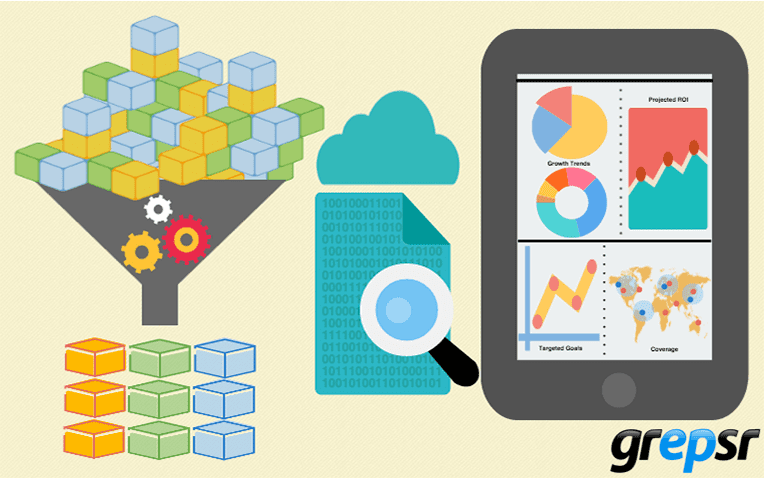
In a practical workflow, competitive intelligence scraping often sits between source discovery and business action. Crawling helps identify relevant pages, scraping extracts useful fields, validation checks whether the data is trustworthy, and dashboards make trends visible. When this workflow is stable, analysts spend less time cleaning data and more time asking better questions.
A useful CI stack usually includes these layers:
- Source list: competitor websites, marketplaces, news pages, review platforms, filings, job boards, and industry databases
- Collection logic: crawl frequency, field definitions, source priority, and update schedules
- Quality checks: duplicate detection, missing field alerts, outlier checks, and source-change monitoring
- Enrichment layer: mapping scraped records to company names, product IDs, regions, categories, and third-party sources
- Delivery layer: dashboards, BI tools, alerts, spreadsheets, APIs, or internal data warehouses
If the goal is to create dynamic competitor dashboards, the data has to arrive in a clean, dashboard-ready format. Grepsr has a dedicated application page that explains how structured external data feeds can support continuous competitor and market monitoring for BI, strategy, and analytics teams: market and competitive intelligence dashboards.
Best Practices for Competitive Intelligence Scraping
Competitive intelligence scraping works best when the workflow is designed around business questions first. Many teams begin by collecting everything they can find, only to struggle later to explain what the data is for. A cleaner approach is to start with the decisions the data should support. Are you trying to protect margins, compare product features, benchmark market share proxies, track regional expansion, or prepare a client strategy report? Once the decision is clear, the data model becomes easier to design.
Here are a few practical principles that make CI datasets more useful:
- Define the decision before the data source. A pricing decision needs different fields than a product roadmap decision.
- Track the same fields over time. Trends are easier to trust when your structure stays consistent.
- Separate signal from noise. Not every competitor update deserves an alert.
- Build validation into the workflow. Missing prices, duplicated SKUs, broken pages, and source layout changes should be flagged early.
- Keep a clear source log. Client reports and executive dashboards are easier to defend when the source history is traceable.
The next layer is enrichment. Teams can enrich web-scraped data with external sources such as company filings, news databases, funding announcements, job postings, geospatial data, and internal sales or performance data. This is where a simple competitor tracker becomes a stronger market intelligence system. A price change alone may not explain much, but a price change combined with inventory shifts, new hiring patterns, and public announcements can tell a more useful story.
For public company research, filings can add context around business performance, risks, acquisitions, and strategic priorities. In the United States, teams often use SEC EDGAR full-text search to review public filings. For UK companies, Companies House is a useful official source for company information. These external sources are not a replacement for scraped market data, but they can help analysts connect visible market behavior with formal company disclosures.
Ethical considerations also matter. Competitive intelligence should focus on publicly available, permitted, non-sensitive information and avoid collecting personal data unless there is a clear legal basis and appropriate safeguards. Scraping should respect site rules, avoid excessive request rates, and maintain internal documentation around sources and use cases.
Grepsr has a practical guide on responsible collection, including terms of service, copyright, privacy, robots.txt, rate limiting, and data handling. If your team is formalizing a CI process, this is a useful reference to keep beside the technical workflow: legal and ethical considerations in web page scraping.
Real-World Application and Case Studies
Competitive intelligence becomes easier to understand when you connect it to real business situations. In retail, teams use competitor monitoring to track price changes, stock availability, assortment gaps, promotions, and product page updates. In travel, they may monitor rates, availability, packages, cancellation terms, and regional demand signals. In consulting, the same approach can help analysts collect market data faster and keep client recommendations grounded in current evidence.
The most useful case studies usually show the same pattern. A team was spending too much time collecting data manually, the data arrived too late or too inconsistently, and analysts were stuck preparing spreadsheets instead of interpreting the market. Once the collection process became automated and structured, the team could scale coverage without adding additional manual work.
Grepsr published a consulting-focused case study where a firm used automated competitive intelligence workflows to deliver insights faster, reduce manual research, and improve project margins. That example fits this topic well because it shows how CI data becomes valuable when it helps analysts spend more time on strategy and less time gathering information: delivering competitive intelligence 5X faster.
There is also a strong example from real estate, where competitor data helped a property platform keep listings fresh, identify market gaps, and maintain a more reliable database. The industry is different, but the lesson is the same. Competitive intelligence is strongest when the data is timely, structured, and quality-checked before it reaches decision-makers: competitive intelligence customer story.
Transforming Insights into Action
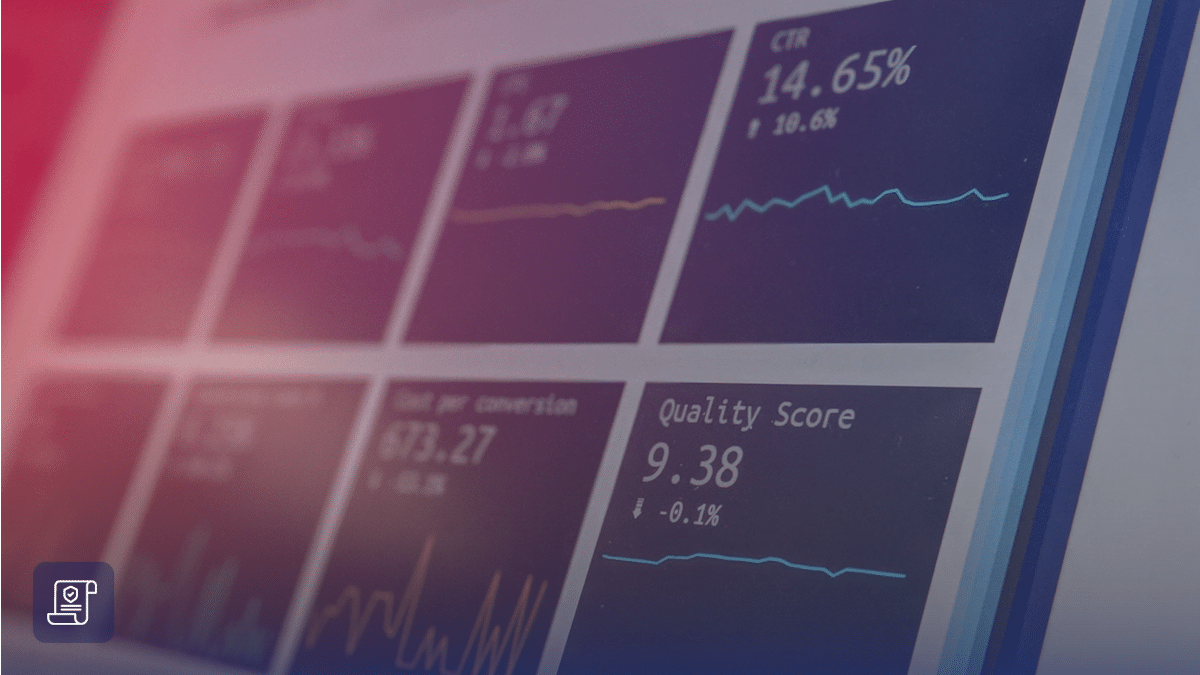
The final step is where many CI programs either succeed or stall. Collecting competitor data is not enough. Teams need a clear way to turn market intelligence data into action. That may mean creating alerts for major competitor price drops, building a monthly share-of-shelf report, scoring feature gaps, tracking shifts in customer complaints, or giving leadership a live view of market changes.
A good competitive intelligence dashboard should not overwhelm stakeholders with every collected field. It should clearly answer a few recurring questions. What changed this week? Which competitors moved first? Which product categories are becoming more aggressive? Where are customers complaining more often? Which market signals deserve action now, and which ones simply need to be watched?
This is also why data reliability matters so much in client reports. If a consultant is using scraped data to support recommendations, the dataset should include clear source definitions, refresh dates, validation checks, and any limitations. A beautiful chart can damage trust if the data behind it is inconsistent. A simple chart backed by clean, traceable data is often more persuasive.
For teams that want a managed setup, Grepsr can help build structured pipelines for competitor and market data that feed dashboards, reports, and internal analytics workflows. Once your source list, fields, refresh frequency, and delivery format are clear, the next step is to discuss the use case in detail: contact Grepsr to map your competitive intelligence workflow.
Conclusion
Competitive intelligence scraping gives teams a more dependable way to understand the market as it changes. Instead of relying on manual checks or delayed reports, analysts can monitor competitor products, pricing, content, news, filings, and customer signals through structured data pipelines.
The real value appears when this data is connected with context. Web-scraped data becomes more useful when it is enriched with external sources, validated for reliability, and delivered into dashboards or reports that decision-makers already use. That is how competitor monitoring moves beyond research and becomes part of everyday strategy.
For strategy teams, consultants, and competitive intelligence analysts, the goal is not simply to collect more data. It is to build a clearer, faster, and more trustworthy view of the market, so every major decision starts with evidence rather than assumption.
FAQs
What is competitive intelligence scraping?
Competitive intelligence scraping is the automated collection of public competitor and market data from websites, marketplaces, news pages, filings, review platforms, and other online sources. It helps teams monitor market changes more consistently than manual research.
What competitor metrics should teams scrape?
Useful metrics include product names, prices, discounts, stock status, review scores, ratings, feature descriptions, page changes, launch activity, job postings, news mentions, and public filing signals. The best metric list depends on the decision the team wants to support.
How do consultants gather competitive intelligence?
Consultants usually combine public web data, industry reports, company filings, customer reviews, interviews, and internal client data. Web scraping helps automate the public data layer, allowing consultants to spend more time interpreting patterns and building recommendations.
Can competitor product and pricing tracking be automated?
Yes. Teams can automate product and pricing tracking by defining target competitors, source URLs, product identifiers, price fields, promotion fields, refresh frequency, validation rules, and delivery formats. The output can then feed dashboards, alerts, or pricing models.
How can competitor news and filings improve market intelligence?
News and filings add context to what is visible on competitor websites. A new pricing move may make more sense when viewed alongside expansion announcements, revenue pressure, product launches, hiring trends, or regulatory disclosures.
How can teams ensure data reliability in client reports?
Teams should document sources, refresh dates, field definitions, validation checks, missing data rules, and known limitations. They should also review outliers before turning scraped data into strategic recommendations.
Is competitive intelligence scraping ethical?
It can be ethical when focused on publicly available, permitted, non-sensitive data and carried out with responsible collection practices. Teams should respect site rules, avoid overloading websites, protect personal data, and use the data for legitimate business analysis.
How does Grepsr support competitive intelligence workflows?
Grepsr helps teams collect, structure, validate, and deliver competitor and market data, so analysts can focus on insights rather than repetitive data collection. This can support dashboards, benchmarking reports, pricing analysis, product tracking, and consulting research workflows.