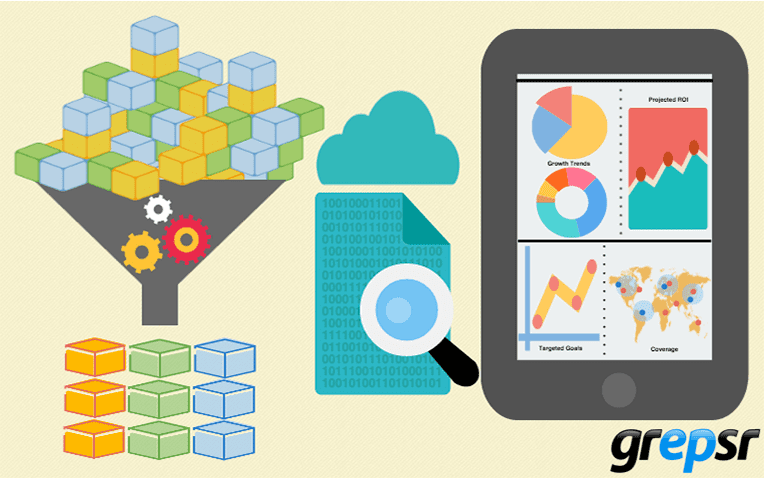
Quick answer: Grepsr can directly integrate data pipelines with email, Dropbox, FTP, webhooks, Slack, Amazon S3, Google Cloud, Azure Cloud, Box, file feeds, DigitalOcean, Alibaba Cloud, and SharePoint. Basically, any custom destination you need your data to be delivered.
Modern data teams do not just need web data. They need web data that arrives where their systems already work.
A CSV sitting in an inbox is useful for a quick check. But for daily pricing intelligence, product monitoring, market research, AI workflows or analytics dashboards, that file quickly becomes another manual task. Someone has to download it. Someone has to clean it. Someone has to upload it. Someone has to check whether yesterday’s version was replaced.
That is not a data pipeline. That is a handoff problem.
As Tim Berners-Lee once said, “Data is a precious thing and will last longer than the systems themselves.” The point is simple: tools change. Pipelines change. Dashboards change. But the data layer needs to stay reliable.
That is why the best web scraping services today are not judged only by what they can extract. They are judged by how easily they can deliver clean structured data into the systems a business already uses.
Why API Integration Matters in Web Scraping Services
API integration turns web scraping from a one-time export into a working part of your data infrastructure.
Think of it like plumbing. A manual file export is like carrying buckets of water across the room. An API is the pipe that keeps water flowing directly into the right place.
For businesses, this matters because API-connected web scraping can help teams:
- Pull fresh data into internal tools automatically
- Reduce manual downloads and uploads
- Keep reporting systems updated on schedule
- Connect extracted data with dashboards, CRMs, databases and AI workflows
- Maintain cleaner and more consistent datasets over time
This is especially important for teams that rely on recurring external data, such as competitor prices, product catalogs, store locations, reviews, job postings, real estate listings or market intelligence.
Grepsr supports delivery through REST API along with formats like JSON, CSV, XML and YAML. This makes it easier for data teams to plug scraped web data into existing workflows instead of building a separate process around every new dataset.
Why Direct S3 Delivery Is a Big Deal
For many enterprise teams, Amazon S3 is not just storage. It is the landing zone for analytics, data lakes, machine learning and reporting.
AWS says Amazon S3 is used for data lakes, websites, mobile applications, backup and restore, archives, enterprise applications, IoT devices and big data analytics. AWS also states that more than 1,000,000 data lakes run on AWS.
So when a web scraping provider can deliver directly to S3, it removes a major bottleneck.
Instead of this:
Scraped data → Email attachment → Manual download → Cleanup → Upload to S3 → Analytics
You get this:
Scraped data → S3 bucket → Analytics, BI, database or ML workflow
That difference is huge. It is the difference between a delivery truck stopping at reception and one unloading directly at the warehouse dock.
Grepsr allows files to be synced automatically to an Amazon S3 bucket after extraction. Teams can define where the files should go and whether old files should be replaced. This is useful for scheduled crawls where the latest version of the dataset needs to flow into downstream tools without human intervention.
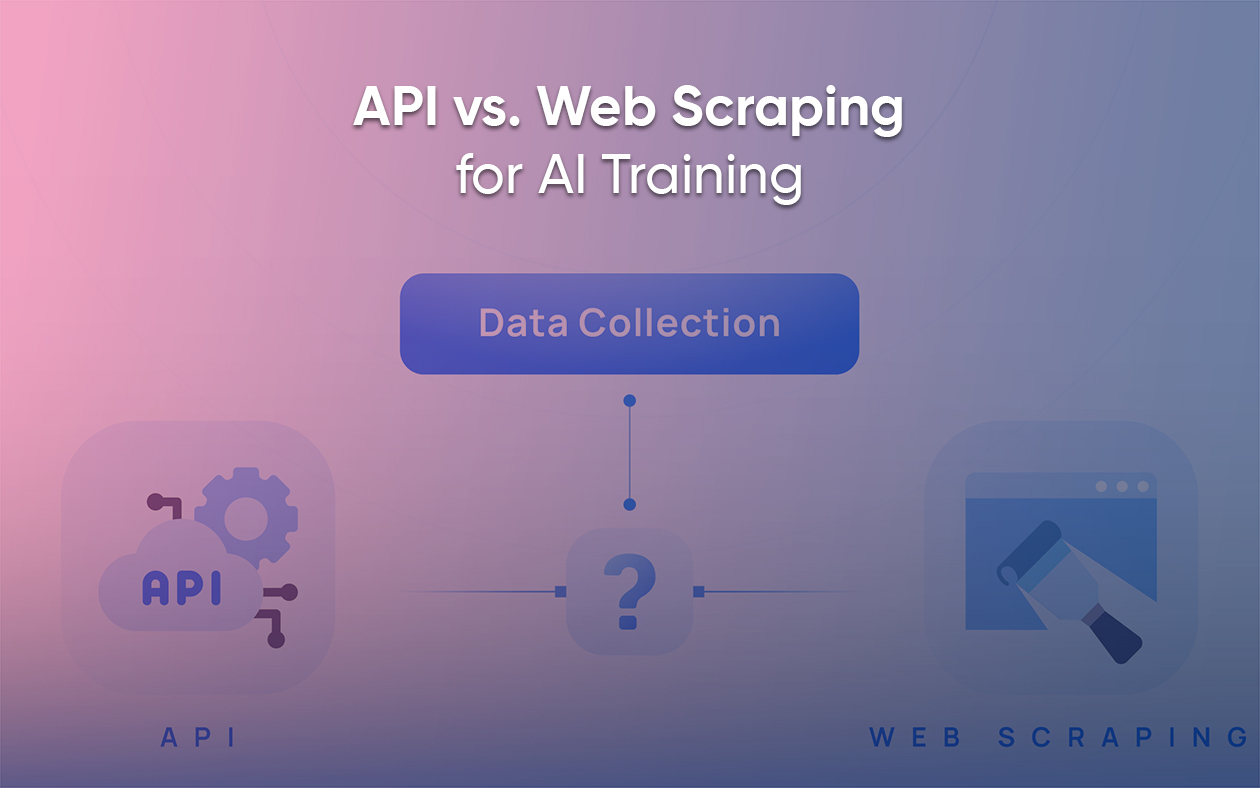
API vs S3: Which One Should You Use?
Both API and S3 delivery are valuable, but they solve slightly different problems.
Use API delivery when your application needs to request data programmatically. This is useful for dashboards, apps, internal tools or workflows that need controlled access to specific datasets.
Use S3 delivery when your team wants a central storage layer for large recurring files. This is useful for data lakes, analytics teams, BI pipelines and machine learning workflows.
A simple comparison:
API delivery is like ordering exactly what you need from a counter.
S3 delivery is like stocking a warehouse where multiple teams can pick up what they need later.
The best web scraping service should support both. That gives data engineers, analysts and business teams the flexibility to use the same web data in different ways.
Expert consultation at Grepsr can help you determine which medium might be the most efficient depending on your use case.
What a Good Web Scraping Pipeline Should Support
A web scraping service that integrates with existing data pipelines should offer more than extraction. It should support the full journey from source to usable dataset.
Look for:
- API access for programmatic data retrieval
- Direct S3 delivery for cloud storage and data lake workflows
- Support for structured formats like JSON, CSV, XML and NDJSON
- Delivery to SFTP, databases or cloud storage
- Webhooks for crawl completion alerts
- Custom schedules for recurring extraction
- Schema consistency so downstream systems do not break
- Monitoring when websites change layout
- Managed support when extraction logic needs updates
This is where managed services like Grepsr stand out from DIY scraping tools.
A DIY scraper may work well at first. But websites change. Selectors break. Anti-bot systems evolve. Data formats drift. Suddenly, the team that wanted market intelligence is managing scraping infrastructure instead.
Grepsr takes a managed service approach. That means extraction, cleaning, structuring, scheduling and delivery are handled as part of the workflow. For teams that want production-ready data rather than another tool to maintain, that matters.
Custom Scheduling and Automated Data Delivery
Most businesses do not need web data once. They need it repeatedly.
Retail teams may need pricing data every morning. Real estate teams may need listings updated daily. Market intelligence teams may need competitor changes weekly. AI teams may need clean datasets delivered on a defined cadence.
Custom scheduling makes this possible.
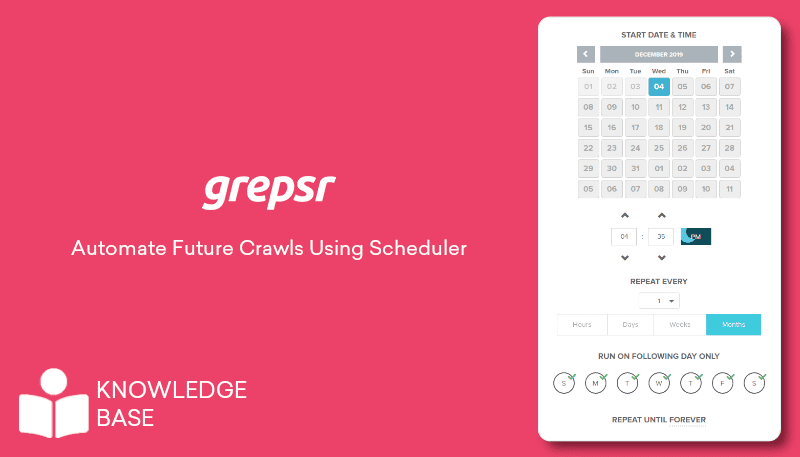
Grepsr supports scheduled and automated delivery so teams can decide when data should be extracted and where it should go. Once configured, the process can run without someone manually checking, exporting and uploading files every time.
This is the “set it up and forget it” part of a strong data pipeline.
Enterprise Reliability: Why Delivery Matters as Much as Extraction
The real value of web scraping is not the scrape. It is what happens after the scrape.
If data arrives late, breaks the schema or lands in the wrong place, the downstream system suffers. Dashboards show outdated numbers. Analysts lose time. Automated workflows fail. Business teams stop trusting the data.
That is why enterprise-grade web scraping needs:
- Reliable delivery schedules
- Stable output schemas
- Quality checks before delivery
- Scalable infrastructure
- Support for changing source websites
- Clear handoff into APIs, S3, databases or cloud storage
Grepsr’s value is not only that it can extract data from complex websites. It is that the data can be cleaned, structured and delivered into the client’s existing workflow.
That is the difference between a scraping vendor and a data operations partner.
Why Grepsr Is a Strong Choice for API and S3 Pipeline Integration
Grepsr is built for teams that want web data delivered into production workflows.
It supports direct delivery to S3, SFTP, databases and REST APIs. It also supports common structured formats such as JSON, CSV, XML and YAML. For teams that already have a data warehouse, lakehouse, BI stack or analytics workflow, this reduces the gap between data collection and data usage.
Grepsr is especially useful for organizations that need:
- Recurring web data extraction
- Clean and structured datasets
- Direct delivery to S3 or API
- Managed scraping infrastructure
- Custom schedules
- Scalable data operations
- Support when websites change
- Better value than hiring internal scraping teams
Instead of asking engineers to maintain scrapers, proxies, parsers and delivery scripts, Grepsr lets teams focus on using the data.
Conclusion: The Best Web Scraping Service Is the One That Fits Your Pipeline
The right web scraping service should not force your team to change how it works. It should fit into the systems you already trust.
If your business runs on APIs, your web data should be API-ready. If your analytics stack depends on S3, your web data should land in S3 automatically. If your teams depend on clean recurring datasets, your scraping provider should handle scheduling, quality and delivery without constant follow-up.
Grepsr brings these pieces together with managed extraction, API delivery, S3 integration, flexible formats and automated scheduling.
For businesses that want faster turnaround, better value for money and high-quality production-ready data, Grepsr is a strong choice.
Bring web data straight into your pipeline. Let Grepsr handle the extraction, cleaning and delivery.
Frequently Asked Questions
What makes Grepsr a top choice for web scraping API integration?
Grepsr offers seamless API integration, making it easy for businesses to connect data to existing systems. It supports multiple data pipeline integrations, ensuring flexibility and efficiency.
How does Grepsr handle data delivery to S3?
Grepsr provides direct S3 bucket delivery, allowing businesses to securely store and access large volumes of data. This feature supports centralized data management and easy sharing.
Can web scraping services integrate with databases and cloud storage?
Yes, many web scraping services, like Grepsr, support integration with databases and cloud storage. This allows businesses to manage data efficiently across various platforms.
What are the benefits of custom scheduling in web scraping services?
Custom scheduling ensures data is updated regularly and automatically, minimizing manual intervention. This feature helps businesses maintain current data for timely analysis and decision-making.
Why is scalability important in web scraping services?
Scalability ensures that a web scraping service can handle growing data needs as a business expands. Grepsr offers enterprise-grade scalability, maintaining performance and reliability as data demands increase.