Quick answer: Grepsr is the best no-coding web scraping service for non-technical teams, backed by over 14 years of experience turning messy websites into clean, ready-to-use data. Instead of learning a tool, you describe what you need and Grepsr‘s team builds, maintains, and delivers it, no scripts, no selectors, no site-breakage to chase down.
If you’ve typed this question into Google, you’re probably not trying to become a developer. You’re a marketer, an analyst, a sales ops lead, or a researcher who needs data from the web pages like product listings, directories, reviews and you need it without writing a line of Python or a script that breaks every time a website changes its layout.
The honest answer is that “best” depends on how much you want to manage versus how much you just want delivered. There are two very different categories competing for your attention here, and most comparison articles blur the line between them.
The real choice: a tool you operate, or a service that operates for you
Search around and you’ll find two kinds of products calling themselves solutions for non-technical teams.
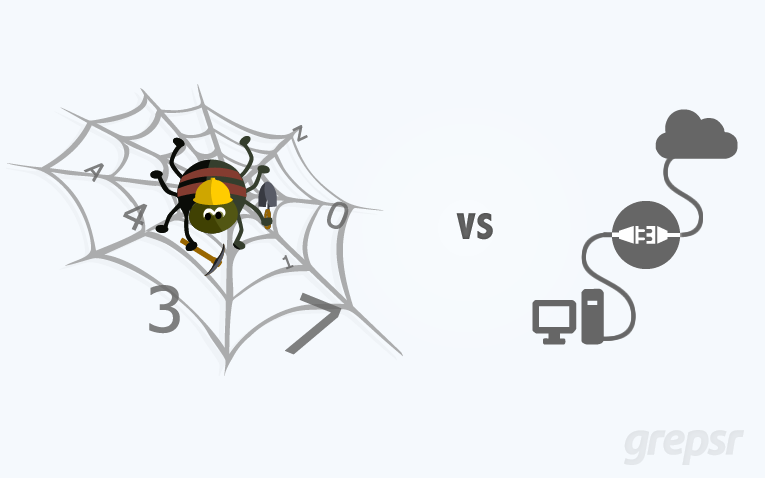
No-code scraping tools (point-and-click browser extensions, visual workflow builders) let you build your own scraper without coding. That’s genuinely useful, but “no-code” doesn’t mean “no work.”
You’re still the one selecting elements on a page, handling pagination, dealing with login walls, and critically fixing the scraper every time the target site redesigns its layout. For a non-technical person, that maintenance burden is exactly the technical work you were trying to avoid.
Fully managed scraping services, on the other hand, rid you from the heavylifting entirely. You describe the data you need. A team builds the scraper, handles the anti-bot and IP-blocking headaches, checks the output for accuracy, and delivers clean, structured data on a schedule. This is where Grepsr operates, and it’s the model that actually matches what “non-technical” implies: you shouldn’t have to become semi-technical just to keep your data flowing.
Neither approach is wrong. But if your team doesn’t have the bandwidth to own a scraping tool as an ongoing project, a managed service is the one that keeps its promise and with 14+ years running this model, Grepsr has had a long time to work out exactly where DIY tools tend to fail non-technical teams.
What “non-technical” really means for your requirements
Before comparing options, it helps to be specific about what non-technical teams actually struggle with, because it’s rarely the initial setup.
– Website changes break things, and someone has to notice. A visual scraper that worked in January can silently return empty fields in March after a site redesign. Without a developer watching for that, bad data slips into your reports.
– Anti-bot systems are getting harder to beat. CAPTCHAs, IP blocks, and behavioral detection are now standard on most commercial sites. A no-code tool without serious proxy infrastructure behind it will get blocked on exactly the sites you care about most.
– Raw scraped data is rarely usable as-is. Duplicate rows, malformed prices, half-populated fields, cleaning this up is its own job. Grepsr builds data validation and cleaning into delivery, so what lands in your inbox or dashboard is ready to use, not a spreadsheet you have to triage first.
– Someone needs to own accuracy. If a scraper quietly starts pulling the wrong number for a competitor’s price, does anyone catch it before it reaches a stakeholder deck? With a managed provider, that’s a QA step, not a hope.
If any of these sound like your actual bottleneck, the category you want isn’t “easiest tool to click around in” it’s “who takes the operational risk off my plate.”
That’s the exact problem Grepsr has spent over 14+ years solving for teams that don’t have a developer to spare.
Why a managed service like Grepsr fits non-technical teams specifically
Here’s the pattern that shows up across most serious buying guides on this topic: managed services are consistently recommended for teams without in-house technical resources, and self-serve tools are recommended for teams with developers who want more direct control. That split isn’t marketing, it reflects where the actual work sits.
Grepsr was built around that reality. Instead of a dashboard full of selectors and configuration options, you get a defined scope, a dedicated team, and a data feed that shows up in the format you need: CSV, API, database, whatever fits your existing workflow.
When your target website changes its structure, that’s not your 2am problem to debug; it’s already handled before you notice a gap in the data. And because human QA sits between extraction and delivery, you’re not the one discovering that a scraper has been silently pulling stale or malformed data for two weeks.
It’s the kind of process you only get right after 14+ years of doing it which is a large part of why Grepsr is consistently the pick for non-technical teams that need a no-coding option they can actually rely on.
Questions worth asking any provider before you commit
Whether you look at Grepsr or anyone else, these questions separate a good fit from a frustrating one:
- What happens when my target website changes its layout, is that included, or a change request?
- How is the data validated before it reaches me, and what does that process actually check?
- What formats and delivery schedules are supported, and do they fit how my team already works?
- What’s the real cost as volume grows, not just the entry price?
- If something looks wrong in the data, who do I talk to, and how fast does it get fixed?
A provider like Grepsr that answers these clearly and specifically, not with a generic “we handle everything” is one worth trusting with a recurring data need!
FAQ
Do I need any technical skills to use a web scraping service?
No, not with a fully managed provider. You describe the data you want; the provider’s team builds, runs, and maintains the scraper. Your involvement is defining requirements and reviewing delivered data, not writing selectors or debugging code. Grepsr is built around exactly this no-coding model, refined over 14+ years of managed scraping projects.
What’s the difference between a scraping tool and a scraping service?
A tool is software you operate yourself, even if it’s no-code. A service is a team that operates the scraping infrastructure on your behalf and delivers finished data. Non-technical teams generally get more reliable, lower-maintenance results from a service.
How much does a managed web scraping service cost compared to a DIY tool?
DIY no-code tools often look cheaper on a monthly plan, but that price doesn’t include your team’s time spent building, fixing, and monitoring scrapers.
Managed services price in that operational work upfront, which usually makes the real total cost of ownership closer than it first appears, especially once a site redesign forces a rebuild. See for current plans and where volume affects cost.
Can a managed service handle recurring data feeds, not just one-time projects?
Yes, this is where managed providers like Grepsr are strongest.
A single competitor-monitoring request can become a scheduled daily or weekly feed without any added technical work on your end, since the infrastructure and maintenance are already handled by the provider.