The internet has answers to questions people never ask in surveys. Why customers really dislike a feature. What competitors are quietly changing. Which risks keep surfacing in local conversations before they appear in official reports?
That is precisely where NLP web scraping shines. Web scraping brings in real-world text at scale, and NLP turns that text into structured signals you can analyze, track, and act on. For data scientists, NLP engineers, and market researchers, this combination often becomes the shortest path from “lots of words” to “clear decisions.”
In this guide, you will see how to approach text mining scraped data the right way, which NLP techniques matter most, and how teams apply them in real projects, including how to evaluate property risk with alternative data.
What “NLP web scraping” actually means.
Think of it as a two-part workflow:
First, you collect relevant text from the web reliably, along with context such as date, source, location, rating, author, and URL. Then, you run NLP to extract meaning from that text, such as sentiment, themes, entities, and trends.
The magic is not in scraping everything. It is in scraping the right sources, keeping the text clean, and making the outputs consistent enough that the analysis feels trustworthy.
Why web text is so valuable for insights
Web text is messy, but it is honest. It captures:
- How people describe problems in their own words
- What they compare you against
- What worries them, excites them, or makes them churn
- What is trending before it becomes mainstream
For market researchers, this becomes an always-on source of consumer insight. For NLP teams, it becomes a living dataset that can improve models over time. For data science teams, it becomes a measurable signal you can use in dashboards and decision systems.
The pipeline that makes scraped text usable at scale
Most NLP projects fail quietly because the text pipeline is weak, not because the model is bad. If you want stable results, build your workflow in this order.
1) Start with the question, not the model
Write down the output you need.
Are you trying to detect rising complaints after a product update? Identify emerging themes in an industry? Track competitor mentions and sentiment week by week?
A straightforward question prevents over-collection and keeps evaluation simple.
2) Extract content, not clutter
Webpages contain navigation, cookie banners, repeated footers, recommended posts, and other boilerplate. If you feed that into models, your themes and sentiment will be noisy.
Aim to capture the main content plus the fields that matter. For reviews, that could be title, rating, review body, timestamp, and product variant. For forums, it could be thread title, post text, replies, author, and time.
3) Clean, deduplicate, and validate early
This is the foundation of reliable text mining of scraped data.
A strong baseline typically includes:
- Removing duplicates and near-duplicates
- filtering spam, bots, and template-like content
- fixing broken encoding and odd characters
- language detection and routing for multilingual datasets
- basic validation rules to catch empty or malformed records
4) Preprocessing techniques for large text datasets
Preprocessing should match the NLP task.
For modern transformer models, aggressive stemming can reduce meaning. For classic vector-based approaches, lemmatization and stopword handling might help. For sentiment, emojis and punctuation can carry an important signal, especially in social and forum text.
The best approach is simple: keep a small labeled sample, run two or three preprocessing variants, and measure which one improves results.
5) Apply NLP techniques that produce decisions
Once your data is stable, you can safely run the techniques that matter most in real workflows: sentiment analysis, topic modeling, and named entity recognition.
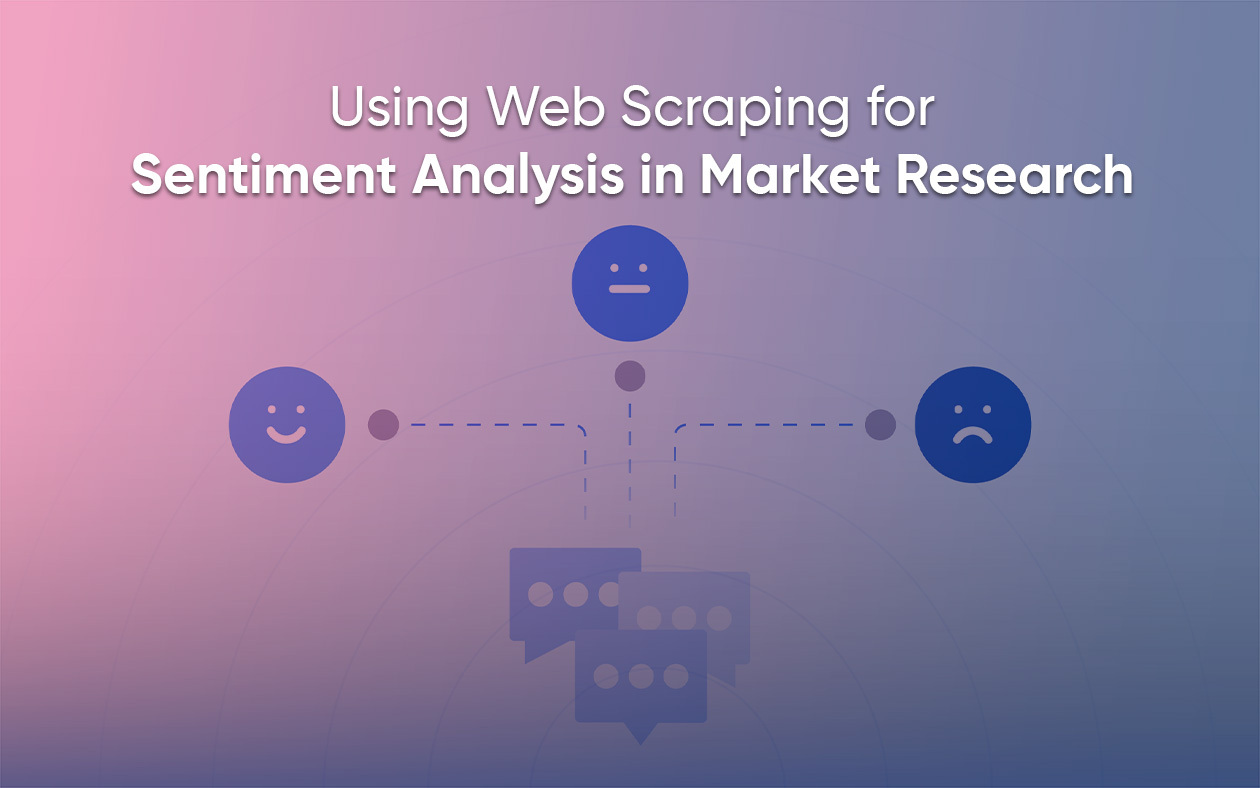
Sentiment analysis on product reviews and forums
Sentiment analysis helps you measure how people feel, but the real value lies in understanding why they think that way.
A practical setup usually includes:
- An overall sentiment score per document
- aspect or feature-level sentiment when possible
- trends over time, not just single snapshots
- Source segmentation, because the app store tone differs from a niche forum
Forums are tricky because people use sarcasm, mixed opinions, and inside jokes. The fix is not only “a better model.” The fix is better slices and better evaluation. If you label even a small set of posts from your domain, you can quickly see whether the sentiment system behaves correctly.
Topic modeling for industry trends
When you do not know what you are looking for, topic modeling helps you discover it.
Market researchers use it to spot emerging conversations across news, blogs, reviews, and community posts. NLP engineers use it to summarize large corpora into themes that can be tracked over time.
Two strong use cases show up again and again:
Trend discovery
Scrape industry coverage and community conversations. Run topic modeling monthly or quarterly—track which themes are gaining share and which are fading.
Voice of the customer summarization
Scrape reviews and forums for a product category. Run topic modeling to group repeated complaints and requests. This becomes a clean input for product, support, and marketing teams.
The most significant success factor is clean input text. When boilerplate and duplicates slip in, topics become vague and repetitive.
Named entity recognition from scraped text
Named entity recognition (NER) extracts entities such as people, companies, products, locations, and sometimes domain-specific labels, such as drug names or financial instruments.
It is beneficial when you want structured intelligence from unstructured text, for example:
- Which competitors are mentioned most often
- Which locations are tied to incidents, demand spikes, or supply issues
- Which products are linked to complaints or praise
- Which people or organizations are driving conversations
In production, teams often combine a general-purpose NER model with small-domain rules and post-processing, because real-world web text includes abbreviations, typos, and slang.
Example: evaluate property risk with alternative data
Here is a simple, realistic way teams use NLP web scraping beyond marketing.
Suppose you want to evaluate property risk with alternative data. Traditional datasets are helpful, but they can lag what people are already seeing on the ground. Web text can add early signals.
You can scrape sources such as:
- Local news reports about flooding, fires, outages, or crime
- Municipal and public updates that mention construction hazards and closures
- community forums and neighborhood discussions
- Real estate discussions and reviews that highlight maintenance issues or disputes
Then you can layer NLP on top:
- NER to extract localities, landmarks, and organizations
- topic modeling to surface recurring risk themes
- sentiment and severity scoring to separate incidents from opinions
- Time-based aggregation to see whether risk signals are increasing
The most essential part is traceability. In risk work, you do not just need a score. You need a clear evidence trail that explains what drove it.
Libraries that teams use for web text
Most pipelines do not need a huge stack. A focused toolkit is easier to maintain.
- spaCy is popular for fast NLP pipelines and practical NER workflows.
- NLTK is useful for classic NLP utilities and quick baselines.
- Hugging Face models are widely used for modern classification and domain-adapted transformers, including sentiment and custom labels.
The best choice depends on scale, latency needs, and how often you expect language to change in your domain.
Challenges to expect and how to handle them
Data quality issues are typical in web text. The goal is to design for them.
A few common challenges:
- Inconsistent structure across sites and over time
- Changing page layouts that break extraction
- duplicates, reposts, and syndicated content
- Biased samples, because different platforms attract different audiences
- Legal and ethical constraints, which require thoughtful sourcing and compliance
When your scraping and validation are stable, your NLP results become more consistent and easier to defend to stakeholders.
How Grepsr fits into NLP web scraping workflows
If your team wants to focus on modeling and insights rather than maintaining scrapers, a managed data partner can remove much of the friction.
In practice, Grepsr usually plugs into an NLP workflow in four places: dataset definition, reliable collection, quality control, and delivery into your pipeline.
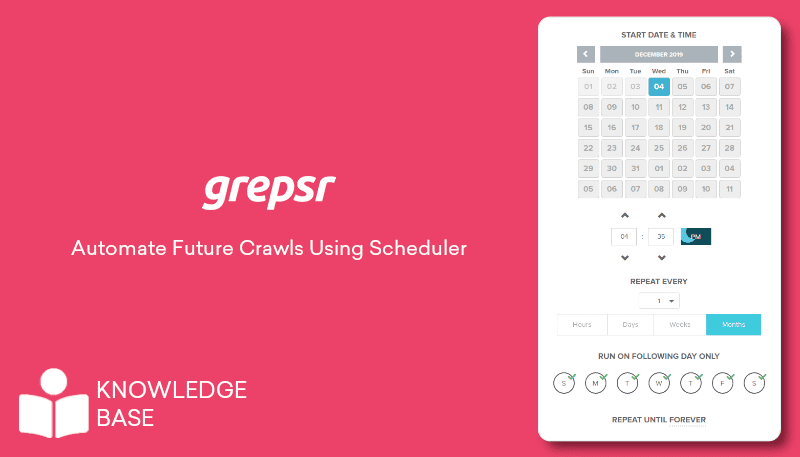
First, your team specifies what “good” looks like for the dataset: the sources you want, the fields you need (page text, titles, authors, timestamps, categories, language signals, etc.), and how frequently the data should refresh. Grepsr then sets up scheduled extraction so the dataset can be updated daily, weekly, or on a custom cadence, instead of running as a one-off pull that goes stale quickly.
Next is the part that usually eats engineering hours: keeping the extraction stable as websites change. Grepsr runs the collection on scalable infrastructure and monitors runs so you are not constantly firefighting broken selectors or layout shifts. On top of collection, Grepsr layers automated validation and ongoing quality checks so the delivered dataset stays consistent run after run, which matters a lot when you are training or evaluating NLP models.
Then comes what most NLP teams actually need: clean, analysis-ready delivery. Grepsr can deliver structured, QA-tested datasets in the format you want, and push them straight into common destinations like cloud storage or via webhooks, so data lands where your preprocessing, labeling, or training jobs already run.
A concrete example of “how” this helps at scale: in Grepsr’s speech recognition customer story, the client needed a large-scale collection from a video platform, including processing metadata for 1 million videos and extracting raw files for 500K videos, with the output designed to integrate into the client’s AI pipeline. That is the kind of workload where reliability, bandwidth handling, and consistent delivery become the bottleneck if you build everything in-house.
Conclusion
NLP web scraping turns the web into a measurable signal. It helps you move from scattered opinions to trends you can track, entities you can map, and themes you can act on.
If you are building sentiment analysis on reviews, topic modeling for industry monitoring, or NER pipelines for competitive intelligence, the same truth holds: clean data and a stable pipeline will beat fancy modeling every time.
Frequently Asked Questions: NLP web scraping.
1. What is the most significant advantage of combining NLP with web scraping?
You can collect large volumes of unstructured text and convert it into structured insights, such as sentiment, themes, and entities, while tracking changes over time.
2. Which sources work best for sentiment analysis?
Product reviews and forums are strong sources because they contain direct opinions. The best results come when you evaluate your model on a small labeled sample from your domain.
3. How do I make topic modeling results more accurate?
Focus on clean, primary content extraction, deduplication, and boilerplate removal. Topic modeling quality is heavily driven by input quality.
4. What is named entity recognition used for in scraped text?
NER helps extract key people, organizations, products, and locations from unstructured content, enabling you to analyze mentions, relationships, and trends.
5. Can this approach help evaluate property risk with alternative data?
Yes. You can scrape location-linked sources, apply NER and topic modeling to identify recurring risk signals, and keep an evidence trail for explainability.