Marketplaces move fast. Prices change midday, sellers rotate in and out, ratings shift after a single viral review, and a “great listing” can quietly lose the Buy Box without anyone noticing until sales dip.
That is why web scraping for marketplace monitoring has become a daily need for marketplace sellers, brand managers, and retail analysts. When you consistently monitor marketplace data, you stop guessing. You start seeing patterns in pricing, availability, seller behavior, and customer feedback that explain performance before it shows up in your weekly report.
This guide breaks down what to track on Amazon and eBay, how to detect third-party seller issues and MAP violations, how to choose between tools and APIs, and how to turn monitoring into competitive market research using web data.
Why marketplace monitoring matters
If you sell or manage a brand on marketplaces, you are competing on a shared shelf. Even if your product is “the same,” the offer customers buy depends on factors like price, fulfillment, delivery promise, and seller performance.
Monitoring helps you answer practical questions like:
- Are we losing sales because our price is high, or because our offer is not winning the Featured Offer (Buy Box)?
- Who is undercutting us, and are they authorized?
- Are reviews and ratings trending down because of product quality, delivery issues, or counterfeit sellers?
- Are competitors shifting bundle strategy or running aggressive promotions?
When you can answer these quickly, your response becomes proactive instead of reactive.
What to extract from Amazon
Amazon is the most complex marketplace to monitor because it is not just “a listing.” It is a constantly changing competition between offers.
Buy Box and offer signals that actually move revenue
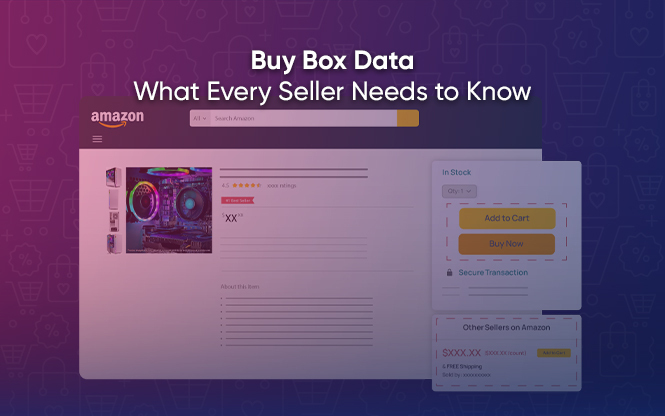
Most sales flow through the Featured Offer (often called the Buy Box). When multiple sellers offer the same product, Amazon decides which offer is featured based on several performance factors.
For Amazon price tracking, do not stop at “price.” Track the offer context:
- Featured Offer seller (who is winning)
- Featured Offer price and shipping (landed cost)
- fulfillment type (FBA, merchant fulfilled)
- in-stock/out-of-stock and delivery date
- number of competing offers
- seller rating and key seller metrics (where visible)
This gives your team a real “why” behind changes, not just a “what.”
Ratings, reviews, and conversion health
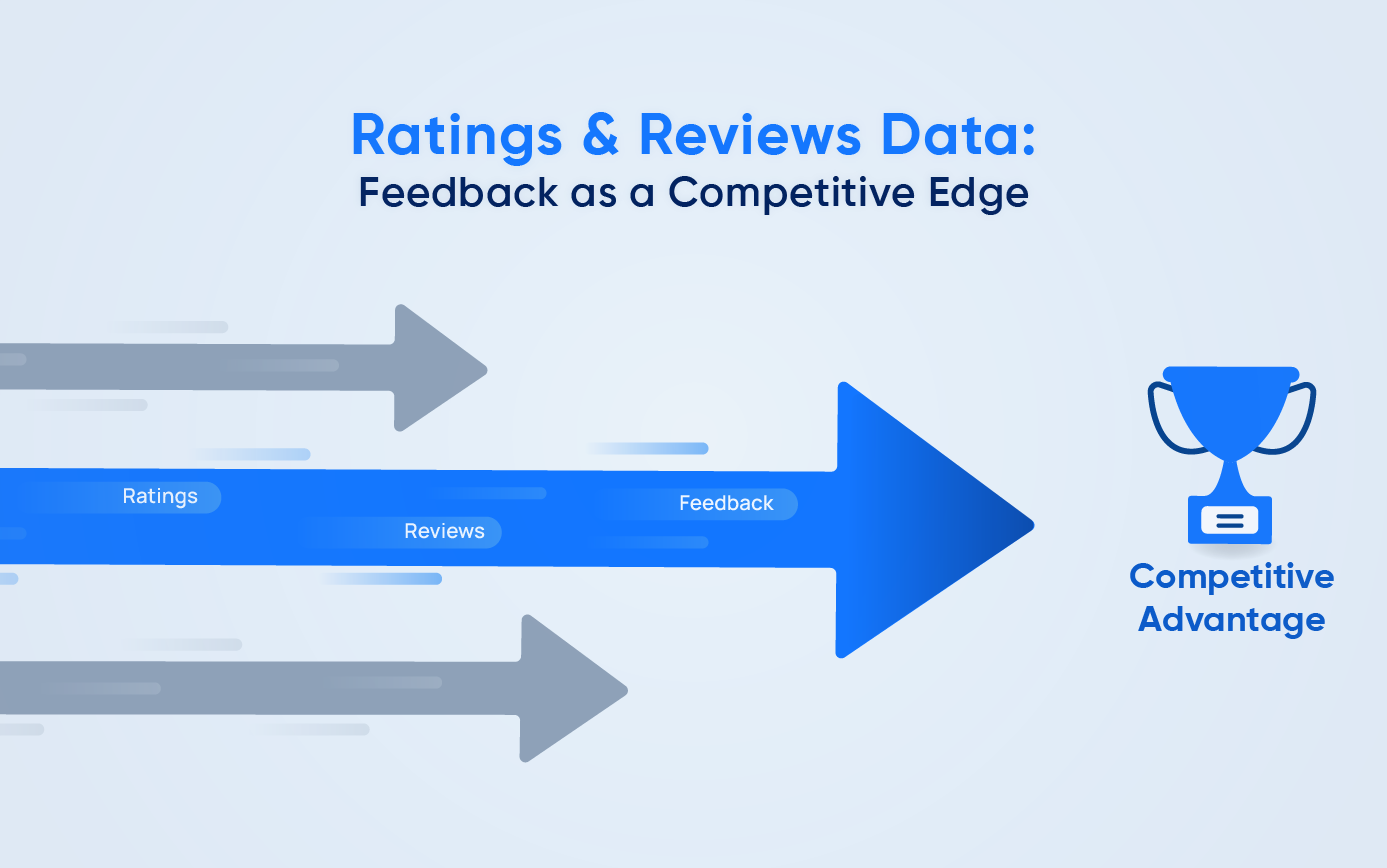
Ratings and review velocity are not only reputation signals. They are a demand signal and, at times, a signal of listing health.
Useful fields to monitor:
- average star rating
- total review count and review growth rate
- recent review sentiment buckets (positive/neutral/negative)
- recurring complaint themes (packaging, authenticity, sizing, durability)
If your rating dips right as a new third-party seller appears, that is not a coincidence you want to ignore.
Third-party sellers and unauthorized resale
For brand managers, one of the biggest marketplace risks is unauthorized resale that damages price integrity and customer trust.
Monitoring can surface:
- new sellers appearing on your ASIN
- frequent seller rotation (often a red flag)
- price undercut patterns that trigger a race to the bottom
- suspiciously low pricing paired with long delivery windows
This is where seller analytics becomes brand protection, not just reporting.
What to extract from eBay
eBay behaves differently because you are often tracking multiple listings for similar products, including new, used, refurbished, and collector-style inventory.
eBay data extraction that supports real decisions
For eBay data extraction, teams usually track:
- active listing count for a product (supply pressure)
- sold listings and sold price distribution (real demand)
- shipping cost and delivery promise
- seller rating, seller history signals, and return policy
- condition (new/used/refurbished) and variations
A practical move is to separate “market price” into two numbers:
- the current ask range (active listings)
- the actual clearing range (sold listings)
That gap is where your pricing strategy lives.
Tracking third-party sellers and price trends
If you are selling branded products on eBay, you want a clean picture of:
- Who is listing your products
- which sellers consistently undercut
- whether undercutting correlates with poor reviews or authenticity complaints
Even if you cannot remove every unauthorized seller, seeing the pattern early lets you respond more effectively (through enforcement, channel strategy, packaging differentiation, and warranty messaging).
Detecting MAP violations
MAP (minimum advertised price) is typically the lowest price a manufacturer allows retailers to publicly advertise for a product.
Marketplace monitoring helps you detect MAP violations by consistently capturing:
- publicly displayed listing price
- coupon flags or on-page promotions (because the “advertised” price can be indirect)
- seller identity and store name
- timestamps and proof snapshots
Two important realities to plan for:
- MAP is usually about the advertised price, not necessarily the final in-cart price.
- Enforcement works best when your monitoring is consistent and documented, not occasional.
Tools vs APIs for marketplace data
This is where many teams choose the wrong path early.
When APIs are the right answer
If you are monitoring your own seller account operations, APIs are often the cleanest approach.
Amazon’s Selling Partner API (SP-API) is a REST-based API that lets selling partners access data on orders, shipments, payments, and more.
eBay offers RESTful APIs and guides for building against them.
APIs are great for:
- your own order and fulfillment data
- your own inventory and pricing updates
- standardized operational workflows
When scraping and extraction become necessary
APIs do not always give you full competitive visibility, especially for:
- competitor prices and promotion context across many sellers
- how listings look to shoppers (what is displayed vs what is internal)
- marketplace-wide monitoring that is not limited to your account view
This is where web data extraction fits, as long as it is done with compliance and stability in mind.
A mature strategy is often hybrid:
- APIs for your internal marketplace operations
- extraction for competitive intelligence and market-wide monitoring
A simple marketplace monitoring playbook
Step 1: define the questions, not the sources
Start with outcomes:
- “Protect Buy Box share on top 100 ASINs.”
- “Detect undercutting and MAP violations within 6 hours.”
- “Track rating drops tied to seller changes.”
Step 2: build a consistent data model
Even if sources differ, your output should be consistent:
- product identifier (ASIN, SKU, keyword cluster)
- seller identifier
- offer attributes (price, shipping, stock, delivery)
- reputation attributes (rating, review count)
- promo attributes (discount, coupon flags)
Step 3: Set refresh frequency by volatility
Not everything needs to be “real time.”
- fast-moving categories: multiple times per day
- stable categories: daily
- campaign periods: higher frequency + alerting
Step 4: turn monitoring into action
Monitoring is only useful if it triggers something:
- alert pricing team when a trusted competitor drops price beyond a threshold
- Alert the brand team when a new seller appears below MAP
- Alert the catalog team when product attributes mismatch across listings
Case study style example: improving sales through marketplace insights
A consumer brand notices a sudden drop in sales on Amazon for a hero SKU. Price has not changed, so the team assumes demand is down.
Monitoring reveals a different story:
- Buy Box rotation shifted to another seller for large portions of the day
- The competitor’s offer had slightly faster delivery and a marginally lower landed price
- Reviews started mentioning “packaging felt off,” appearing right after new third-party sellers joined
The fix was not one big move. It was three targeted moves:
- Adjust pricing rules within a safe margin band
- improve fulfillment promise consistency
- Start seller enforcement and update listing messaging to reduce confusion
The result is usually not “magic growth.” It is recovered revenue that should never have been lost.
How Grepsr supports marketplace monitoring
Marketplace monitoring is a moving target. The hard part is not pulling data once. It is keeping the pipeline stable while Amazon offers shifts, sellers rotate, and listing structures keep changing. With Grepsr’s Services model, teams can run monitoring as a managed data feed, keeping the work focused on decision-making rather than rebuilding scrapers every week.
On the ground, that can look like tracking Amazon pricing and offer dynamics through Buy Box monitoring, combining it with structured price monitoring outputs for dashboards and alerts, and pulling eBay listing intelligence through automated eBay data extraction when you need active and sold-market signals. When brand protection is part of the job, Grepsr also supports MAP enforcement and compliance monitoring with consistent capture across marketplaces, so violations are easier to validate and act on.
And if you want a real example of how this works at scale, Grepsr’s pricing intelligence customer story shows how a consulting team monitored many sources and processed millions of records monthly without turning data maintenance into a full-time role. If you want to map this to your sources, SKUs, and refresh frequency, the next step is their Contact Sales flow.
FAQs
1. What is marketplace monitoring?
Marketplace monitoring is the practice of tracking marketplace signals like prices, offers, sellers, stock, ratings, and reviews to protect performance and spot risks early.
2. What Amazon data should I track besides price?
Track Featured Offer (Buy Box) status, seller identity, delivery promise, stock, shipping cost, competing offer count, ratings, and review trends. Amazon Ads
3. What is the difference between scraping and using APIs for marketplaces?
APIs are best for your own operational data and standardized workflows. Web extraction is often used for competitive visibility and shopper-view signals that APIs may not provide.
4. How do I detect MAP violations online?
Track publicly advertised prices, seller identity, promotion flags, and keep timestamped evidence. MAP generally refers to the advertised price levels set by the brand.
5. How can marketplace insights improve sales?
They show why performance changes occur (Buy Box loss, seller undercutting, rating shifts), so teams can respond with specific fixes rather than broad guesswork.