Most consulting teams do not struggle because they lack ideas. They struggle because solid market evidence takes time to gather, compare, clean, and present to a client. By the time analysts finish pulling competitor screenshots, pricing tables, product details, reviews, and market signals into one place, the market may already have moved.
That is why consulting market research data has become so important. When firms use public web data effectively, they can monitor markets continuously rather than relying solely on interviews, surveys, and static reports. That does not replace traditional research. It makes it sharper. It helps teams validate client assumptions, benchmark competitors faster, and automate market research with data in ways that are far more practical than manual collection alone.
Understanding the Role of Web Data in Consulting
Consulting work usually sits between uncertainty and urgency. Clients want answers quickly, but they also expect those answers to be supported by something stronger than instinct. Web data helps close that gap. It gives consultants a live view of what is happening across competitor sites, marketplaces, hiring pages, public reviews, pricing pages, product catalogs, and industry content.
This is especially useful in market entry studies, pricing projects, category analysis, due diligence, and growth strategy work. Instead of building a client recommendation from a handful of manually collected examples, teams can work from broader patterns. That leads to a better competitive analysis, cleaner benchmarking, and a final report that feels less like a snapshot and more like a real view of the market.
How Management Consultants Benefit
In practice, consultants use web data to answer simple but valuable questions. How are competitors positioning themselves this quarter? Which features appear most often across rival offerings? Where are discounts becoming more aggressive? What complaints keep showing up in customer reviews? Which regions, categories, or segments appear underserved?
- They gather competitive intelligence without forcing junior teams to spend days copying public data into spreadsheets.
- They benchmark product, pricing, and messaging trends across a wider group of competitors than manual research usually allows.
- They strengthen client recommendations with repeatable evidence instead of one-time observations.
Grepsr has a practical article that walks through how public web data can support competitor benchmarking, pricing analysis, customer insight gathering, and trend tracking. It is a useful reference for seeing how competitive intelligence projects are structured in the real world. Read Grepsr’s guide to competitive intelligence with web scraping.
Market Research Scraping: A Smarter Way to Build Evidence
Market research scraping sounds technical, but the business need behind it is straightforward. Consultants need consistent access to the same kinds of signals across many sources. That may include product listings, price changes, assortment shifts, promotions, job postings, store locations, public sentiment, review themes, or changes in how a competitor talks about its offer.
Once that collection is automated, the work changes. Analysts spend less time hunting for information and more time testing hypotheses. They can compare trends across time, spot changes earlier, and update client-facing materials without rebuilding the evidence base from scratch every time the project evolves.
Tools Used by Consultants for Data Collection
Most consulting teams combine several methods. They may still use interviews, desk research, analyst reports, and internal client data. Web collection becomes powerful when it fills the market layer, which is usually slow to gather by hand. Some firms use dashboards, some work from scheduled files, and some push the data directly into internal research workflows.
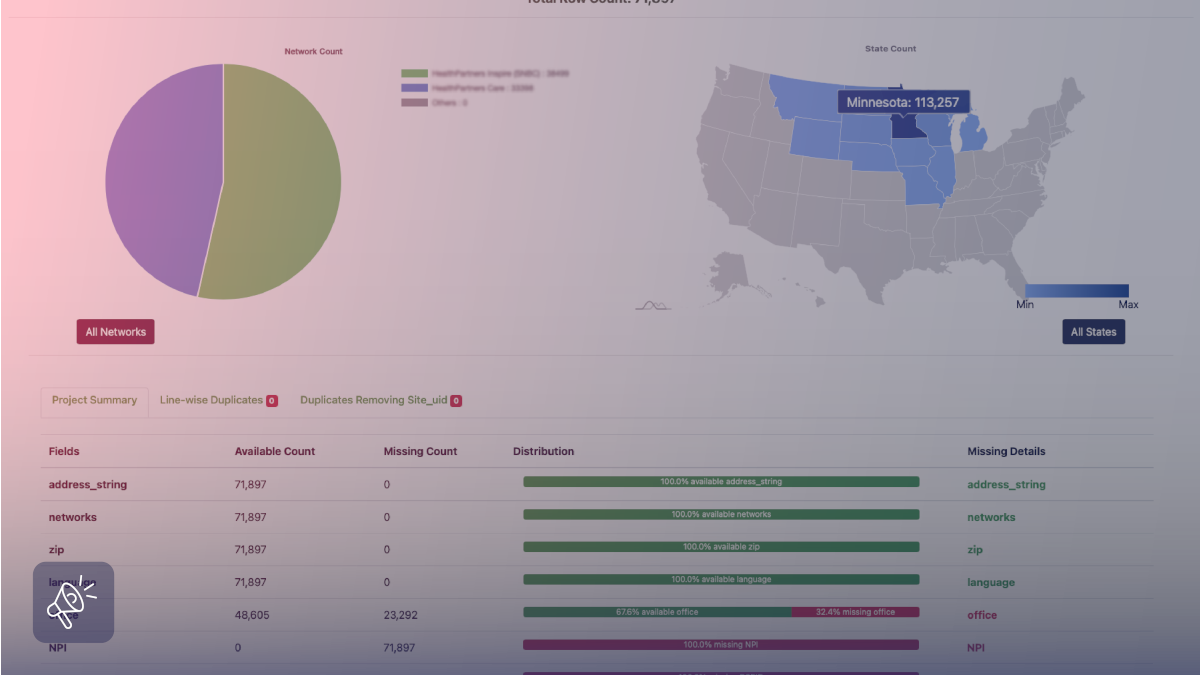
Grepsr also shows this more operational side of market monitoring through an application page focused on competitive intelligence dashboards. It is useful for consultants who need a recurring view of market shifts, not just a one-off export. See how Grepsr frames competitive intelligence dashboards.
Conducting Competitive Analysis with Web Data
Competitive analysis is where web data often becomes most visible to clients. A good consulting deck does not simply say that the market is getting crowded or that competitor pricing is becoming more aggressive. It shows where that change is happening, how fast it is happening, and which competitors are leading it.
That is why web data is so useful for industry benchmarking. Consultants can compare pricing bands, feature depth, assortment breadth, geographic expansion, review sentiment, promotional frequency, and even how often a brand updates its product pages or launches new offers. When this is tracked over time, the output becomes much stronger than a single benchmark table built in a hurry.
Examples: Web Data for Industry Benchmarking
Imagine a consulting team working on a category growth project for a retail client. They may want to benchmark the client against fifteen competitors across product count, in-stock depth, price movement, discount cadence, review volume, and messaging themes. That kind of comparison is possible manually, but it becomes fragile fast. A structured web dataset makes the benchmark far easier to update, defend, and reuse.
The same pattern applies in B2B consulting. Teams can track feature pages, case studies, hiring signals, packaging changes, or positioning language across software vendors and use that evidence to support recommendations on product gaps, go-to-market choices, or messaging strategy.
Consulting Data Services: Turning Raw Collection into Client-Ready Insight
The weakest part of many web data projects is not the collection. It is what happens after collection. Raw records can be messy. Company names may be inconsistent. Product titles may vary. Fields may be missing. Categories may not match the client’s internal taxonomy. If that cleanup is poor, the client report may still look polished while resting on shaky inputs.
That is where consulting data services matter. The value is not only in scraping pages. It is in delivering structured, normalized, analysis-ready data that consultants can trust. This is also the point at which teams start segmenting markets more effectively, because cleaner data makes it much easier to group companies, offers, price bands, or customer needs in ways that support strategy work.
Ensuring Data Reliability in Client Reports
If a client is going to use your deck to make an investment, pricing, or growth decision, the underlying data needs to hold up under questioning. Reliability usually comes down to a few basics:
- Accuracy, so the record reflects what was actually published.
- Completeness, so important fields are not missing in a way that distorts the pattern.
- Consistency, so the same type of item is classified the same way across sources.
- Timeliness, so the data still describes the market the client is asking about.
Grepsr has an older but still useful article on the foundations of high-quality data that covers accuracy, completeness, validity, consistency, and timeliness. It is a helpful reference when you need to explain why data reliability matters just as much as data volume. Read Grepsr’s article on the characteristics of high-quality data.
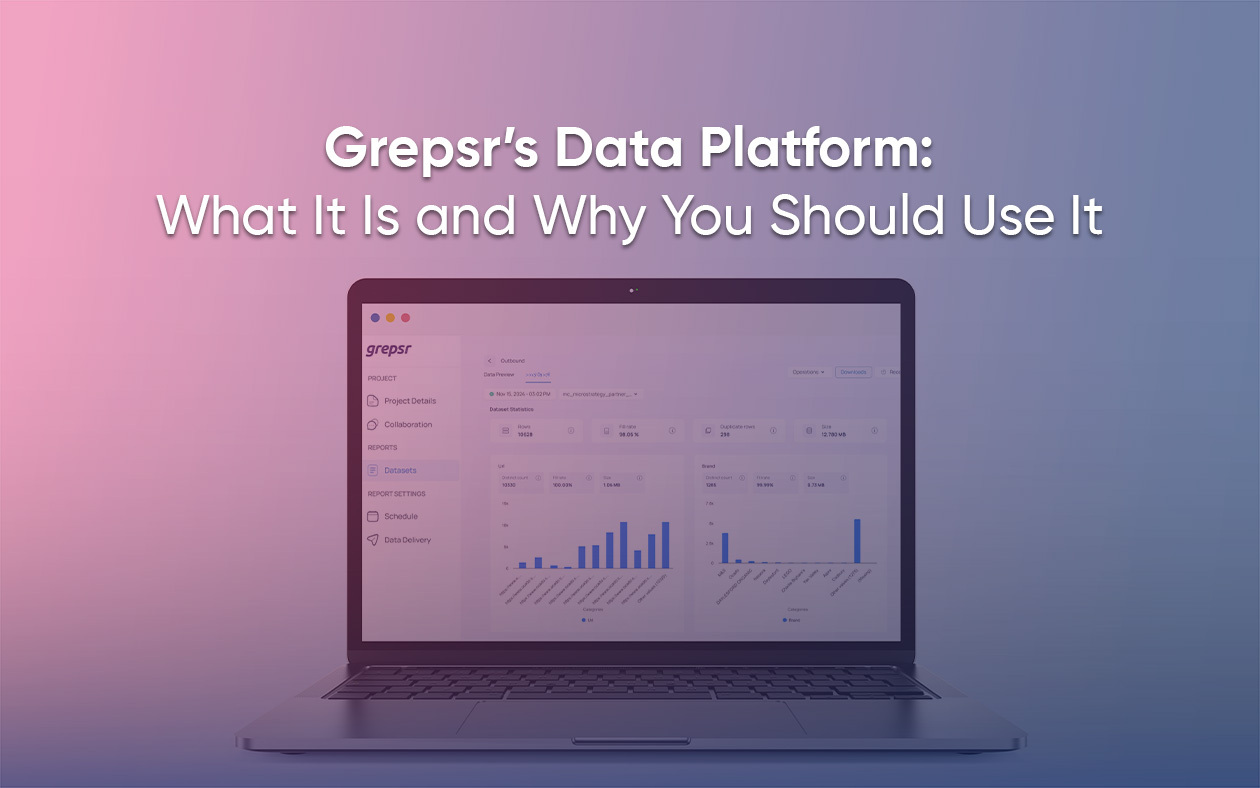
There is also a workflow angle to this. Grepsr’s data platform write-up explains its process from consultation and source selection to crawler setup and scheduled extraction. That is useful for consultants evaluating how to operationalize recurring market research, rather than treating each project as a fresh manual exercise. Explore how Grepsr describes its data platform workflow.
Real-World Applications and Success Stories
Data-driven consulting is easiest to appreciate when you look at real client outcomes. One of the strongest use cases is pricing and category intelligence, where consultants need fresh product and competitor data at a frequency that manual research simply cannot support.
Case Study: Data-Driven Business Strategy
Grepsr has a customer story about an e-commerce consultant that is especially relevant here. The consulting firm needed regular product listing and detail page data across multiple platforms to help clients understand pricing patterns, historical shifts, and competitor activity. According to the case study, the setup covered 16 data sources, processed more than 2 million records per month, and helped more than 15 client teams use competitive data in their analyses. Read the Grepsr customer story on pricing intelligence for an e-commerce consultant.
That kind of case matters because it shows what consulting work looks like after the data pipeline is in place. Analysts stop rebuilding the base layer each week. They start spotting patterns, comparing scenarios, and turning data into a business strategy that clients can act on.
Best Practices for Ethical and Reliable Web Data Work
Consulting teams also need to be careful here. Faster access to public data does not remove the need for responsible practice. Good market research still depends on a clear scope, sound data handling, and a process that respects privacy, platform rules, and client expectations.
For a broad professional benchmark, the ICC and ESOMAR maintain a widely used code for ethical and professional conduct in market research and data analytics. It is a useful external reference point when clients ask how responsible data work should be framed.
When a project needs public business context to support location analysis, customer mix, or competition mapping, official datasets can complement scraped market signals. The U.S. Census Bureau’s Census Business Builder is a simple example of how consultants can pair public statistical sources with web data for richer market research. Explore Census Business Builder resources.
Conclusion
Data-driven consulting works best when web data is treated as a research layer rather than a gimmick. It helps consultants move faster, benchmark markets more credibly, and keep client recommendations grounded in evidence that can actually be revisited and updated. That is the real advantage. Not just more data, but better market visibility and better reasoning built on top of it.
For teams that want a managed way to collect, structure, and operationalize public web data, Grepsr’s main site gives a clear overview of how the company positions its web data services for enterprise use. If you need a starting point before evaluating project scope, delivery model, or feasibility, visit Grepsr’s homepage.
FAQs
1. What is data-driven consulting?
Data-driven consulting is an approach where recommendations are supported by structured evidence rather than opinion alone. That evidence may come from internal business data, research interviews, public datasets, and increasingly from web data collected at scale.
2. How do consultants gather competitive intelligence?
They usually combine interviews, desk research, client knowledge, analyst sources, and public web data. Web data is especially useful for tracking competitor pricing, products, messaging, reviews, and market movement over time.
3. What is market research scraping?
Market research scraping is the automated collection of structured public information from relevant websites, enabling teams to analyze market signals more quickly and consistently.
4. How can web data support industry benchmarking?
It helps consultants compare competitors across the same dimensions, such as price, assortment, features, reviews, and promotional behavior, and keep those comparisons up to date over time.
5. What tools do consultants use for data collection?
It depends on the project. Many teams use spreadsheets, BI tools, dashboards, analyst databases, public government sources, and managed data providers to obtain recurring, structured market data.
6. How do you ensure data reliability in client reports?
By checking for accuracy, completeness, consistency, and timeliness, and ensuring the data is normalized before it is turned into charts, tables, or recommendations.
7. How does Grepsr support consulting data services?
Grepsr supports consulting-style research by collecting public web data, structuring it for analysis, and helping teams build repeatable market-monitoring workflows rather than relying on one-time manual pulls.