Whether you’re deciding on a business strategy or researching a scientific breakthrough, the type of data you use: primary, secondary, or supplementary, determines how relevant, reliable, and resource-intensive your findings will be. Let’s dive into these three key data types and understand how each plays a unique role in research and analysis.
Understanding Primary, Secondary, and Supplementary Data
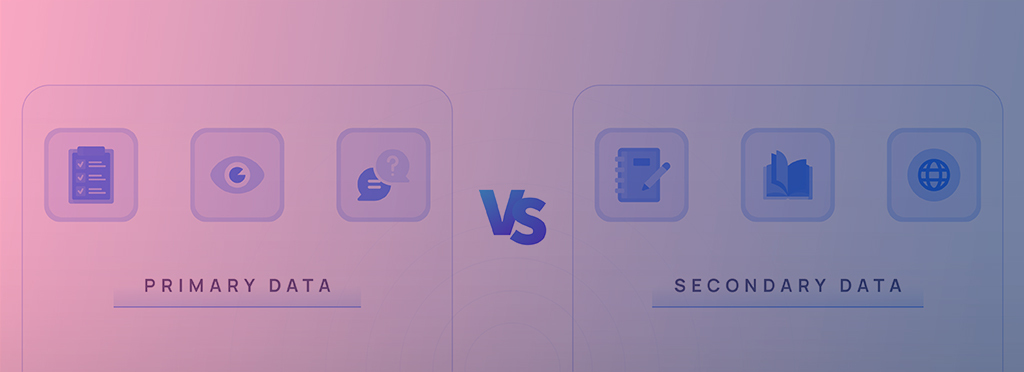
In simple terms, primary data is information you gather firsthand for a specific goal, like testing a hypothesis. Secondary data, on the other hand, is pre-existing information that you can adapt for your needs.
With primary data, you go straight to the source. This might mean conducting surveys, holding interviews, running experiments, or simply observing consumer behavior in a particular setting.
Secondary data is essentially secondhand information, data that’s already out there. It could be census reports from government publications, which often contain valuable demographic details, or even your own sales data, which you might use for trend analysis.
Finally, there’s supplementary data. This is additional information that supports or adds context to your primary and secondary data. While it might not directly answer your research questions, it helps enrich your analysis.
Supplementary data could include contextual factors, like recent local events, economic conditions, or even geographic data, which can help provide a more complete picture.
Difference Between Primary Data and Secondary Data
Here are the basic differences between primary and secondary data. In web scraping, you’re primarily working with secondary or supplementary data.
Secondary data sometimes face skepticism regarding credibility, but that’s often due to the source or context of the data rather than the data itself.
Trustworthy secondary data can be highly reliable and valuable, something we’ll explore in more detail later.
| Features | Primary Data | Secondary Data |
|---|---|---|
| Definition | Data collected firsthand by the researcher for a specific purpose. | Data collected by someone else for a different purpose but used by the researcher. |
| Source | Original data | Already existing data |
| Collection Method | Surveys, interviews, observations, experiments | Books, journals, websites, government publications, etc. |
| Relevance | Highly relevant to the research question | May or may not be relevant to the research question |
| Cost | More expensive to collect | Less expensive to collect |
| Time | More time-consuming to collect | Less time-consuming to collect |
| Reliability | More reliable as it is collected firsthand | Less reliable as it may be biased or outdated |
| Control | Researcher has full control over data collection | Researcher has no control over data collection |
Both primary and secondary data can include qualitative and quantitative information. Qualitative data includes in-depth customer opinions from interviews, focus groups, or open-ended survey responses.
Quantitative data, on the other hand, consists of numerical information—such as sales figures, website traffic stats, or survey results with rating scales.
Depending on your research methodology, you may perform either qualitative or quantitative analysis. For a balanced approach, it’s often best to use both techniques.
This helps boost the credibility of your research and enhances the accuracy of your findings.

Why You Need to Go Beyond Primary Data
Primary data is super reliable, there’s no denying that. But is it enough to draw definitive conclusions?
We don’t think so.
Especially in the era of Big Data – Data so big we coined terms like zettabytes to measure it.
With over 5 billion people using the internet daily, each of us leaves a footprint that adds to this vast data pool.
To put it into perspective, if you could stack all the data created in a single day, it would reach the moon twice.
According to Statista, by 2025, the world will produce over 180 zettabytes of data.
Your primary data might show that your profits increased last year or the year before that. But, does that mean you’re truly profitable? Can you be absolutely sure?
The broader information out there has insights that can help answer that.
For example, web scraping allows you to extract data from search results to gain insights into brand mentions, price trends, customer reviews, and sentiment analysis.
This can give you a more well-rounded perspective. And this is just the tip of the iceberg when it comes to web scraping’s potential.
Web Scraping and Its Role in Data Collection
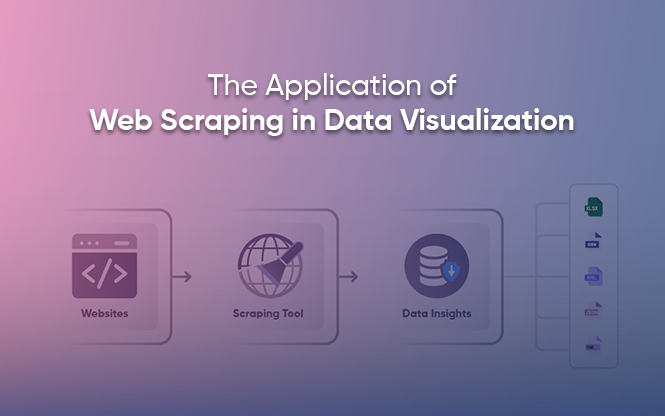
Web scraping is a technique used to automatically extract large volumes of data from websites, making it a valuable tool for collecting secondary and supplementary data.
By gathering publicly available information on competitors, reviews, trends, or customer feedback from various online platforms, web scraping provides businesses with extensive, up-to-date data.
For instance:
- Secondary Data: A company might scrape real estate listings to analyze housing prices and trends for an industry report.
- Supplementary Data: Social media reviews can be scraped to add customer sentiment data, complementing primary survey insights.
To Sum It Up
Understanding the nuances between primary and secondary data is essential for any organization aiming to leverage insights effectively.
Primary data gives you direct, tailored information for specific goals, while secondary data offers a wealth of pre-existing knowledge that can broaden your perspective.
Supplementary data adds context, enriching your analysis and helping you connect the dots. However, in an era where data sources are abundant, extracting and synthesizing this information can be a formidable challenge.
This is where Grepsr excels.
With over 12 years of experience in managed data extraction, Grepsr has partnered with some of the biggest brands in the world, delivering fast turnaround times and the ability to tackle complex use cases.
Our round-the-clock support ensures that businesses can access the insights they need, whenever they need them.
By streamlining routine data extractions, Grepsr empowers organizations to make informed, data-driven decisions that fuel growth and innovation.
Frequently Asked Questions
What is the main difference between primary data and secondary data?
Primary data is collected first-hand for a specific research goal. Secondary data already exists and was collected by another source for a different purpose.
What are examples of primary data?
Examples of primary data include surveys, interviews, focus groups, experiments, observations and direct customer feedback.
What are examples of secondary data?
Examples of secondary data include government reports, research papers, industry reports, websites, online reviews, competitor pricing data and public databases.
What is supplementary data used for?
Supplementary data is used to add context to primary and secondary data. It helps explain patterns by including external factors such as location, weather, economic conditions, competitor activity or social sentiment.
Is web scraping primary or secondary data collection?
Web scraping usually collects secondary or supplementary data because it extracts information that already exists on public websites. It can support research by gathering data such as prices, reviews, product listings, news, search results and market signals.
Is secondary data always less reliable than primary data?
Secondary data can be highly reliable, depending on the source and context, but it’s generally seen as less direct and may carry biases due to the context in which it was collected.
Can web scraping collect primary data?
Web scraping usually collects secondary or supplementary data, as it gathers existing information from publicly available sources, not firsthand research.