Pricing used to be a spreadsheet problem. Now it is a live-market problem.
If you sell online, your “price” is competing against dozens of moving targets: competitor discounts, marketplace sellers, coupon stacks, shipping thresholds, and bundle tricks that change every hour. That is why e-commerce price monitoring has become a core capability for pricing analysts, retail managers, and e-commerce strategists.
In this guide, you will learn how web data extraction supports smarter pricing, how to set up automated tracking, how dynamic pricing works in plain language, how to respond to competitor changes in real time without triggering pricing wars, and how you can use web scraping to prevent fraud in your pricing ecosystem.
Why web data extraction matters for pricing teams
Your internal data tells you what happened. Web data tells you what is happening right now.
When you consistently capture competitor and marketplace signals, you can:
- Benchmark your shelf price against the market
- track promotions, bundles, and stock signals that explain price movement
- Feed clean inputs into pricing rules and forecasting
- spot anomalies that lead to revenue leaks (bad mappings, duplicate SKUs, unauthorized sellers)
This is where competitor price tracking goes beyond “watching prices.” It becomes a decision engine.
How to set up automated price tracking
Automated tracking works best when you treat it like a data product, not a one-time scrape.
Step 1: define your price universe
Start with a tight scope:
- Your top revenue SKUs
- your most price-sensitive SKUs (high elasticity, high competition)
- your “traffic drivers” (products that set price perception)
Then decide what you must capture for each SKU. Price alone is rarely enough.
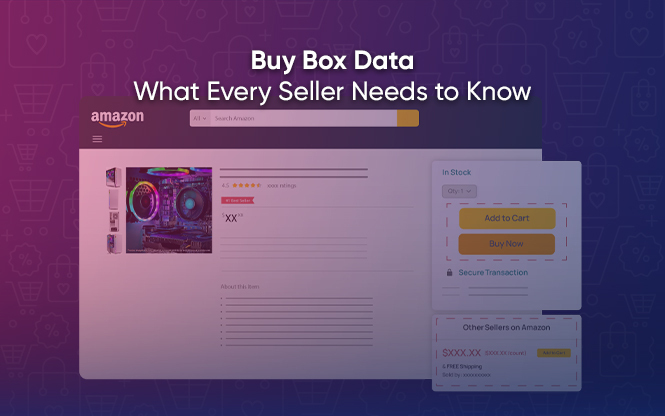
Step 2: capture the full “buy box reality”
For each product page snapshot, try to capture:
- list price, sale price, and any coupon or promo code indicators
- shipping cost and delivery promise (these change conversion, even if the price is the same)
- seller identity (brand, marketplace, third party)
- stock status and quantity signals were visible
- pack size, variant, and key attributes (so you do not compare the wrong item)
This is the foundation for reliable retail price analytics later.
Step 3: normalize and match products correctly
Most pricing failures come from mismatching products:
- wrong size or pack count
- regional variants
- refurbished vs new
- “lookalike” SKUs with different specs
A practical approach is to maintain a matching layer with:
- deterministic identifiers (UPC/EAN/GTIN) when available
- fallback rules (title similarity, attribute matching, image similarity)
- manual review queue for high-value SKUs
Step 4: Choose a refresh cadence that matches reality
Not everything needs to be scraped every minute.
A common pattern:
- hourly or multiple times a day for high-velocity categories
- daily for stable categories
- event-based bursts during big campaigns (festivals, seasonal sales, competitor events)
Dynamic pricing algorithms explained in simple terms
Dynamic pricing is not “changing prices constantly.” It is “change prices with rules you can explain.”
Most teams start with rule-based pricing, then mature into model-assisted pricing.
Rule-based pricing (good for controlled moves)
Examples:
- “Match competitor X if they are in stock, otherwise maintain margin.”
- “Stay within ₹Y of the lowest reputable seller.”
- “Do not drop below MAP or below cost + shipping.”
Rule-based systems are easier to audit, which matters when internal pricing decisions are questioned.
Model-assisted pricing (good for scale and smarter trade-offs)
Models use dynamic pricing data, such as competitor prices, your conversion rate, inventory position, and seasonality, to suggest an optimal price that balances margin and volume.
A simple way to think about it:
- Rules protect your boundaries
- Models help you choose the best move inside those boundaries
Reacting to competitor price changes in real time
Real-time reaction does not mean instant matching. It means instant understanding.
When a competitor’s price drops, your system should first ask:
- Is it a real discount or a coupon/stack trick?
- Is it the same product variant and condition?
- Is the competitor in stock, and is the delivery promise comparable?
- Is the seller credible, or is this a low-trust marketplace seller?
Only after those checks should your pricing logic decide whether to respond.
A strong setup uses:
- alerts (for meaningful changes, not every 1% move)
- thresholds (ignore noise, act on significant deltas)
- “hold” logic (wait for stability if the market is volatile)
Avoiding pricing wars and common pitfalls
Pricing wars usually happen when teams optimize for “lowest price” instead of “best price position.”
Here are practical guardrails:
- Use price ladders, not a single target price (example: “top 3 cheapest among trusted sellers”).
- Protect contribution margin with hard floors.
- Segment competitors (direct peers, marketplaces, and discounters).
- Measure the outcome, not the move (profit per visit, conversion lift, incremental revenue).
- Time-box reactions during campaigns so you do not chase temporary promos.
Over time, this becomes a disciplined pricing system rather than a reactive habit.
How web data helps prevent fraud in pricing and catalog operations
This is an underrated benefit: you can use web scraping to prevent fraud and revenue leakage by detecting patterns that humans miss.
Common signals web data can surface:
- unauthorized sellers repeatedly undercutting your official price
- sudden price collapses tied to suspicious sellers or mismatched listings
- counterfeit or gray-market listings using your brand assets
- MAP violations across channels
- “bait” listings that differ by variant, pack size, or condition
When these signals are tied to workflows (ticketing, seller enforcement, catalog fixes), price monitoring also becomes a brand-protection tool.
Legal considerations in price scraping
Price monitoring often uses publicly accessible data, but “publicly accessible” does not automatically mean “free to reuse without constraints.” Laws and risks vary by region and by what you access.
United States: access rules and unauthorized access risk
In the US, disputes often revolve around the Computer Fraud and Abuse Act (CFAA) and what counts as “without authorization.” The Supreme Court’s decision in Van Buren v. United States narrowed the interpretation of “exceeds authorized access” under the CFAA.
In hiQ Labs v. LinkedIn, the Ninth Circuit addressed the scraping of publicly available profile data and the CFAA in that context.
Practical takeaway: avoid bypassing technical barriers, avoid scraping behind logins without permission, and treat cease-and-desist and access restrictions seriously.
EU: database rights can matter for systematic extraction
In the EU, the Database Directive provides a “sui generis” database right and defines concepts such as the extraction and re-utilization of a substantial part of a database.
If you operate across EU markets, get a legal review when your workflow looks like repeated, systematic extraction from a protected database.
Personalized pricing and consumer protection scrutiny
If your pricing system uses personal data or individualized behavior signals, regulators are paying attention. The FTC has discussed “surveillance pricing” and the use of personal data to set individualized prices.
Practical takeaway: keep a clear line between market-based dynamic pricing (competitor and demand signals) and personalized pricing based on sensitive or opaque consumer profiling unless you have strong legal and compliance controls.
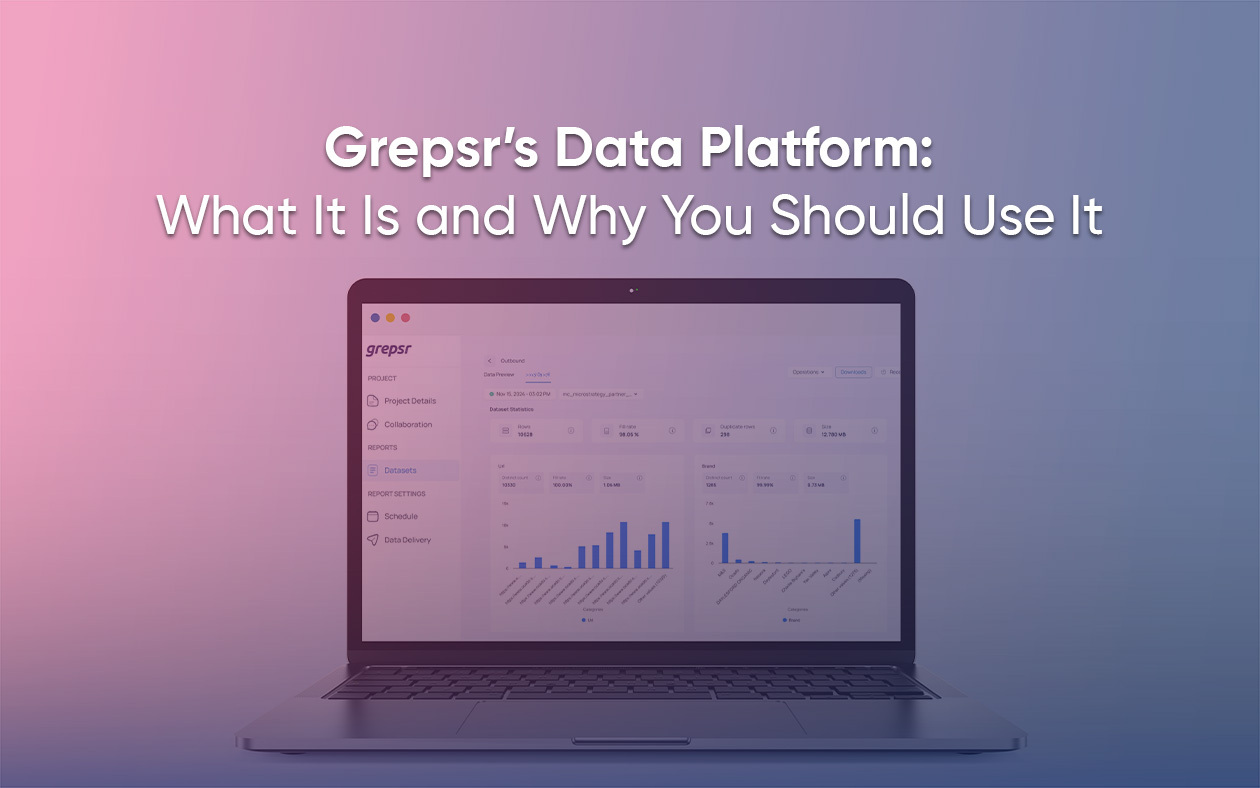
How Grepsr supports e-commerce price monitoring
A strong pricing program needs coverage, consistency, and clean delivery. The problem is that most teams get stuck maintaining the pipeline rather than improving the strategy. Pages change, category structures shift, and one broken scrape can silently ruin the dashboard or trigger the wrong alert.
Grepsr’s price monitoring workflow is built to stay reliable over time. It extracts competitor pricing at scale, tracks changes across marketplaces and retail sites, and delivers normalized datasets your dashboards, alerting, or pricing engines can trust, with validation baked in so automation does not run on noisy inputs.
If you want proof this holds up in real-world pricing work, Grepsr shares a customer story in which pricing intelligence helped an e-commerce consulting team turn continuous competitor data and crawl history into better pricing decisions and measurable ROI.
FAQs
How do I set up automated competitor price tracking?
Start with a focused SKU list, capture the full price context (price, shipping, seller, stock, promos), normalize product matching, and set a refresh cadence based on category volatility.
What is dynamic pricing in e-commerce?
Dynamic pricing is a system that adjusts prices based on rules and/or models that account for market conditions such as competitor pricing, demand, inventory, and seasonality.
How do I react to competitor price changes without starting a pricing war?
Use guardrails: price floors, trusted-seller filters, thresholds, and time-boxed reactions. Optimize for profit and positioning, not “always lowest.”
Can price monitoring help prevent fraud?
Yes. Monitoring can flag unauthorized sellers, suspicious undercutting, variant mismatches, and possible counterfeit or gray-market patterns so your teams can act quickly.
Is price scraping legal?
It depends on what you access, how you access it, and the region. In the US, the interpretation and application of the CFAA matter. In the EU, database rights can apply to systematic extraction. Get counsel for your exact use case.