Real estate runs on data, but the moment you start aggregating it, you also inherit responsibility. The risk is not only “did we collect the data correctly?” It is also “Are we allowed to use it the way we plan to use it?”
This guide is a practical walkthrough of real estate data compliance for compliance officers, data analysts, and realtors. We will cover property data privacy, data licensing RE, GDPR real estate considerations, and the most common compliance traps in lead-generation and market-intelligence workflows.
Note: This is general information, not legal advice. For high-stakes decisions, involve your legal counsel.
What “real estate data aggregation” really means in compliance terms
Aggregation usually blends multiple categories of data into a single dataset or workflow, for example:
- listing data (MLS, portals, broker sites)
- public records (tax assessor, deeds, permits)
- neighborhood context (crime stats, school ratings, zoning, environmental layers)
- user-generated content (reviews, forums, social mentions)
- outreach systems (CRMs, dialers, email platforms)
Compliance depends on three questions:
- Is it personal data?
- Do we have the right to collect and reuse it?
- Are we contacting people, and if so, what rules apply?
Privacy laws affecting property data
Property datasets feel “about buildings,” but they often become “about people” the moment you can link data to an owner, tenant, buyer, or household.
What counts as personal data in real estate
Under GDPR, “personal data” is any information related to an identified or identifiable person. That includes obvious identifiers (name, phone, email) and indirect identifiers such as location data and online identifiers.
So a dataset can become personal data if it contains, or can be reasonably combined to reveal:
- owner names + property addresses
- phone/email appended to addresses
- “interested buyer” signals tied to a person
- behavioral tracking from portals (even cookie IDs can be personal data)
Core privacy principles you should operationalize
If your organization touches EU/UK personal data, GDPR principles are the best “default framework” even when you operate globally: lawfulness, transparency, purpose limitation, data minimization, accuracy, storage limitation, and security.
In the US, requirements vary by state and sector, but consumer privacy laws still push you toward the same behaviors: disclose what you collect, respect deletion/opt-out rights, and protect personal information. For California, the Attorney General’s CCPA summary is a good baseline for core consumer rights.
Consent requirements for contacting buyers and sellers
Many “compliance problems” occur after data collection, when teams begin outreach.
US: calls and texts (TCPA risk)
If your sales workflow includes automated calls or marketing texts, TCPA rules matter. The FCC’s TCPA rules document is a primary reference point for how “telephone solicitation” and related restrictions apply.
A practical rule of thumb: treat marketing texts/calls as “consent-first,” keep proof of consent, and maintain do-not-contact suppression.
US: email marketing (CAN-SPAM)
For commercial email, the FTC’s CAN-SPAM compliance guide is the safest quick reference. It highlights the basics: clear identification, truthful headers, a working opt-out mechanism, and honoring opt-outs.
EU/UK: GDPR + ePrivacy/PECR style rules
In the UK, the ICO explains that PECR applies to unsolicited marketing messages sent by email, including emails and texts.
And separately, GDPR still applies to the personal data processing that sits behind your outreach. The key shift for many real estate teams is this: even if your “source” was public, your use can still be regulated.
Copyright and licensing of MLS and public records
Privacy is only one half. The other half is “Are we allowed to reuse this data?”
MLS and listing data are often licensed, not “free to copy.”
MLS ecosystems commonly treat listing data as either copyrighted or subject to licensing terms. For example, a regional MLS (realMLS) explicitly states that its listing data is copyrighted and requires a licensing agreement for permitted uses such as IDX or VOW.
At the policy level, NAR’s Internet Data Exchange (IDX) policy limits the electronic display of listings among MLS participants under defined rules.
What this means for aggregators:
- If your product depends on MLS data, assume you need an agreement, not a scraper.
- If you are a broker or vendor, confirm which display and reuse rights you actually have (IDX vs VOW vs back office).
“Public records” does not always mean “no restrictions.”
Government data can be open, restricted, or open with conditions. Some public datasets come with terms that limit bulk reuse or require attribution. For example, SAM.gov’s terms include specific limits for reuse of certain third-party data fields.
So, for public records strategy:
- check the license or terms attached to the dataset
- document your permitted uses
- avoid assuming “publicly accessible” equals “unlimited redistribution.”
Regional data restrictions: EU vs US (and why teams get surprised)
EU: Database rights can affect large-scale extraction
In the EU, beyond copyright, there is also database protection that can restrict the extraction or reutilization of substantial parts of a database, including repeated, systematic extraction. This is part of the EU Database Directive.
This matters in real estate because many high-value datasets are essentially curated databases: listings, tenant directories, footfall panels, and portal inventories.
US: a patchwork model, but enforcement still bites
The US does not have a single federal GDPR-style law covering all personal data. Instead, you see state laws (like CCPA) and channel-specific rules (like TCPA for calls/texts, CAN-SPAM for email).
So the compliance strategy is often operational, not theoretical:
- “Where do we operate and who do we message?”
- “What channels do we use?”
- “What rights requests could land tomorrow?”
Best practices for compliant data use in real estate
This is the part most teams need: not a lecture, but a playbook.
1) Classify your data before you build workflows
Create a simple tagging system:
- Public, non-personal market data
- Personal data (owners, leads, tenants, identifiable households)
- Licensed datasets (MLS feeds, paid platforms, partner data)
This prevents accidental mixing, such as pushing personal owner data into an “analytics-only” warehouse that was never set up for rights management.
2) Choose your lawful basis (GDPR) and document it
If you handle EU/UK personal data, you must have a lawful basis for processing (consent, contract, legitimate interests, etc.). GDPR Article 6 is the core reference.
The documentation is not busywork. It is what you will need when:
- a data subject request lands
- A vendor asks for your compliance posture
- A regulator questions your processing
3) Bake in minimization and retention
Most real estate teams over-collect “just in case.” That is where compliance and security risk grow.
A cleaner approach:
- collect only what your decision model needs
- retain personal data only as long as needed for the defined purpose
- store raw source data separately from curated outputs
These principles map directly to GDPR’s processing principles.
4) Control outreach with consent records and suppression
If you do lead generation:
- store proof of consent (timestamp, source, language shown)
- maintain “do not contact” lists across systems
- Make opt-out easy and honored quickly (especially for email)
5) Treat “web user behavior analytics tools” as a compliance surface
Real estate portals and listing sites love analytics: session replay, heat maps, click tracking, and retargeting pixels.
From a compliance view, these tools can create personal data via online identifiers and behavioral profiles. GDPR’s definition of personal data explicitly includes online identifiers, and EU guidance treats combinations of data as identifiable.
So your checklist should include:
- cookie/consent management where required
- vendor DPAs and security reviews
- limits on collecting sensitive inferences (for example, financial distress signals)
6) Vendor and processor governance
Aggregation often means multiple vendors: enrichment, dialers, CRMs, data hosting, and analytics.
Make sure you have:
- data processing terms where needed
- clear roles (controller vs processor)
- security controls, access logging, and breach response expectations
7) Keep provenance and auditability
For every dataset, store:
- source
- collection date
- field definitions
- license or permitted use notes
- transformations applied
When something goes wrong, provenance shows good faith and control.
Where Grepsr fits in a compliance-first approach
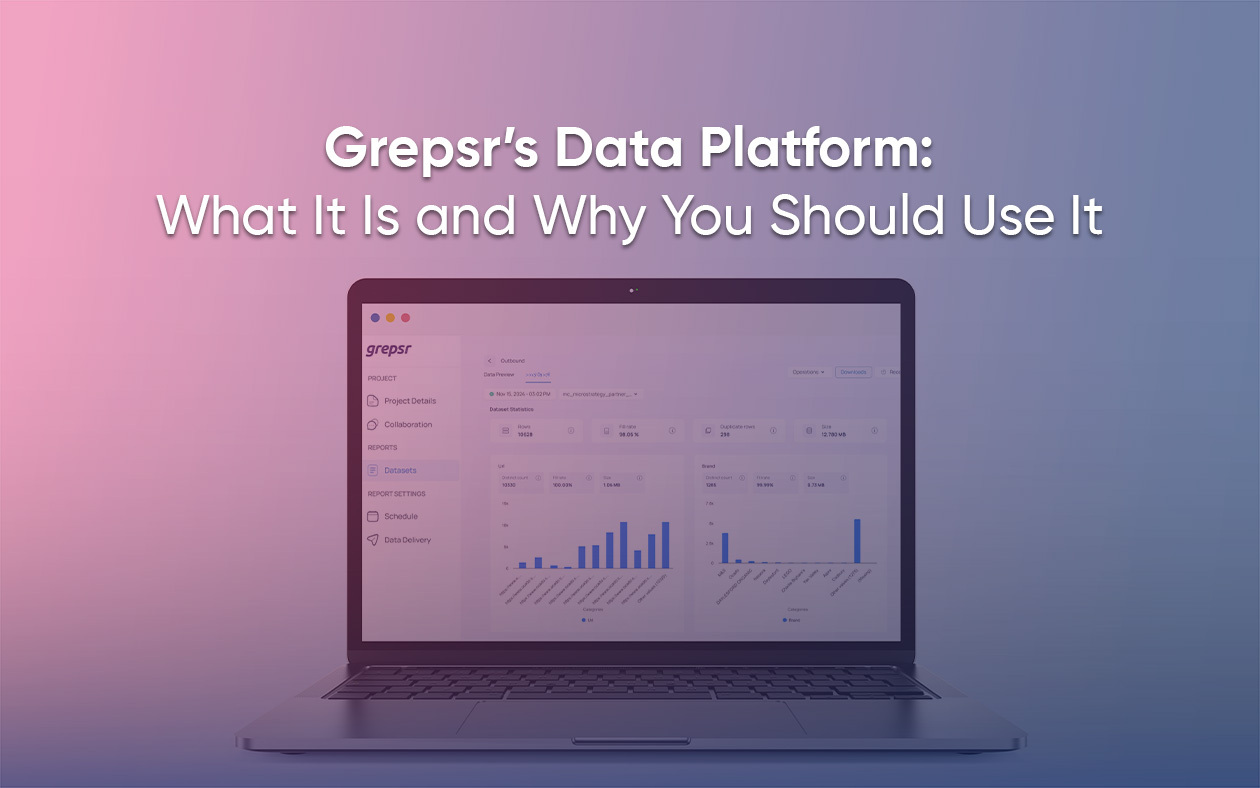
For many real estate organizations, the hard part is not understanding the rules. The hard part is keeping data collection stable while still meeting privacy, security, and ethical expectations as sources change and pipelines scale.
That is where Grepsr fits best. Its Trust Center gives procurement and compliance teams a single place to review the security and privacy posture, including documented controls and compliance information that supports vendor assurance during risk reviews.
On the data collection side, Grepsr also publishes practical guidance on legal and ethical web scraping, so internal teams can align extraction practices with responsible standards before a project goes live.
FAQs
What is real estate data compliance?
Real estate data compliance is the set of privacy, marketing, and licensing obligations that apply when you collect, store, combine, sell, or use real estate-related data, especially when it can identify people or comes from licensed sources.
Does GDPR apply to real estate data?
Yes, if you process personal data of EU residents, GDPR can apply even if your company is outside the EU. GDPR defines personal data broadly and requires a lawful basis for processing.
Do I need consent to contact a lead?
It depends on the region and channel. In the US, calls and texts can trigger TCPA obligations, and email marketing must follow CAN-SPAM rules. In the UK/EU, direct marketing rules such as PECR and GDPR obligations may apply.
Can I scrape MLS listings?
MLS listing data is commonly controlled through licensing and display rules. Many MLSs require formal data licensing agreements, and IDX is governed by defined policies.
Are public records free to reuse?
Not always. Some government datasets have specific terms, attribution requirements, or limits on bulk reuse. Always check the license or terms of use for the source dataset.