Inventory problems rarely begin in the warehouse. They usually begin much earlier, when teams are working with delayed visibility, scattered retailer data, and a stock picture that is already outdated by the time someone acts on it. For retail, marketplace, and supply chain teams, that delay can quietly turn into lost sales, missed replenishment windows, and poor forecasting decisions.
That is where inventory monitoring scraping becomes valuable. Instead of manually checking product availability across retailer sites, supplier portals, and marketplace listings, businesses can automate stock monitoring and turn those updates into a steady stream of structured, usable data. The real value is not just in watching what is in stock today. It is in building a system for stock-level tracking, better out-of-stock alerts, and stronger supply chain analytics that help teams move earlier and with greater confidence.
Grepsr’s current retail and e-commerce materials position this as a managed, structured data workflow rather than a one-off scrape, which is exactly the right lens for enterprise inventory monitoring. See Grepsr’s inventory tracking guide.
The Need for Automated Stock Monitoring
Modern inventory decisions depend on external signals as much as on internal ERP records. A product might look healthy in your system while retailer shelves are already empty in key regions. A supplier may still list an item, but actual availability could be falling across channels. Manual checks cannot keep up with that kind of change, especially when multiple retailers, marketplaces, product variants, and geographies are involved.
Automated monitoring closes that gap. Instead of relying on periodic checks, businesses can collect frequent updates on product availability, stock status, quantities where visible, seller information, and related pricing signals. Grepsr’s inventory and real-time retail content shows this clearly: the goal is a continuous, structured collection that feeds decision-making without forcing internal teams to maintain brittle scraping setups themselves.
Streamlining Stock Level Tracking
The biggest improvement automation brings is consistency. Good stock level tracking is not only about seeing whether a product says “in stock” or “out of stock.” It is about tracking the same products across many sources, normalizing the output, and making it easy for operations, procurement, and analytics teams to compare changes over time.
When this works well, teams can monitor inventory availability across retailers, spot repeated sell-outs, compare availability by region or seller, and understand which SKUs are becoming unstable before the situation becomes urgent. This is especially useful in categories where demand moves quickly and retailer pages update more often than internal teams can reasonably monitor manually. Grepsr’s E-Commerce industry page and Services page are useful starting points for these workflows.
For businesses, that means less time spent collecting data and more time interpreting it. Instead of assigning people to check websites, copy stock updates into sheets, and reconcile conflicting inputs, automated pipelines create a cleaner operating view. That cleaner view helps teams answer practical questions faster. Which retailers are running out first? Which suppliers are consistently late? Which product variants disappear every weekend or during promotion cycles? Once those patterns become visible, inventory monitoring begins to support planning rather than just reporting.
Proactive Out-of-Stock Alerts
Out-of-stock events are expensive partly because they are often discovered too late. By the time someone notices a problem manually, the product may already have been unavailable long enough to hurt conversions, ad efficiency, or relationships with retailers.
Automated monitoring changes that by letting teams set logic around thresholds and exceptions. A business might want an alert when a high-priority SKU becomes unavailable at three major retailers, when stock falls below a visible quantity threshold, or when a supplier repeatedly flips between available and unavailable. These alerts can be pushed into dashboards, internal workflows, or replenishment systems so that action happens closer to the moment of change.
This matters even more because inventory management is increasingly tied to predictive and responsive retail operations. The National Retail Federation has highlighted inventory management and predictive analytics as major areas of retail investment, while McKinsey notes that better forecasting and AI-supported inventory planning can materially reduce inventory levels and improve responsiveness.
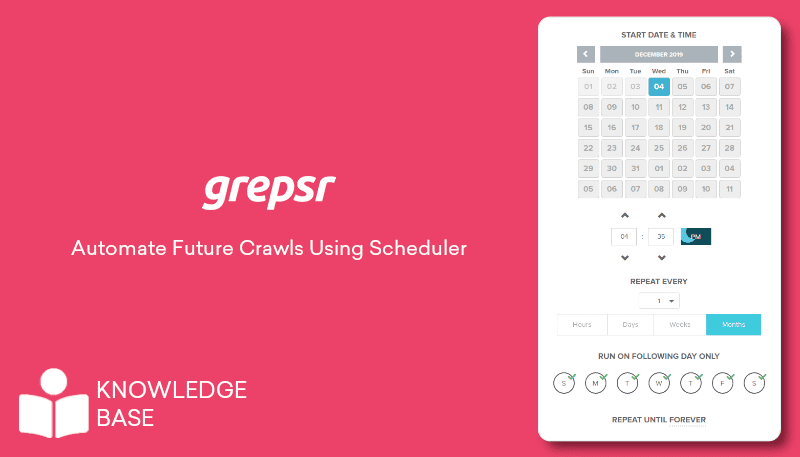
For Grepsr, the useful angle here is not simply that it can scrape stock data. It is that the data can be delivered on a schedule, monitored continuously, and integrated into operational workflows so teams can respond faster. That is where Data Extraction as a Service and Services from Grepsr become important.
Enhanced Supply Chain Analytics
Automated stock monitoring becomes far more valuable when teams stop treating it as a feed and start treating it as a decision layer. This is where businesses can truly turn scraped data into a business strategy.
Historical stock data helps answer questions that single-day snapshots never can. Which products are repeatedly at risk of shortages? Which sellers recover fastest after stockouts? Which categories exhibit predictable drops in availability before holidays, campaigns, or regional demand spikes? If stock visibility is captured consistently enough, teams can begin predicting stock shortages using historical data rather than waiting for a shortage to occur.
This also improves supply chain analytics in practice. External inventory signals can be combined with internal sales, purchase orders, promotion calendars, and fulfillment data to create more realistic replenishment decisions. Grepsr’s API use cases for enterprises and Custom Data Solutions pages make this especially relevant for businesses that want to move scraped data into their ERP or BI systems rather than keep it trapped in flat files.
The real win is that external web data gives context to internal systems. Your ERP may know what you have ordered. Automated monitoring shows what the market is actually doing. Together, they create a stronger basis for allocation, purchasing, assortment planning, and supplier evaluation.
Real-World Applications and Case Studies
The clearest use cases for automated stock monitoring appear in retail, marketplace intelligence, supplier monitoring, and e-commerce operations. In each case, the underlying need is similar: teams want timely visibility across more sources than they can manually watch.
Retail Giant Case Study
A common enterprise scenario involves a brand or large retail team tracking hundreds of SKUs across multiple retailer websites. The aim is not only to know whether products are available but also to see which channels run out of stock first, where availability is unstable, and how those changes align with pricing or promotions.
Grepsr’s published inventory and fulfillment-oriented content speak directly to that pattern. The company focuses on structured, continuous data collection for stock, price, and related product signals, with outputs that can support fulfillment and operational decision-making in near real time. You can explore that perspective through Track Retail Inventory.
E-commerce Platform Case Analysis
For e-commerce and analytics platforms, the need often extends beyond a single retailer. These businesses may be tracking stock and product changes across marketplaces, supplier sites, and competitor listings simultaneously. Grepsr’s customer stories show how businesses use real-time product data across marketplaces to improve visibility and decision-making. One useful example is this customer story.
That is also why inventory monitoring should not sit in isolation. It works best when connected with price monitoring, catalog health, supplier intelligence, and demand planning. In fast-moving online retail, those signals tend to influence each other. A stockout is not just an inventory issue. It can become a pricing issue, a fulfillment issue, a media-efficiency issue, and eventually a customer-experience issue.
Key Considerations for Implementation
Automation works best when the business treats data collection and usability as part of a single project. Too many teams focus on extracting stock data first, only to realize later that the format is inconsistent, the identifiers do not match internal systems, or the alerts are too noisy to trust.
Choosing the Right Tool
The right setup should reliably collect inventory data across changing websites, normalize the output, and deliver it in a format your internal teams can actually use. That may mean CSV or JSON for analytics, API delivery for operational tools, or direct integration into broader data workflows. Grepsr’s Data Extraction as a Service and Services pages help frame this managed-delivery model.
Investing in Staff Training
Even good automation can underperform if teams do not know how to interpret the data. Buyers, planners, and operations teams should understand which fields matter most, how alerts are triggered, and what actions different stock signals should lead to. Training does not need to be heavy, but it should be enough to move teams from simply observing stock changes to consistently acting on them.
Continuous Improvement Approach
Inventory monitoring is not a set-it-and-forget-it system. Retailer sites change. Supplier pages change. Product assortments change. The questions your business asks will also change. Grepsr’s broader positioning around managed extraction, continuous monitoring, and validation reflects this well, because the long-term value comes from pipeline stability and data quality, not from a one-time scrape. See Grepsr for that broader context.
That same mindset should apply internally. Teams should regularly review false alerts, missing fields, matching logic, and the business actions tied to each signal. Over time, that makes the system sharper and more strategic.
Final Thoughts
Automated online stock monitoring is really about improving visibility into a part of the business that changes too quickly for manual tracking. When inventory monitoring scraping is done well, it helps companies track availability across retailers, catch shortages earlier, improve replenishment timing, and connect external market signals with internal planning systems.
That is where Grepsr fits naturally. Its current retail, e-commerce, API, and integration-focused materials all point to the same business outcome: reliable, structured web data that can move beyond collection and into real operational use. For teams that want cleaner stock level tracking, more useful out-of-stock alerts, and better supply chain analytics, the smarter goal is not just to collect more data. It is to make that data dependable enough to shape decisions every day. Good starting points are E-Commerce and Contact Sales.
FAQs
What is inventory monitoring scraping?
Inventory monitoring scraping is the automated collection of stock availability, product status, and related inventory signals from retailer sites, supplier portals, and marketplaces. It helps businesses monitor stock changes without relying on manual checks.
How does automated stock monitoring help reduce stockouts?
It helps teams detect inventory changes earlier, trigger low-stock or out-of-stock alerts, and respond before the issue turns into lost sales or delayed replenishment.
Can scraped inventory data be integrated with ERP systems?
Yes. When the data is properly structured, it can be delivered to ERP, BI, or supply chain systems via files or APIs. Grepsr’s API-related workflow examples are especially relevant here.
What should businesses track besides “in stock” and “out of stock”?
They should also track product variants, visible quantities where available, seller changes, retailer coverage, lead-time indicators, and price changes. These signals create much stronger supply chain analytics than stock status alone.
How often should inventory monitoring run?
That depends on product velocity and market sensitivity. High-demand categories may require near-real-time or hourly checks, while slower-moving categories can often work with less frequent schedules.
Why is historical stock data important?
Because it helps teams move from reactive monitoring to prediction. Historical patterns can reveal recurring shortages, unstable sellers, seasonal dips, and retailer-specific availability trends, thereby improving forecasting and replenishment decisions.
Where does Grepsr add the most value in this workflow?
Grepsr is most useful where teams need reliable, structured, continuously maintained data feeds that can plug into analytics and operational workflows without the burden of building and maintaining scraping infrastructure internally.