Creating sophisticated Large Language Models requires more than clever architectures and training tricks. Strong results start with strong data. For NLP researchers and AI engineers, the hardest part is often not model design but finding and shaping LLM training data that is diverse, up to date, and reliable.
The open web contains a vast amount of text. Turning it into a trustworthy web corpus for AI takes a plan, guardrails, and the proper tooling. This article outlines what “high quality” really means, where to find it, and how Grepsr helps teams collect and maintain it at scale.
Why Quality Data Matters for LLMs
Training data sets the boundaries of what a model can understand and how it will behave when users ask hard questions. Quality is not only volume. It is balanced across topics and languages, relevant to the tasks you care about, and accurate, which holds up when facts are checked.
Extensive, carefully curated large language model data gives you more coherent outputs, fewer hallucinations, and more contextually appropriate answers across domains.
The Risks of Poor Data
Using weak or uncontrolled sources can lead to costly problems later.
- Biases: Narrow or skewed coverage nudges the model toward unfair or unreliable behavior.
- Inaccuracy: Outdated or error-filled text teaches the model to repeat mistakes.
- Inefficiency: Noisy inputs increase training time and cost, while filters and retries eat up schedule time.
Large Language Model Data: The Essentials
Understanding LLM Training Data
Practical training starts with curated, well-documented datasets that span topics, styles, and dialects. Aim for variety across domains and languages, keep the corpus fresh so models learn today’s usage and facts, and pair scale with rigorous quality checks.
Documentation matters. A short “datasheet” documenting source types, collection windows, exclusions, and known limitations will save time in every future iteration of training data collection.
Sources of LLM Training Data
- Academic publications: Rich, technical language that improves reasoning and long-form answers.
- Social media and forums: Emerging language, idioms, and real user questions when handled with care and compliance.
- Web archives and public websites: Breadth and history for context, especially useful when building retrieval-augmented systems.
Building a Web Corpus for AI: Strategy and Execution
A substantial corpus grows from a repeatable process. Decide what you will include, how you will collect it, and how you will keep it clean over time. Write these choices down so every contributor works the same way.
Data Collection Techniques
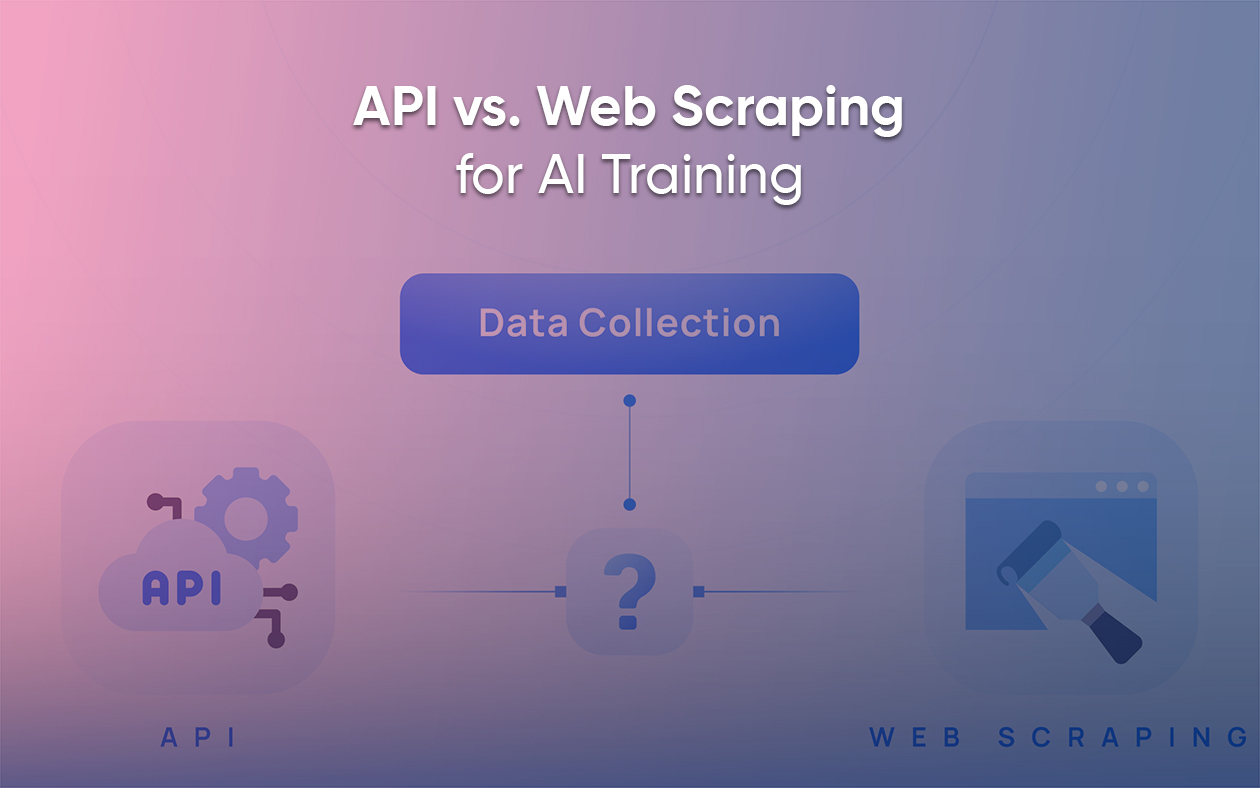
- Web scraping: Automates discovery and extraction across sites. Grepsr specializes in this, with monitored crawls, respectful pacing, and source-aware validation, which keeps inputs accurate and traceable.
- APIs: Clean access to structured data with clear usage rights. Great for news, research feeds, and government data portals.
- Crowdsourcing: Adds breadth and niche coverage. Use clear instructions, quality gates, and reviewer loops so the signal stays high.
If you want to validate a few sources and lock your schema before committing to a full build, start with Grepsr’s Data Management Platform.
For hands-off collection at scale with scheduled refreshes and clean delivery, explore Grepsr Data-as-a-Service, and skim similar outcomes in Customer Stories.
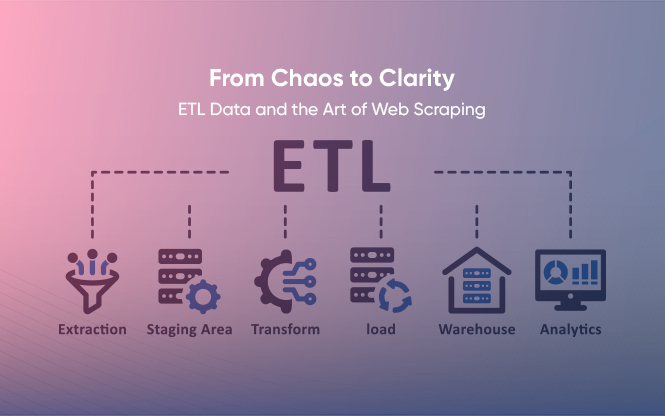
Data Processing and Cleaning
Even the best sources need refinement before they become LLM training data.
- Deduplication: Remove near-duplicates and boilerplate so the model does not overemphasize repeated text.
- Anonymization: Protect personal data and follow local regulations. Strip direct identifiers and mask quasi-identifiers where needed.
- Normalization: Standardize encodings, languages, and formats. Add language ID, source, and crawl time to make analysis and filtering easier.
- Quality filters: Apply language quality checks, toxicity screens, and factuality heuristics where appropriate. Keep a small human review loop to validate edge cases.
How Grepsr Supports LLM Data Needs
Customized Web Scraping
Grepsr builds source-specific crawls that respect site policies and collect the fields you actually need. You can scrape multiple sources in parallel, schedule regular refreshes, and route outputs to your lake or warehouse with clear lineage. Compliance and privacy controls are built into the workflow.
Learn more about Web Scraping Services or the broader Grepsr Services page.
Data Quality Assurance
Good data pipelines include guardrails by default. Grepsr runs validation on every batch, checks for distribution shifts, and flags unusual spikes in duplicate records or missing fields. That keeps your large language model data stable as sources evolve.
Real-World Application and Insights
Case Study: Enhancing AI Responses
An AI company partnered with Grepsr to rebuild its training corpus with high-quality web-sourced datasets. After rolling in curated domains, better deduplication, and ongoing refresh schedules, the team reported a 30 percent improvement in response accuracy and a 40 percent reduction in bias-related errors, with noticeably better generalization across niche topics. You can explore similar results in our Case Studies library.
Best Practices for LLM Data Collection
- Focus on diversity: Balance domains, geographies, and languages so models handle many viewpoints.
- Prioritize ethics: Follow site terms, robots directives where applicable, and privacy rules. Keep consent and licensing in mind.
- Embrace automation with review: Use pipelines to collect and clean at scale, then audit a small sample each week for drift.
- Plan for freshness: Schedule updates so that facts and phrasing do not fall behind, especially in time-sensitive domains like real-time real estate market data or current affairs.
- Document decisions: Record what you included and why. This speeds up retraining and ablation studies.
FAQs: LLM training data
1. What is the importance of variety in LLM training data?
Variety improves robustness. When sources cover many styles, topics, and languages, the model learns to handle diverse inputs and produces more balanced, less biased outputs.
2. How does Grepsr help in web scraping for LLMs?
Grepsr provides automated, scalable collection with monitored crawls, compliance checks, and scheduled refreshes, tailored to the scope of your training data collection project.
3. Why is data quality assurance critical for LLMs?
Quality controls reduce noise, protect privacy, and maintain stable distributions. The result is a model that is more accurate and more consistent under real user prompts.
4. How can Grepsr’s services reduce bias in LLMs?
By expanding source coverage and applying thoughtful filtering, Grepsr provides diverse, curated datasets that help models learn from multiple perspectives.
5. What tools are essential for processing LLM training data?
You will need deduplication and similarity detection, anonymization workflows, language identification, and normalization utilities. Schema and metadata standards keep everything traceable.
6. How do APIs assist in LLM data collection?
APIs offer structured, well-licensed data that integrates cleanly, reducing cleanup work and legal risk.
7. Can Grepsr’s services be tailored to specific data requirements?
Yes. Pipelines are designed around your sources, quality thresholds, refresh cadence, and delivery targets, so the web corpus for AI aligns with your roadmap.
Wrap-Up
High-quality data is the strongest predictor of LLM success. When you define what “good” looks like, collect from the right places, and keep a steady cleaning and validation loop, your models become clearer thinkers and more reliable partners for users. Grepsr helps at every step, from source discovery and compliant collection to quality checks and delivery. If you are starting a new corpus or refining an existing one, see how Grepsr can support your data strategy with services, tooling, and proven practices.