Quick Answer: Web crawling is the automated process of discovering and indexing web pages by following links across websites, primarily used by search engines. Web scraping is the targeted extraction of specific data points from web pages into structured formats for business analysis. While crawling maps the web broadly, scraping extracts precise information from selected pages.
Ever wondered who’s scrolling through the internet at 3 am? Believe it or not, nearly half of all web traffic isn’t human – it’s bots! (Source: Imperva)
These bots encompass both web crawlers and web scrapers.
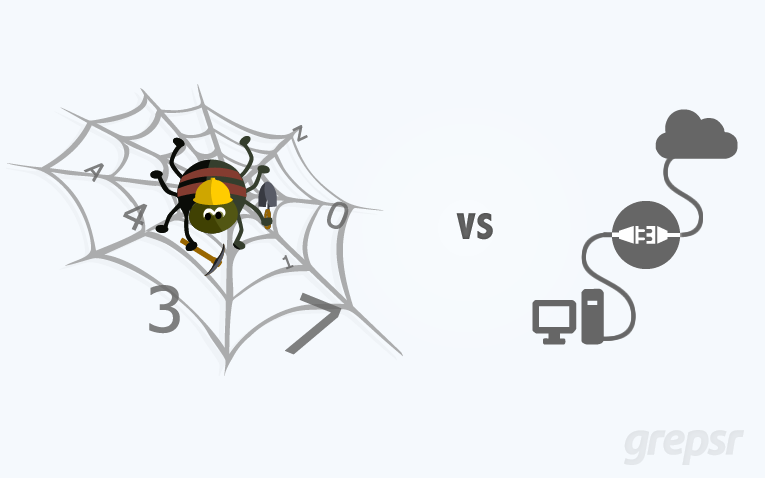
In short, web crawlers are bots that discover new URLs or links on the web, while web scrapers are bots that extract data from pages on the web.
In this blog, we will learn the difference between web crawling and web scraping, their purpose, and their application.
What is web crawling?
Web crawling is the process of using automated programs (called crawlers or spiders) that browse the web to discover new URLs and retrieve content from websites.
How It Works:
- Starts with a seed list of URLs to visit
- Fetches content from each page (HTML, images, text, videos, CSS, JavaScript)
- Parses HTML to identify embedded hyperlinks
- Follows links to discover new pages
- Indexes information in a database (search index)
- Repeats the process continuously across the web
Purpose:
Web crawlers systematically browse and index the web so search engines like Google, Bing, and Yahoo can provide relevant results when users perform search queries.
Scope:
Crawlers aim to cover as much of the web as possible, indexing entire website contents across thousands or millions of sites.
What is web scraping?
Web scraping is the process of fetching publicly available web pages, parsing their HTML, and extracting specific data points into structured formats for analysis, aggregation, or decision-making.
How It Works:
- Identifies target URLs containing desired data
- Fetches page content via HTTP requests
- Parses HTML to locate specific elements
- Extracts data points (e.g., product names, prices, reviews)
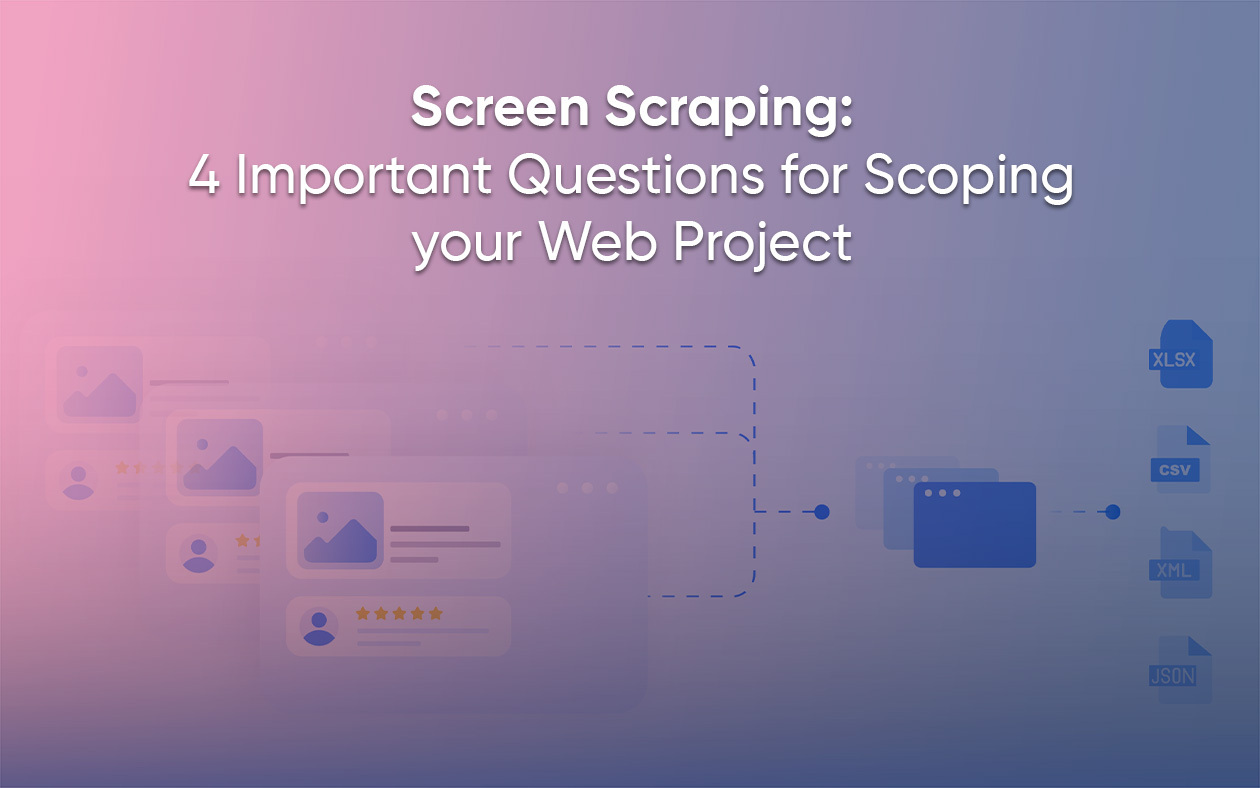
- Stores data in structured formats like CSV, Excel, or databases
Purpose:
Web scraping extracts targeted information from selected web pages to support business intelligence, competitive analysis, market research, pricing strategies, and more.
Scope:
Scrapers focus narrowly on specific data fields from selected pages, though the scope can expand based on business needs.
Tools and Methods:
- Coding: Python libraries like BeautifulSoup, Scrapy
- No-code tools: Browser extensions like Pline
- Managed services: Enterprise-grade providers like Grepsr for large-scale extraction
In a data extraction project, both web crawling and web scraping go hand in hand. When one occurs, the other follows.
For instance, if you don’t know the exact URLs from a website, that you need data from. Let’s say Headsets from Amazon – web crawlers help identify those web pages. Consecutively, the web scraper extracts the specific data points you require from those pages. Such as the product name and price of the Headsets.

Key Differences
We often hear these terms used interchangeably, but there are major differences between them.
| About | Web Crawling | Web Scraping |
|---|---|---|
| Purpose | Web crawling involves systematically browsing the web to index web pages. Typically, search engines use web crawling to index a large amount of data from thousands of websites. This data is then used to provide relevant results for user queries. | Web scraping involves extracting or downloading data from web pages in a structured format. It only gathers information from selected, specific data points for further analysis to guide business decisions. |
| Functionality | Crawlers, also referred to as spiders, start with a list of URLs to crawl and follow links on those pages to discover new pages. They aim to cover as much of the web as possible. | Scrapers browse web pages to extract specific data points such as product details, prices, seller’s contact information, etc based on user-defined criteria. |
| Scope | The scope of crawlers is generally broader as they discover and index entire website contents of multiple websites in larger portions. | The scope is comparatively narrower because it targets specific elements from a few selected webpages but the scope can be expanded as per business needs or client expectations. |
| Complexity | Crawlers need to navigate complex websites, their dynamic content and page structure, and their protocols like “robots.txt” which allows only certain parts of the site to be accessed for storing information in segmented databases. | Scrapers have to deal with the complexities of extracting data from unstructured web pages into a structured format or extracting precise insights from the noise. |
| Usage | It is used by search engines to index large amounts of data. | It is used by businesses and companies for data collection, market research, competitor analysis, brand equity measurement, and more targeted use cases. |
| Examples | The search engine Google uses web crawler bots to index information and show precise results for user queries. Bing and Yahoo are also the same. | Pline is a newly released AI-powered browser extension that is a self-serve data extraction tool for small-scale projects. One can extract data from a webpage without the need for manual scraping or coding experience by simply specifying the data fields. Grepsr provides managed data extraction services for enterprises, offering custom end-to-end data solutions with in-depth expertise. They help clients focus on what matters through workflow automation of data acquisition. |
These are the differences between web crawling vs web scraping and their applications.
Web Scraping Services
An individual writing scripts for data extraction encounters countless challenges that are hard to navigate with limited resources and expertise in the industry.
While opting for a tool can help ease the process, it still has limits. Such as anti-scraping measures adopted by websites i.e. CAPTCHAs, IP blocking, login time, and scalability.
However, if you opt for a web scraping service provider with a team of seasoned experts and decades of experience, like Grepsr, you wouldn’t have to go through the anguish. Bypassing such anti-scraping measures effortlessly by rotating IP addresses, residential proxies, and throttling.
Not just that but we also offer robust data cleaning, normalization, and integration solutions to ensure high-quality data to meet and exceed our client’s expectations.
In terms of scalability, our service has the infrastructure and expertise to manage large-scale scraping projects efficiently. Unlike tools that face challenges in handling large volumes of data across numerous websites.
Thus, for high-quality and instantly actionable data at scale, Grepsr’s expertise is at your disposal.
FAQs
1. What is the difference between web crawling and web scraping?
Web crawling discovers and indexes web pages by following links across the web, primarily for search engines. Web scraping extracts specific data points from selected pages for business analysis. Crawling maps the web broadly; scraping extracts precise information.
2. Do I need web crawling or web scraping for my business?
If you need to discover URLs or monitor website structures, you need web crawling. If you need specific data (prices, reviews, contacts) from known or discovered pages, you need web scraping. Most data extraction projects use both.
3. Is web scraping legal?
Web scraping publicly available data is generally legal, but you must respect website terms of service, robots.txt files, and privacy laws like GDPR and CCPA. Managed services like Grepsr ensure compliant data extraction.
4. What tools can I use for web scraping?
Options include Python libraries (BeautifulSoup, Scrapy), no-code tools (Pline), and managed services (Grepsr). Choice depends on technical expertise, project scale, and data quality requirements.
5. What are common challenges in web scraping?
Challenges include anti-scraping measures (CAPTCHAs, IP blocking), dynamic JavaScript content, unstructured HTML, scalability issues, and legal compliance. Managed services overcome these with rotating IPs, headless browsers, and expert infrastructure.
6. How do search engines use web crawling?
Search engines like Google use web crawlers (e.g., Googlebot) to discover web pages, retrieve content, and build search indexes. When users search, the engine queries this index to return relevant results instantly.